Insurance Coverage Explained: Mass Uprisings, Strikes, Riots and Malicious Damage
Full Story:
In an era marked by social, political, and economic unpredictability, it has become increasingly imperative for businesses, property owners, and risk managers to comprehend the scope of insurance coverage pertaining to civil disturbances and politically motivated events. Modern insurance policies typically differentiate between three principal categories of such risks: Mass Uprisings, SRCC (Strikes, Riots and Civil Commotion), and Malicious Damage (MD). Each category carries its own definitions, conditions, and limitations regarding coverage.
1. Mass Uprising
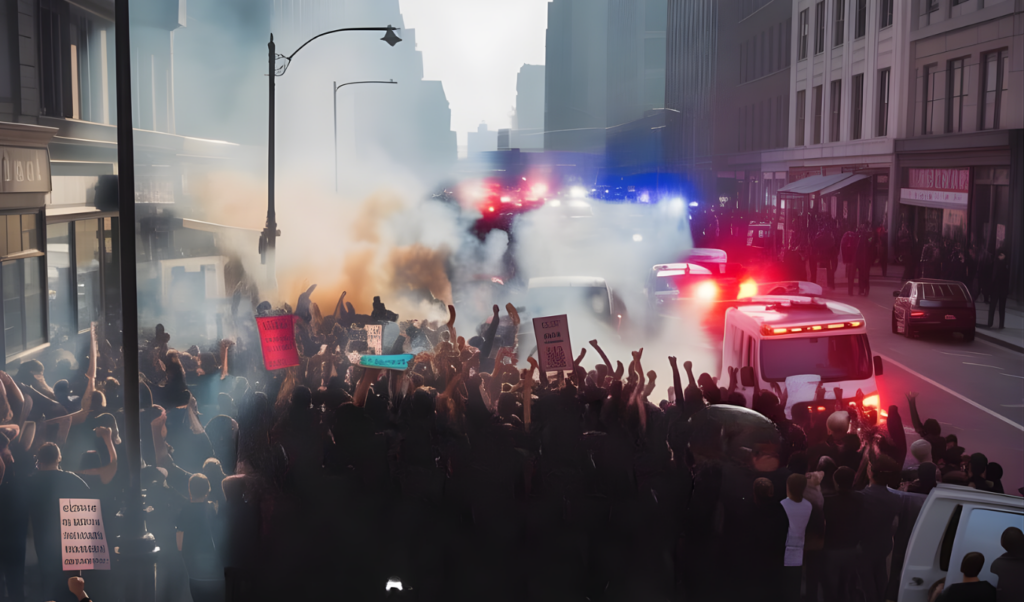
A mass uprising denotes a large-scale, prolonged public movement involving a significant number of individuals acting collectively against governmental authorities, state institutions, or administrative systems. Such events may manifest as:
Nationwide or city-wide protests and demonstrations
Violent civil unrest
Attacks on government or institutional property
Extensive destruction caused by public action
Insurance coverage for losses resulting from mass uprisings is applicable only if explicitly documented within the policy schedule or endorsements, and is subject to all relevant policy terms, exceptions, deductibles, and limits. Without explicit coverage, losses arising from such events are typically excluded.
2. SRCC (Strikes, Riots and Civil Commotion)
SRCC coverage pertains to losses stemming from:
Strike: Coordinated industrial action or work stoppages that result in public disorder and property damage
Riot: Violent conduct by unlawful assemblies leading to the destruction of property
Civil Commotion: Localised disturbances caused by groups of people, which may occur independently of political motives
SRCC-related claims are valid only when the SRCC extension is active and the relevant premium has been paid. Coverage remains subject to the policy’s standard terms, sub-limits, and deductibles.
3. Malicious Damage (MD)
Malicious Damage refers to deliberate, unlawful acts by individuals or small groups causing damage to insured property. Typical examples include vandalism, sabotage, intentional destruction, or actions motivated by personal vendettas. MD is not automatically covered under SRCC or mass uprisings and applies exclusively when explicitly incorporated within the policy.
Comparative Overview of Coverage:
| Aspect | Mass Uprising | SRCC | Malicious Damage (MD) |
|---|---|---|---|
| Nature of Event | Large-scale political or social upheaval | Strikes, riots, local civil disturbances | Deliberate acts by individuals or small groups |
| Purpose | Political or governmental change | Social or economic unrest | Personal vendetta or criminal intent |
| Coverage Requirement | Explicitly stated in policy | SRCC extension active and premium paid | Policy must explicitly include MD |
| Reinsurance Position | Political Violence category; stringent conditions | Generally accepted by reinsurers | Covered under standard property treaty |
| Claims Assessment Complexity | High; widespread losses | Medium; limited to specific areas | Low; event-specific losses |
General Exclusions:
Unless otherwise specified, policies generally exclude losses arising from mass uprisings, war, rebellion, insurrection, revolution, armed revolt, or acts of terrorism.
For businesses and property owners, clearly understanding these distinctions is essential. Policies with explicit endorsements ensure that risks arising from civil unrest, industrial action, or malicious acts are properly insured, thereby supporting robust and effective risk management in today’s volatile environment.