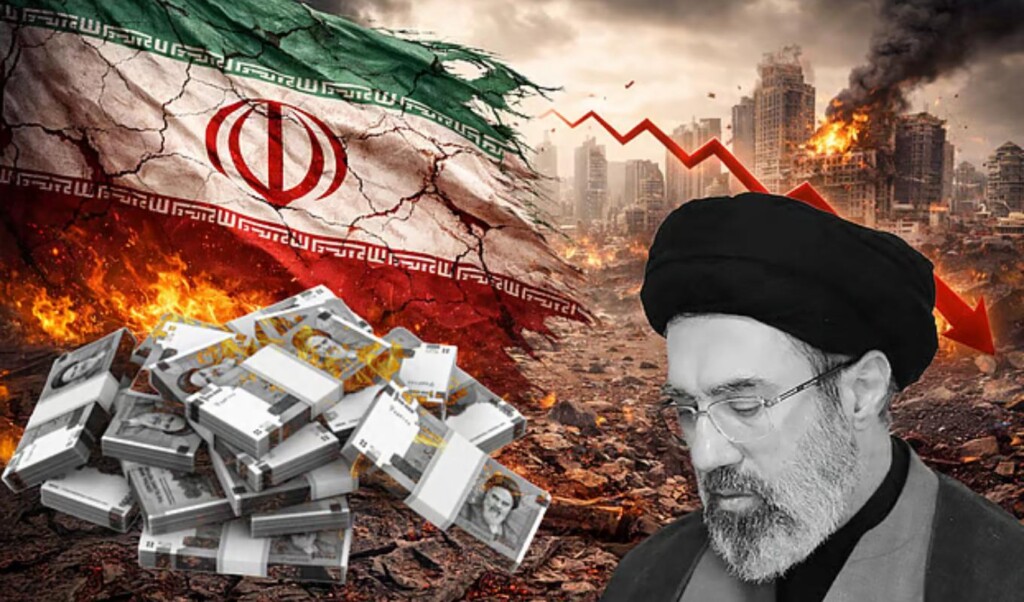
Iran’s economy continues to falter even after a temporary halt in bombing campaigns by the United States and Israel, with businesses reporting only marginal recovery and widespread uncertainty about the future. While some workers have returned to their jobs following the ceasefire announced earlier this week, overall economic activity remains significantly below pre-conflict levels.
In Tehran’s historic Grand Bazaar, traditionally one of the country’s busiest commercial hubs, a modest increase in opened shops was observed on Saturday, the first working day of the week. Many traders extended operating hours in an attempt to recover lost income. However, merchants emphasised that customer demand remains severely depressed, and sales are still far below normal conditions.
One trader dealing in metal goods and light industrial equipment described the market as “almost completely paralysed”. He reported receiving new wholesale price lists showing increases of 20 to 30 per cent compared with late January, attributing the surge to disrupted supply chains and uncertainty over future imports. Inflation had already been accelerating before the latest escalation, driven by domestic unrest, sporadic violence, and extended internet shutdowns that previously crippled economic activity.
Economic pressure overview
| Sector | Current Condition | Key Pressure Factors |
|---|---|---|
| Retail trade | Weak recovery, low demand | Reduced consumer spending, uncertainty |
| E-commerce | Near collapse | Internet restrictions, blocked websites |
| Manufacturing | Disrupted | Infrastructure damage, supply shortages |
| Telecommunications | Highly controlled | Tiered internet access, state restrictions |
| Labour market | Rising layoffs | Business closures, reduced contracts |
| Logistics & transport | Partially non-functional | Damage to ports, rail, airports |
Since the escalation of hostilities, Iran has experienced near-continuous disruptions to internet access, further isolating households and businesses. Many livelihoods dependent on digital platforms have effectively disappeared. Online retailers report that customers are unable to locate their websites without specialised access tools, which remain limited in availability.
A Tehran-based English language tutor explained that she has been forced to abandon international video conferencing platforms in favour of a domestically controlled system. While this intranet-based alternative ensures limited continuity, it prevents access for students outside the country and raises concerns over data security and encryption standards.
Government officials had previously pledged to ease internet restrictions, but authorities now argue that limitations must remain in place for “security reasons”. The Information and Communications Technology Minister recently announced that selected digital businesses may receive targeted support, including credit facilities and improved connectivity. However, no clear framework has been provided for those excluded from state assistance.
Meanwhile, telecom operators have begun introducing tiered service packages under the “Internet Pro” model, offering differentiated access depending on profession and usage type—part of a broader long-term plan for segmented internet governance.
The wider economy has also suffered from extensive damage to infrastructure. Reports indicate that industrial sites, including steel plants, petrochemical facilities, aluminium production centres, airports, ports, rail networks, and oil and gas installations, have been heavily impacted by strikes. Reconstruction, even if hostilities end permanently, is expected to take years.
Beyond physical destruction, Iran faces deep structural challenges: pre-existing budget deficits, international sanctions linked to its nuclear programme, and stalled foreign investment. A collapsed peace negotiation effort has further reduced hopes of near-term de-escalation, while regional military tensions remain high.
Across industries, layoffs are accelerating. Technology firms are avoiding long-term contracts, automobile manufacturers have reduced their workforce significantly, and media organisations have dismissed large numbers of journalists. In Tehran, many content creators and freelancers report exhausting their savings and selling personal belongings to survive.
As one online content creator summarised, “Whether there is war or not, it feels as though we have been struggling for a long time already—silenced not only in voice, but in livelihood as well.”