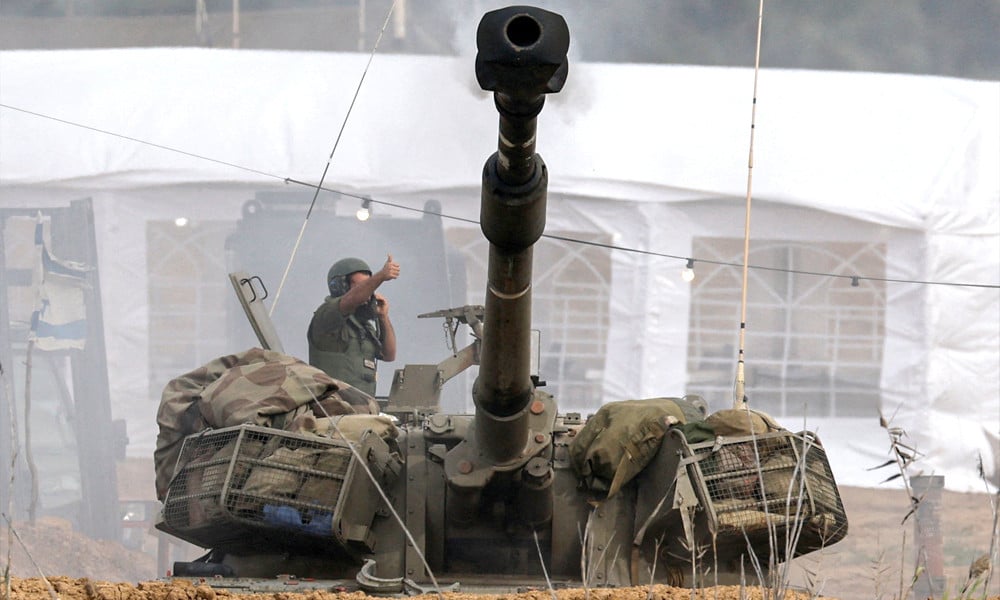
Iran has launched a series of retaliatory attacks targeting US military positions in the Middle East, using ballistic missiles and drones against American assets in Jordan and other regional locations. The strikes came after a wave of US air attacks on Iranian targets, which Tehran said killed at least eight people overnight.
The Islamic Revolutionary Guard Corps (IRGC) said its forces carried out the operation in response to what it described as American aggression. In a statement, the elite Iranian military organisation claimed that several US aerial refuelling aircraft and fighter jets had been destroyed, while a number of other aircraft suffered significant damage. The claims have not been independently verified by US officials.
The IRGC also called on the people of Jordan to oppose what it described as “aggressive and anti-Islamic American interests” operating from their territory. However, Jordanian military officials said earlier that their forces had intercepted three missiles launched from Iran. They stated that there were no casualties or material damage resulting from the incident.
Strikes Reported in Syria and Gulf Region
Iran also claimed responsibility for an attack on a US special operations facility at Al-Tanf in Syria. According to the IRGC, the strike was carried out in retaliation for the deaths of Iranian military personnel in Iran’s southeastern city of Iranshahr.
There was no immediate confirmation or comment from either the Syrian government or the US military regarding the reported attack. Earlier this year, Washington had announced that it had completed the withdrawal of its troops from the Al-Tanf base, which is located near the strategic border area connecting Syria, Jordan and Iraq.
The latest developments have raised further questions about the scale and current status of US military operations in the region.
Iran Claims Wider Regional Operations
Iran has also claimed missile strikes against locations linked to US allies in the Middle East, including Qatar, Kuwait and Iraq.
Explosions were reported in the northern Iraqi cities of Erbil and Sulaymaniyah. Local officials said the strikes targeted the Kurdish group Komala, which Tehran considers an opposition organisation. At least nine people were reported killed and several others injured, although Iran did not immediately claim responsibility for those attacks.
In Kuwait, authorities said a power generation and seawater desalination facility was damaged in an attack. The incident raised concerns over the vulnerability of critical infrastructure in Gulf states, where energy and water facilities are considered strategically important.
Conflict Intensifies Around Strait of Hormuz
Tensions between Iran and the United States have escalated sharply following the collapse of a temporary ceasefire last month. The confrontation has increasingly centred around the Strait of Hormuz, one of the world’s most important energy shipping routes.
US forces have carried out strikes on Iranian infrastructure, including bridges, electricity facilities and a key port area. The attacks followed earlier warnings from US President Donald Trump that pressure could be increased on Tehran if Iran continued restricting movement and operations around the strategic waterway.
Iranian state media reported that American strikes had hit several locations in the southern provinces, including Ahvaz, Qeshm, Bushehr, Dashti, Bostan, Sirik and Bandar-e Lengeh. Iranian officials also said three bridges in the Bandar-e Khamir area were damaged, along with locations near the Tapeh Allah Akbar area of Bandar Abbas.
Iran’s state television reported that at least seven people were killed in attacks on road and railway infrastructure in Hormozgan province. Officials also said the airport in Iranshahr was damaged, causing disruption to electricity supplies in surrounding areas. On Kish Island, temporary power interruptions were reported following air strikes.
Iranian authorities have claimed that dozens of people have been killed and hundreds injured in US attacks so far. They said further casualties were reported following the latest round of strikes on Friday.
The escalation marks one of the most serious confrontations between Tehran and Washington in recent years, increasing fears of a wider regional conflict involving military bases, energy infrastructure and key shipping routes across the Middle East.