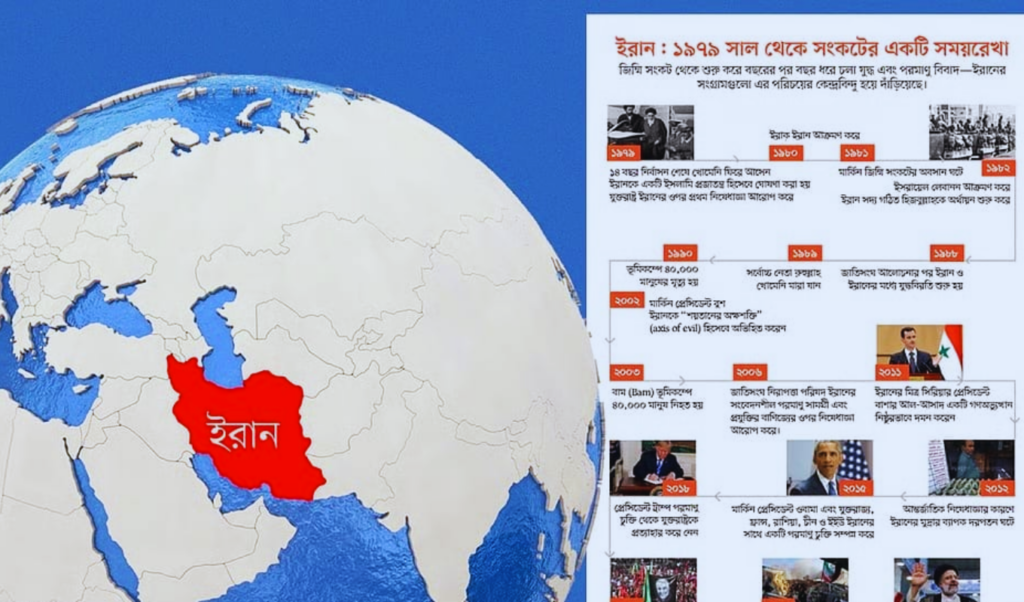
Under the leadership of Ayatollah Ruhollah Khomeini, the 1979 Islamic Revolution ended the pro-Western Pahlavi monarchy in Iran. Following this upheaval, the country was officially renamed the Islamic Republic of Iran, marking the start of a conservative, revolutionary government that continues to rule 47 years later.
Since its establishment, the Islamic Republic has navigated domestic unrest, prolonged wars, and international pressures, particularly from the United States and Israel. The nation has faced economic crises due to repeated sanctions, while simultaneously managing regional conflicts and maintaining influence across the Middle East.
The following table summarises key events in Iran’s modern history:
| Year | Event | Description & Impact |
|---|---|---|
| 1963 | Opposition to Shah’s reforms | Khomeini imprisoned for opposing the White Revolution; later exiled to Iraq and France. |
| 1979 Feb | Islamic Republic established | Khomeini returns to Iran; monarchy abolished via referendum. |
| 1979 Nov | US Embassy seized | 52 diplomats held hostage for 444 days; US imposes first sanctions. |
| 1980–1988 | Iran–Iraq War | Saddam Hussein attacks Iran; chemical weapons used; approx. 1 million casualties; major regional destabilisation. |
| 1982 | Hezbollah founded | Iran supports Shia militias in Lebanon, bolstering regional influence. |
| 1989 | Khomeini dies; Ali Khamenei becomes Supreme Leader | Rafsanjani leads economic recovery and reconstruction. |
| 1990 | Northern earthquake | 40,000 deaths; disaster management under scrutiny. |
| 1995 | US sanctions on oil & trade | Accusations of nuclear and militant support; long-term economic pressure. |
| 1998 | Afghanistan crisis | Iranian troop mobilisation after Taliban killings of diplomats and journalist. |
| 2003 | US invades Iraq | Iran supports Shia militias, enhancing regional power. |
| 2006–2010 | Nuclear sanctions & cyberattacks | UN Security Council imposes multiple sanctions; Stuxnet malware attacks nuclear facilities. |
| 2011 | Syrian crisis | Iran’s Revolutionary Guard assists Assad regime, strengthening influence. |
| 2012 | EU oil embargo & currency collapse | Rial loses ~80% value; economic crisis intensifies. |
| 2015 | Nuclear deal (JCPOA) | Iran agrees to limit enrichment; sanctions lifted gradually. |
| 2018 | US withdrawal from JCPOA | Trump reinstates sanctions; renewed economic strain. |
| 2020 | Qasem Soleimani killed | US drone strike kills IRGC commander; Iran retaliates with missile attacks. |
| 2024–25 | Regional escalations | Damascus embassy attack, presidential helicopter crash, Hamas leader killed; 12-day Iran–Israel conflict intensifies tensions. |
| 2026 Feb–Mar | Operation Epic Fury | Joint US–Israeli strike kills Supreme Leader Khamenei; widespread destruction and uncertainty across Iran. |
Over nearly five decades, Iran’s political trajectory has been defined by a mixture of revolutionary zeal, regional assertiveness, and resistance to Western influence. The nation has faced multiple wars, domestic protests, and natural disasters, while its foreign policy has consistently focused on expanding Shia influence in Lebanon, Syria, and Iraq.
Recent escalations, including the 2026 Operation Epic Fury, have resulted in widespread destruction across Iranian cities, targeting military and political centres. In response, Iran launched missile and drone attacks against Israeli and US positions, further destabilising the Middle East.
This historical continuum illustrates the delicate balance Iran maintains between domestic governance, regional power projection, and international diplomacy, highlighting the enduring volatility of its relationship with the United States and its allies.