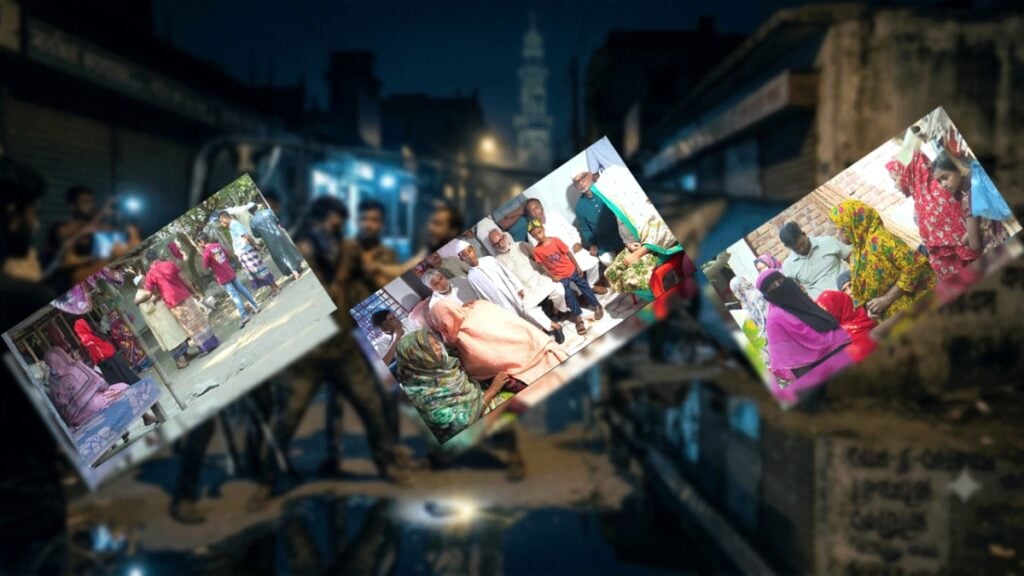
Doctors, businesspeople and members of the wider community are struggling with a growing sense of insecurity. The latest incident, in which BNP leader and brick-and-sand trader Zakir Hossain was shot dead while sitting at his shop in Rupsa, has intensified public anxiety. The situation has become so serious that medicine traders have threatened to close pharmacies across the region unless the authorities ensure their safety.
The concerns extend beyond a single killing. Recent incidents suggest a wider pattern of violence linked to territorial disputes, drug trading, extortion and commercial rivalries. Business owners targeted by armed groups say they have received little reassurance despite reporting incidents to the police. Some victims are also reluctant to file formal complaints, fearing retaliation.
BNP Leader Shot Dead Inside His Shop
Amid the growing tension, Zakir Hossain, 43, was shot dead inside a shop in the Swalpobahirda village of Rupsa Upazila at around 10.30pm on Thursday, 12 November.
He was a resident of Khajadanga village in the upazila’s No. 4 TSB Union. Alongside his brick-and-sand business, he was a member of a search committee involved in the organisational restructuring of the local BNP unit.
According to police and local sources, Zakir was sitting inside his shop when two helmet-wearing men arrived on a motorcycle. One of them entered the shop and shot him in the head at close range. The attackers then fled on their motorcycle.
Local residents rushed Zakir to Rupsa Upazila Health Complex, where he died while receiving treatment.
Police are investigating possible political and business-related motives behind the killing. His reported interest in contesting the upcoming union parishad election as a member has also drawn the attention of investigators.
Khulna Superintendent of Police Government Omar Faruk said investigators were examining whether business disputes had played a role. Police were working to establish the motive and identify those responsible.
Sources involved in the investigation said information was also being collected about several people close to Zakir. However, the precise circumstances and motive behind the killing have yet to be established.
13 Shooting Incidents in Around 20 Days
Figures from recent incidents highlight the scale of the security concerns in Khulna.
Between 22 October and 12 November, at least 13 shooting incidents were reported across the city and district. Six people lost their lives in those incidents.
During the same period, three more people were killed in attacks involving sharp weapons and physical assaults. This means at least nine people were murdered in approximately 20 days.
Five of the killings took place within Khulna metropolitan areas, while the remaining four occurred in Rupsa and Dumuria upazilas.
According to information released by police, the total number of murders recorded across Khulna city and district had reached 79 by 12 November this year.
The frequency of shootings, public killings and attacks on commercial establishments has raised serious questions about the overall law and order situation. The use of firearms in targeted attacks has particularly heightened concerns among residents and business owners.
Extortion Threats Force Businesses to Close
Criminal groups are increasingly accused of targeting commercial establishments in Khulna. Reports of extortion demands have emerged from hospitals, diagnostic centres, pharmacies and businesses involved in the supply of bricks and sand.
Mohammad Rafiqul Islam, general secretary of the Khulna Metropolitan Brick and Sand Traders’ Association, alleged that he recently received a telephone call from individuals claiming to represent a criminal gang. They demanded Tk 300,000 and threatened to kill him if he refused to pay.
According to Rafiqul, the callers also contacted his wife and issued threats against her. Fearing for their safety, he did not feel confident enough to lodge a complaint with the police. He subsequently switched off both his and his wife’s mobile phones.
In another incident, a case was filed over an alleged extortion demand targeting Dr Gazi Mizan, director of Gazi Medical College Hospital in Sonadanga. Police arrested a man named Faisal Munshi in connection with the case. He was subsequently sent to jail through a court order.
The owner of Mallik Brothers Pharmacy on Rupsa Stand Road alleged that a man known as Ashik, described as a prominent criminal, demanded Tk 3 million from him. Fearing an attack if he refused, the owner decided to shut down the pharmacy.
Chayanika Pharmacy in Tutpara and Zahid Electric are among other establishments whose owners have reportedly suspended business after receiving threats.
In some cases, police personnel have been deployed outside affected establishments. However, several owners remain unwilling to reopen their businesses, saying they do not feel sufficiently protected.
The consequences extend beyond financial losses for the owners. Employees face uncertainty over their livelihoods, while customers are being deprived of services they previously relied upon.
Pharmacy Owners Give Authorities Three Days
Medicine traders have now announced plans to organise protests against extortion and attacks on their businesses.
On Thursday, the Bangladesh Chemists and Druggists Association, together with local medicine traders in Khulna, submitted a memorandum to the Deputy Commissioner and the Khulna Metropolitan Police Commissioner, demanding immediate action against those responsible.
The memorandum highlighted the importance of pharmacies in maintaining access to essential healthcare. Many remain open from early morning until late at night, while some operate throughout the night to meet emergency demand.
However, traders say threats from extortionists have made it increasingly difficult to continue operating safely.
The memorandum specifically referred to alleged extortion demands and death threats targeting Chayanika Pharmacy in Tutpara and Mallik Brothers Pharmacy in Rupsa, among other establishments. The traders called on the administration to take immediate and effective measures.
They have given the authorities three days to act. If no effective steps are taken against the alleged extortionists within that period, they have threatened to close all chemists’ shops and pharmacies across the Khulna region and launch tougher programmes.
Such a shutdown could have serious consequences for residents. Pharmacies play a particularly important role in providing medicines outside regular hospital hours, especially for emergency patients and people requiring urgent treatment at night.
The possibility of widespread closures has therefore added another dimension to the growing public concern over security in Khulna.
Police Identify 181 Active Criminals in the City
According to the Crime Division of Khulna Metropolitan Police, 181 criminals are particularly active across the city’s eight police stations.
Several groups have been accused of involvement in extortion, drug trading, armed attacks and killings. The names of B Company, Nur Azim and Ashik’s groups have emerged in connection with various incidents.
Police records indicate that Nur Azim was arrested on 2 January last year but secured bail in August. His group has recently been mentioned in allegations involving extortion demands and attacks on different establishments.
Meanwhile, his brother, Shahariar Islam Rocky, was arrested in Shibchar, Madaripur, by a joint team of Rapid Action Battalion-6 and RAB-8.
According to RAB, nine cases have been filed against Rocky at different police stations in Khulna, including cases involving murder and drugs.
Khulna Metropolitan Police Deputy Commissioner Rezaur Rahman said investigators had identified many of those allegedly involved in recent attacks on businesses. Some of the suspects had previously been arrested, he added.
Police are also monitoring cases in which individuals allegedly returned to criminal activities after securing bail.
The recurrence of offences involving previously arrested suspects has raised questions about the effectiveness of existing measures to prevent repeat criminal activity.
Victims Fear Retaliation and Avoid Filing Complaints
One of the most worrying aspects of the situation is the reluctance of victims to seek legal protection.
Several business owners say they fear becoming targets of further attacks if they report extortion demands or identify those responsible. As a result, some are choosing to remain silent rather than approach the police.
A number of traders have also expressed dissatisfaction with the response they have received. They allege that although police officers have visited incident locations and collected CCTV footage, the absence of visible action against the perpetrators has done little to restore their confidence.
Advocate Babul Howlader, member secretary of Khulna Nagarik Samaj, believes that arresting those directly involved in criminal activities will not be enough to improve the situation.
He argues that investigators must also identify and bring to justice the people who plan criminal operations, finance them and provide protection to offenders. He also described victims’ reluctance to file complaints as a major obstacle to tackling crime.
Kudrat-e-Khuda, district president of Citizens for Good Governance (SHUJAN), said political leaders, social organisations, police and the judiciary must work together to address the crisis.
In his view, a lasting solution will remain difficult unless political protection and patronage for criminals are brought to an end.
Lawmakers Call for Tough Action Against Criminals
Concern over the deteriorating security situation has also been expressed by elected representatives.
National Parliament Whip and Khulna-3 MP Rakibul Islam Bakul has called for decisive action against criminals, regardless of their political connections or influential backers.
He said the administration must act against offenders whoever they are and whoever may be protecting them. If the authorities fail to take action, elected representatives will take to the streets, he warned.
Khulna-2 MP Sheikh Jahangir Hossain Helal has also raised the issue of public insecurity in Parliament, highlighting the impact of extortion and criminal activities on residents.
He said the people of Khulna wanted to be freed from the current situation and called for effective measures to restore public safety.
Meanwhile, Sheikh Ashraf Uz Zaman, president of the Greater Khulna Development Struggle Coordination Committee, has proposed forming a separate specialised unit comprising experienced personnel from the police and other law enforcement agencies.
He argued that action should extend beyond the individuals directly involved in criminal activities to those who provide them with shelter, influence and support.
Joint Forces to Launch Special Crackdown
Against this backdrop, senior officials from law enforcement agencies met at Khulna Circuit House on Thursday night and decided to launch a special joint operation against terrorism and extortion.
The meeting agreed to establish checkpoints on highways and other important roads. Around 200 Ansar members are to be deployed to help secure these checkpoints.
The authorities also decided to increase regular patrols and strengthen intelligence surveillance to monitor criminal activities. A tougher drive against motorcycles operating without valid licences was also discussed.
The meeting was chaired by Divisional Commissioner Mohammad Abdullah Harun. Senior officials attending included Khulna Metropolitan Police Commissioner Mohammad Sazzadur Rahman, representatives of district police, RAB-6, river police, Armed Police, the Coast Guard and various intelligence agencies.
Earlier in the evening, another special meeting was held under the chairmanship of Deputy Commissioner Hure Jannat. Political leaders, business representatives, doctors, journalists and officials from the administration attended the discussion.
Participants expressed concern over the overall security situation in Khulna and called for the immediate launch of special operations to tackle the growing threat.
Restoring Public Confidence Remains the Biggest Challenge
The decision to launch joint operations and strengthen security measures has raised expectations among residents and business owners. However, questions remain over how effectively these initiatives will address the underlying problems.
Residents want more than temporary checkpoints, meetings and short-term arrests. They are calling for the sources of illegal firearms to be identified, extortion networks dismantled and those directing or financing criminal activities brought before the law.
Ensuring protection for victims is equally important. Business owners who have closed their establishments because of threats need concrete guarantees that they can resume operations without fear of further attacks.
The authorities must also create conditions in which victims can report crimes without worrying about retaliation. Without public confidence in law enforcement, many incidents may remain unreported, allowing criminal networks to operate with greater freedom.
For Khulna, the challenge is no longer limited to controlling individual incidents of violence. It is about restoring the sense of security necessary for businesses to function, healthcare services to continue and ordinary people to go about their daily lives.
Residents now expect the promised crackdown to produce lasting results, rather than a temporary reduction in violence. Only sustained action against armed criminals, extortionists and those protecting them can help bring normality back to the city and its surrounding areas.