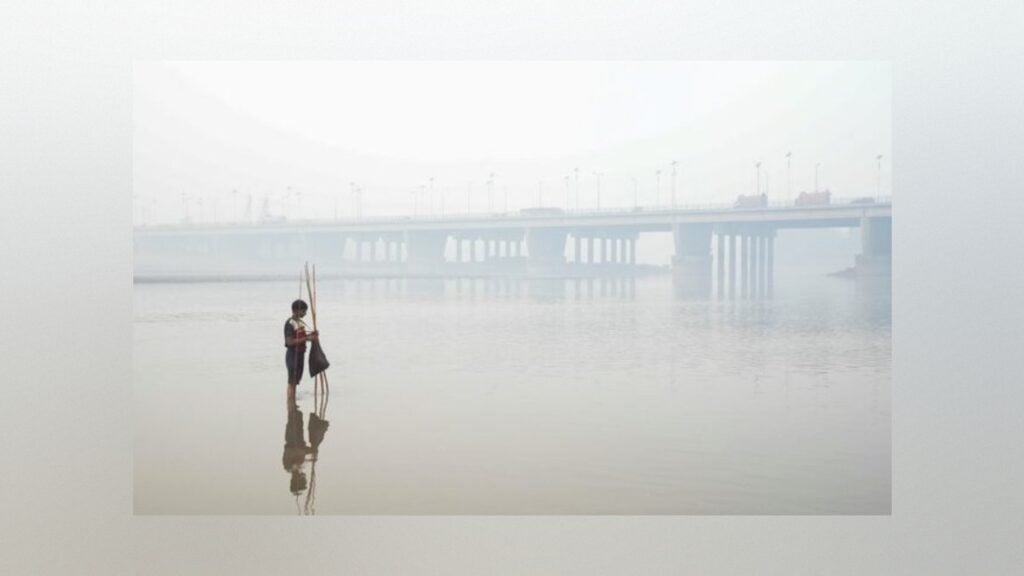
Lahore has once again topped the global ranking of the world’s most polluted major cities as the onset of winter brings worsening smog to Pakistan. On Wednesday, 28 October, the city recorded an Air Quality Index (AQI) of 296 at 10 am, according to real-time data from Swiss-based air quality monitoring organisation IQAir.
The latest reading has renewed concerns about the health risks facing millions of residents as Pakistan enters a season when stagnant atmospheric conditions and multiple pollution sources often combine to produce dense smog.
Air pollution has become one of Pakistan’s most serious environmental and public health challenges in recent years. Lahore, the capital of Punjab province, is particularly vulnerable during the colder months, when emissions from factories, vehicle exhaust, agricultural stubble burning and construction activities contribute to deteriorating air quality. Changes in wind patterns and atmospheric conditions can also prevent pollutants from dispersing, allowing them to accumulate near the ground.
According to IQAir’s readings at the time, Cairo, the Egyptian capital, ranked second among the world’s most polluted major cities, with an AQI of 289. Delhi, India’s capital, followed in third place at 272. Tashkent, the capital of Uzbekistan, ranked fourth with a reading of 186, while Karachi, another major Pakistani city, occupied fifth place at 173.
Under the United States AQI classification system, readings between 201 and 300 fall within the ‘very unhealthy’ category. Lahore’s score of 296 placed it close to the upper end of this range, signalling a serious health concern. Cairo and Delhi were also within the same category at the time of the assessment.
Air pollution at such levels can affect people across the population, but children, older people and those with asthma, heart disease or other respiratory conditions are particularly vulnerable. Exposure to polluted air can irritate the respiratory system, aggravate existing illnesses and make breathing more difficult. Prolonged exposure to air pollution can also contribute to longer-term health problems.
In Lahore, falling temperatures during the early morning have coincided with increasingly dense smog, reducing visibility and adding to concerns about public safety. Poor visibility can make road travel more hazardous, while elevated pollution levels can make outdoor exercise particularly risky.
Residents are generally advised to limit prolonged outdoor exertion when air quality deteriorates. People with asthma and other respiratory conditions should take particular care and follow local health advice. Reducing exposure is especially important when pollution reaches the very unhealthy category.
Sajid Bashir, a spokesperson for Pakistan’s Environmental Protection Agency (EPA), told Dawn that authorities were monitoring industrial facilities and installing equipment to measure pollution levels. He said changing weather conditions were contributing to the worsening smog and that measures were being taken to discourage the burning of agricultural residues.
According to Bashir, easterly winds from areas near the Indian border were carrying polluted air towards Lahore, worsening conditions across central Punjab. While regional wind patterns can influence how pollutants travel, local sources, including industrial emissions, vehicle exhaust and construction dust, remain significant contributors to the city’s air pollution.
The provincial government is planning to acquire and deploy 30 additional modern fog cannons mounted on electric trucks as part of its efforts to combat smog and airborne dust. The equipment is designed to spray water to suppress dust particles in the surrounding area.
Bashir said anti-smog guns were being prioritised in locations where concentrations of PM10 particles were particularly high. PM10 refers to airborne particulate matter measuring up to 10 micrometres in diameter. These particles can enter the respiratory system and aggravate certain health conditions. Water spraying is being used around roads and nearby areas in an effort to control dust.
However, such equipment can address only part of the problem. Although water spraying may temporarily reduce airborne dust, it cannot eliminate pollution from factories, vehicles or agricultural burning. Lasting improvements will require effective controls on emissions and consistent enforcement of environmental regulations.
Bashir also identified development projects in Lahore and other Punjab cities as contributing factors. Construction and roadworks can release substantial amounts of dust when appropriate control measures are not followed, adding to the concentration of airborne particles.
Authorities are stepping up industrial inspections as part of their response. According to Bashir, Punjab Climate Watch is operating in three shifts to monitor factories and identify breaches of environmental regulations. Inspection teams are pursuing legal action and imposing fines when violations are detected.
Despite these measures, officials acknowledge that improving air quality will take time. The recurrence of severe smog indicates the scale of the challenge facing the provincial authorities, particularly as winter conditions make it more difficult for pollutants to disperse.
Lahore also topped the pollution rankings during the previous week, when its air quality reportedly reached the ‘hazardous’ category. Earlier, on 2 October, IQAir recorded an AQI of 167 for the city, placing it in the ‘unhealthy’ range. Punjab Chief Minister Maryam Nawaz said at the time that the government was working to address environmental problems.
Concerns extend beyond particulate pollution. On 1 October, an analysis published by the Copernicus Atmosphere Monitoring Service (CAMS), which operates under the European Union’s Copernicus Climate Change Service, identified Lahore among the cities experiencing very poor ozone conditions.
Ground-level ozone is a harmful air pollutant formed through chemical reactions involving other pollutants in the presence of sunlight. Unlike the ozone layer in the upper atmosphere, which protects the Earth from harmful ultraviolet radiation, ozone near the ground can irritate the lungs and worsen respiratory conditions. Its presence adds another dimension to Lahore’s air quality challenges.
The repeated appearance of Lahore at the top of global pollution rankings highlights the difficulty of achieving lasting improvements. Weather conditions can intensify smog by trapping pollutants close to the ground, but the underlying problem also reflects emissions from transport, industrial activity, construction and agricultural practices.
As winter progresses, the risk of recurring episodes of severe smog is likely to remain a major concern for residents of Lahore and surrounding areas. The government’s monitoring programmes, inspections, fines and dust-suppression initiatives represent efforts to address the crisis, but their effectiveness will depend on consistent implementation and meaningful reductions in pollution at its source.
For Lahore, tackling the problem will require more than temporary interventions during periods of particularly poor air quality. Stronger enforcement of industrial standards, reduced vehicle emissions, better dust management at construction sites and effective measures to prevent agricultural residue burning will be essential to protecting public health. Without sustained action, the city could continue to face dangerous levels of pollution during the winter months, placing further pressure on its residents and healthcare services.