Hangzhou — Bangladesh’s ambitions of securing a historic gold or silver medal at the Asian Games collapsed dramatically on Thursday, following a decisive six-wicket defeat to rivals Pakistan in the semi-finals. Driven back into a battle for the bronze medal, the national side fell short in a match severely curtailed by weather, leaving supporters frustrated and the squad grappling with familiar questions over preparation.
In a clash reduced to 13 overs per side following torrential rain, Bangladesh were sent in to bat after losing the toss. They managed to post a total of 111 for 5, setting Pakistan a target of 112. The Pakistani batting line-up chased down the required runs with considerable ease, sealing victory with nine balls to spare and bringing Bangladesh’s campaign for a top-two finish to an abrupt halt.
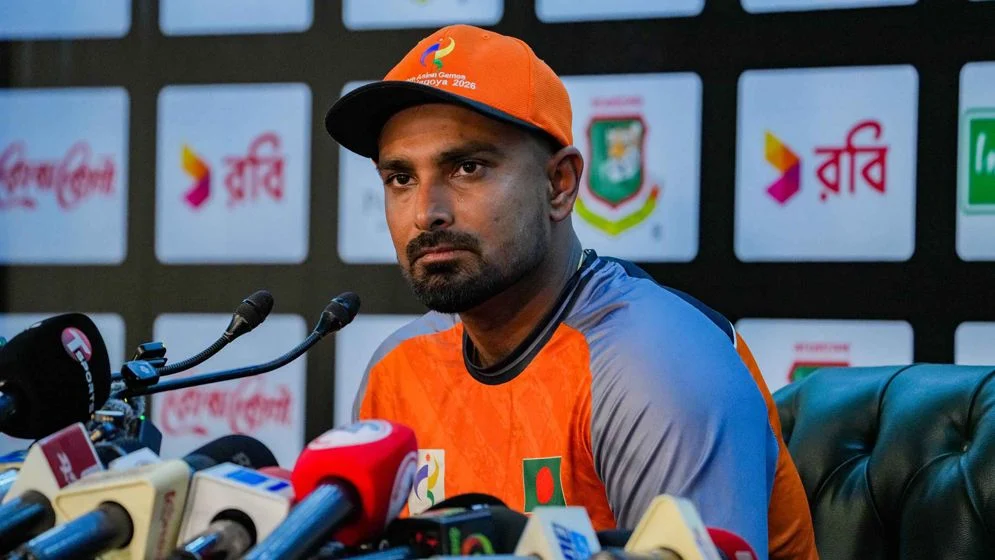
Speaking in the aftermath of the defeat, Bangladesh captain Litton Das pointed to a distinct lack of training opportunities and prolonged inactivity in their quarters as primary reasons for the squad’s subpar performance.
“I think if we could have bowled better in the middle overs and conceded fewer sixes, our chances of winning would have been much higher,” Litton admitted during the post-match conference.
The turning point of the contest emerged in the death overs, where star fast bowler Mustafizur Rahman endured an unusually expensive outing. Conceding 41 runs across his two overs, Mustafizur was handed the ball when Pakistan required 34 runs off the final four overs. Instead of restricting the opposition, he conceded 23 runs in a single over, completely shifting the momentum in Pakistan’s favour.
When quizzed by reporters on the decision to bring Mustafizur back into the attack despite his conceding 18 runs in his opening over, a defensive Litton stood by his tactical choice.
“Had Mustafizur taken three wickets today, you would not be asking this question,” Litton countered. “He has delivered for us for a long time. To me, Mustafizur was the best option at that moment, so I used him. If you ever feel another option is better, you are welcome to bowl them.”
Bangladesh’s batting performance offered little solace. Towhid Hridoy provided the lone spark of brilliance, scoring a fiery 42 off 25 balls. However, he received virtually no support from the rest of the top order. Litton himself set a poor example, departing for just two runs off three balls after being bowled whilst attempting an ill-judged reverse sweep.
Addressing the fragile batting display, Litton doubled down on the lack of match practice and difficult conditions.
“We have been stuck inside our hotel rooms for a long time, and losing the toss did not help either,” the skipper explained. “We had no alternative options, and the pitch posed significant difficulties. It would have been great if we had played better, but it is hardly easy to sit idle for days and then step out to play an extraordinary innings.”
Litton further highlighted that the team had to navigate the initial overs with zero intelligence on the surface. “We had no idea about the track because we have not seen any games here recently, nor was there any facility to practise on the main pitch. We essentially played the first few overs blind before the batters gradually got a read on it.”
However, Litton’s assertions regarding preparation appear to contradict statements made by the team management earlier in the week. Only two days prior, Bangladesh’s head coach insisted that the squad was fully prepared for rain interruptions and limited field access. Furthermore, middle-order batter Yasir Ali Rabbin explicitly dismissed the lack of practice as a factor during his press interaction yesterday.
While Bangladesh struggled to adapt, Pakistan faced identical logistical constraints and weather disruptions yet executed their run chase with clinical composure, raising further scrutiny over Bangladesh’s resilience under pressure.