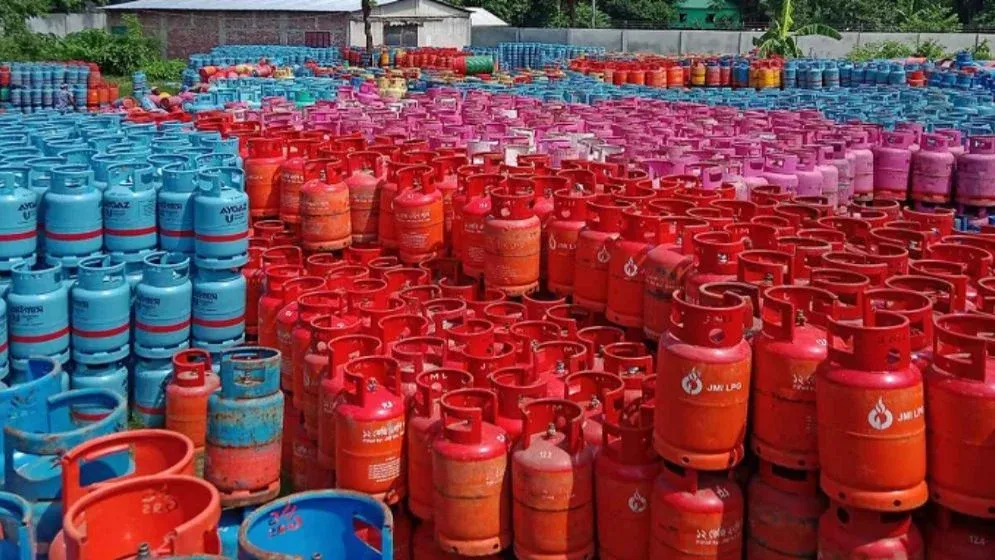
Traders across Bangladesh have announced a two-day nationwide shutdown of Liquefied Petroleum Gas (LPG) sales in protest against alleged administrative harassment and official crackdowns. Under the planned strike, all retail shops and distribution channels will suspend operations on Thursday, 15 October, and Friday, 16 October.
Selim Khan, President of the LPG Traders Cooperative Society Limited, announced the decision during an emergency press conference at the National Press Club in Dhaka on Monday. Retailers and wholesalers from various districts attended the event to express solidarity with the movement.
Association leaders expressed deep frustration over the growing volatility in the retail and wholesale markets, claiming that small traders are being unfairly blamed for systemic pricing failures. Although the government sets retail prices, major LPG importing and bottling companies regularly fail to supply cylinders at those official rates. Forced to purchase stock from primary suppliers at inflated costs, local shopkeepers find it financially impossible to sell cylinders to consumers at government-capped prices.
Rather than addressing the supply chain bottlenecks or penalising the major operators, local administrative bodies, mobile courts, and the Directorate of National Consumer Rights Protection have focused their enforcement efforts almost exclusively on small shopkeepers. Traders face heavy fines, legal cases, and continuous harassment during routine raids. Speaking at the press conference, Mr Khan pointed out that buying cylinders at higher rates and reselling them at fixed government caps forces traders to operate at a complete loss, whilst selling above the cap exposes them to daily legal penalties.
The conflict follows a sharp price hike announced by the Bangladesh Energy Regulatory Commission (BERC) on 4 October. BERC raised the price of the widely used 12kg LPG cylinder by BDT 252, fixing the consumer rate at BDT 1,837. Spot checks across the capital and major cities reveal that government-mandated rates remain largely unobserved. Consumers across the country report paying between BDT 1,900 and BDT 2,000 or more per cylinder.
While consumers frequently accuse retailers of creating artificial shortages following monthly price revisions, shopkeepers maintain that true stability is impossible without direct price controls at the import and bottling levels. Business leaders warned that if the administration fails to stop targeting retailers and enforce official prices among primary suppliers during the two-day strike, traders will launch an indefinite, nationwide shutdown.