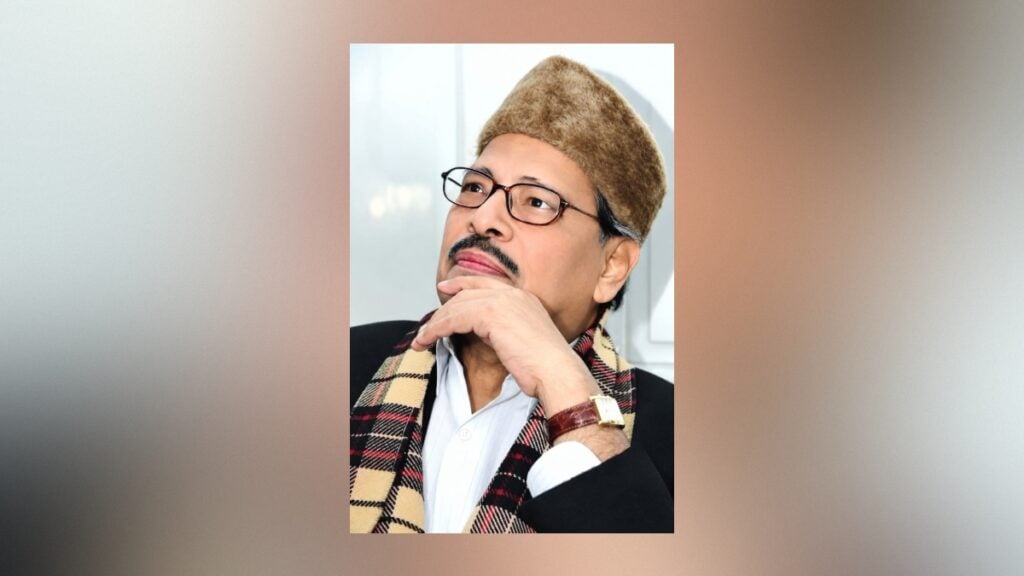
Few lines capture the complexities of human life as simply and poignantly as these. When sung in the unmistakable voice of Manna Dey, they become more than lyrics; they reflect the joys, sorrows, unfulfilled dreams and quiet disappointments that shape the human experience. A legendary singer whose music touched millions, Manna Dey remains an enduring presence in the world of Bengali and Indian music, long after his passing.
Born Prabodh Chandra Dey in Kolkata on 1 May 1919, Manna Dey grew into one of the most distinguished vocalists of the Indian subcontinent. His musical journey began at an early age, nurtured by his uncle, the celebrated musician Krishna Chandra Dey, who introduced him to the fundamentals of music and inspired him to pursue the art seriously.
Years of rigorous training in classical music shaped his distinctive style. His command of intricate ragas, remarkable vocal range, precise musical expression and ability to convey deep emotion set him apart from many of his contemporaries. He possessed the rare ability to combine the technical demands of classical music with the accessibility and emotional appeal of popular songs.
Manna Dey began his career in Hindi cinema in 1942. Over the decades that followed, he recorded numerous memorable songs in Bengali, Hindi and other Indian languages, establishing himself as a versatile singer whose repertoire extended far beyond any single musical genre. Whether performing a demanding classical composition, a romantic melody or a reflective song about life, he brought extraordinary discipline and sensitivity to his work.
His contribution to music was not confined to technical excellence. He had an exceptional ability to understand the emotional depth of a lyric and translate it into a performance that felt personal to the listener. His voice could express romantic longing, playful affection, philosophical reflection and profound melancholy with equal conviction.
Among his most celebrated Bengali songs is Coffee Houser Sei Adda Ta Aaj Aar Nei, a nostalgic composition that evokes memories of friendships, youthful conversations and the inevitable passage of time. The song, with its recollections of a once-familiar gathering place, has become an enduring part of Bengali cultural life. For generations of listeners, it recalls friendships that have faded, dreams that have changed and moments that can never be recovered.
Other Bengali favourites, including Ei Kule Ami Aar Oi Kule Tumi and Jodi Kagaje Lekho Naam, reveal different dimensions of his artistry. His Hindi songs were equally impressive. Laga Chunari Mein Daag showcased his command of classical intricacies, while Poochho Na Kaise Maine Rain Bitaayi demonstrated his ability to bring classical influences into film music without losing their emotional intensity.
Each performance revealed a different facet of his musical personality. He could navigate demanding melodic passages with precision while ensuring that the underlying emotion remained accessible to ordinary listeners. This balance between musical sophistication and popular appeal became one of the defining characteristics of his career.
Yet, perhaps no song captures his enduring connection with listeners quite like Sabai To Sukhi Hote Chay, built around the familiar thought that everyone seeks happiness, although not everyone finds it.
The sentiment is universal. People pursue happiness through love, family, friendship, ambition and personal fulfilment, but life rarely grants everyone the same measure of contentment. For some, dreams become reality; for others, disappointment and longing remain constant companions. Through Manna Dey’s expressive delivery, this simple observation becomes a deeply moving reflection on the uneven nature of human existence.
His greatness also lay in his ability to remain distinctive in an era crowded with extraordinary musical talent. From the 1950s onwards, he enriched Bengali and Hindi film music alongside celebrated contemporaries such as Hemanta Mukherjee, Shyamal Mitra, Kishore Kumar, Lata Mangeshkar and Asha Bhosle.
Each had a recognisable artistic identity, but Manna Dey carved out a place of his own through his classical training, versatility and willingness to embrace demanding compositions. He did not limit himself to the conventions of popular playback singing. Instead, he demonstrated that technically sophisticated music could also move a wide audience when performed with sincerity and emotional understanding.
His achievements received significant national recognition. He was awarded the Padma Bhushan in 2005 for his contribution to Indian music and received the Dadasaheb Phalke Award in 2009, the country’s highest honour in cinema, recognising his exceptional contribution to the film industry. These distinctions reflected the stature he had attained through decades of artistic dedication.
For all the honours he received, however, his most enduring reward was the affection of his listeners. His songs continued to travel across generations, reaching audiences who had never experienced the era in which many of them were first recorded. His music became part of family gatherings, cultural programmes, radio broadcasts and private moments of reflection.
Away from the recording studio, Manna Dey shared a long married life with his wife, Sulochana Kumaran. During his later years, he lived in Bengaluru, where his health gradually declined. Even as his public appearances became less frequent, his artistic legacy remained firmly rooted in the hearts of music lovers.
On 24 October 2013, Manna Dey died in Bengaluru at the age of 94. His death marked the end of an extraordinary life and the departure of one of the most respected voices in Indian music. Yet, the passing of the singer did not silence the music that had defined his existence.
His legacy continues to find expression in the everyday lives of his listeners. On a quiet evening, Coffee Houser Sei Adda Ta Aaj Aar Nei can transport someone back to a cherished friendship or a long-forgotten chapter of youth. In moments of sadness, Sabai To Sukhi Hote Chay offers a reminder that disappointment and longing are shared elements of the human condition. In matters of the heart, his romantic songs continue to articulate feelings that words alone often fail to convey.
This enduring relevance is a testament to the depth of his artistry. Musical fashions change, new voices emerge and generations develop their own tastes, but songs rooted in genuine emotion rarely lose their power. Manna Dey’s recordings continue to resonate because they speak to experiences that remain familiar regardless of age or circumstance.
His life also stands as a reminder that artistic greatness is not measured solely by popularity or commercial success. It is sustained by dedication, versatility, creative courage and the ability to leave something meaningful behind. Manna Dey embodied these qualities throughout a career that enriched the musical heritage of the Indian subcontinent.
As admirers remember him on the 13th anniversary of his death, respect for the legendary singer remains undiminished. His voice continues to bridge generations, bringing together those who grew up listening to his songs and younger audiences discovering them for the first time.
Manna Dey is no longer among us, but his music remains alive in the memories, emotions and experiences of millions. Through every familiar melody, every poignant lyric and every note that evokes a forgotten moment, he continues to speak to the human heart.
Manna Dey lives on — in his songs, in our memories and in the timeless language of music.