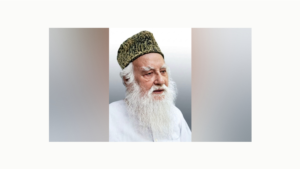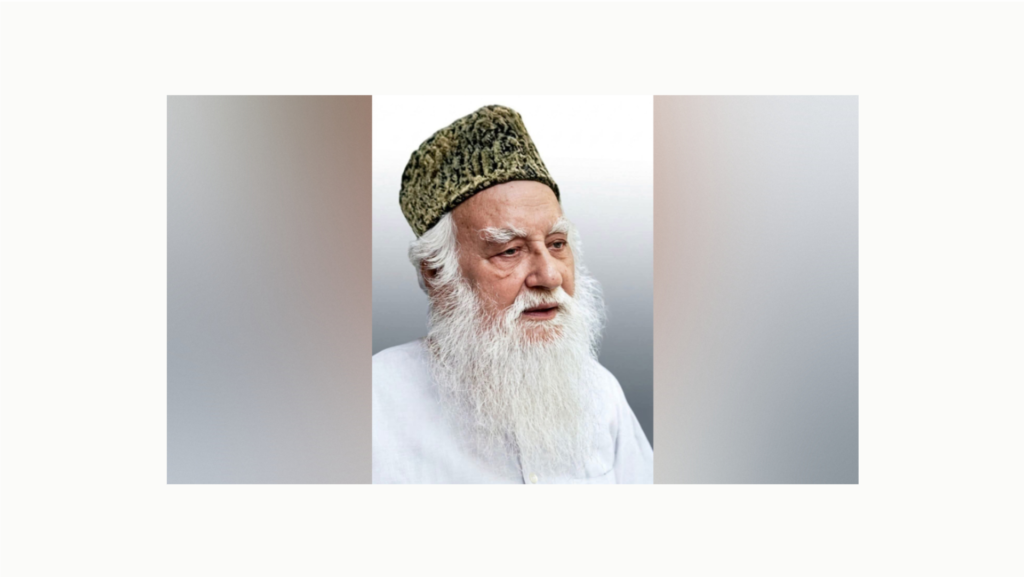
Bangladesh’s history is shaped by individuals whose lives represent far more than personal achievements or political accomplishments. Their contributions reflect struggles for freedom, justice, equality and the rights of ordinary people. Maulana Abdur Rashid Tarkabagish was one such uncompromising leader. From the anti-British independence movement and the historic Salanga uprising to peasant movements, the Language Movement, democratic struggles and the liberation of Bangladesh, he left an enduring mark on the country’s political history.
Born on 27 November 1900 in Tarutia village, in Ullapara upazila of Sirajganj, Maulana Abdur Rashid Tarkabagish belonged to a family with a religious and spiritual heritage. His father was Shah Syed Abu Ishaq and his mother was Azizunnesa. Although he grew up in an environment shaped by religious education and traditional values, he developed a strong sense of justice and an early determination to challenge exploitation and injustice. These convictions eventually made him one of the most prominent voices for the rights of ordinary people in the region.
An Early Commitment to People’s Rights
Tarkabagish’s activism began when he was still a young boy. At just 13, he organised local milk sellers to demand fair prices for their products. His initiative was directed against the exploitation practised by local moneylenders and influential traders. This early demonstration of leadership offered a glimpse of the political figure he would later become.
Although he had a strong desire for education and intellectual development, his involvement in the anti-British movement disrupted his conventional academic journey. He subsequently pursued religious studies at several institutions in India, including Deoband and Saharanpur.
His exceptional ability in logic, debate and religious argument earned him the title ‘Tarkabagish’, which reflected his reputation as a skilled debater and persuasive speaker. His intellectual abilities, combined with his political convictions, helped establish his standing among the people.
The Salanga Uprising: A Bloody Chapter in the Anti-British Movement
Whenever Maulana Abdur Rashid Tarkabagish’s name is mentioned, one of the most significant episodes associated with his life is the historic Salanga uprising of 27 January 1922.
The incident took place during a turbulent period of the Non-Cooperation Movement and the Khilafat Movement, when resistance against British colonial rule was spreading across the Indian subcontinent. Calls to boycott foreign goods and promote indigenous products had inspired widespread public participation. In Bengal, these movements encouraged ordinary people to challenge colonial authority and economic exploitation.
The movement reached Salanga Haat, a busy weekly marketplace in Sirajganj, where Tarkabagish played a leading role in organising anti-British resistance.
On 27 January, a large gathering assembled at the market as people participated in the campaign against foreign goods. Tensions escalated following confrontations with British police, attempts to suppress the gathering and arrests of activists. The situation eventually turned into a massacre when colonial police opened fire on the largely unarmed crowd.
The marketplace was transformed into a scene of bloodshed. Numerous people were killed or injured, although historical accounts differ over the precise number of casualties. Local recollections and accounts attributed to Tarkabagish himself refer to approximately 4,000 casualties.
The incident subsequently became known as the Salanga Uprising or the Salanga Massacre. It remains a significant example of the resistance mounted by ordinary people against British colonial oppression.
Tarkabagish was only 22 at the time. His leadership in the movement brought him into direct confrontation with the colonial administration, resulting in imprisonment. His willingness to risk personal freedom for the cause of independence and public rights established his place in the history of Bengal’s anti-colonial struggle.
Championing Peasants and the Economically Disadvantaged
Tarkabagish’s political activities extended well beyond the struggle against British rule. The economic freedom and social dignity of peasants, labourers and disadvantaged communities remained central to his political philosophy.
He consistently opposed the exploitation of farmers by landlords and moneylenders, the burden of agricultural debt and inequalities surrounding land ownership. He believed that political freedom would remain incomplete unless ordinary people were also freed from economic oppression.
In 1933, he organised a conference focusing on the rights of peasants and people burdened by debt. Four years later, in 1937, he demonstrated his determination by organising a peasant conference in Natore in defiance of Section 144, which restricted public gatherings.
He was actively involved in organising agricultural workers and farmers and subsequently served as the founding president of the East Pakistan Peasant Association. His political activities were driven by demands for fair treatment, the abolition of exploitative landlordism and the establishment of a society in which farmers could live with dignity.
His involvement in the Khilafat Movement, the Non-Cooperation Movement and various peasant struggles, including the Tebhaga movement, further strengthened his reputation as a leader committed to the interests of ordinary people.
A Courageous Voice During the Language Movement
The Language Movement of 1952 marked another important chapter in Tarkabagish’s political life.
On 21 February, police opened fire on students demonstrating in Dhaka for recognition of Bangla as one of Pakistan’s state languages. News of the killings reached the East Bengal Provincial Assembly, where Tarkabagish strongly opposed the continuation of parliamentary proceedings.
In protest against the actions of the Pakistani authorities, he walked out of the assembly, expressing solidarity with the students and the wider public movement.
His position was particularly significant because he was then associated with the ruling Muslim League. Despite being a member of the party, he refused to support its political position when it conflicted with the demands of the people.
He subsequently resigned from the Muslim League Parliamentary Party and moved a no-confidence motion against the government of Nurul Amin. His political activities during this period also led to his arrest.
Tarkabagish’s actions demonstrated that loyalty to a political party could never be more important than the fundamental rights of the people or the recognition of their mother tongue. His contribution remains an important part of the political history of the Language Movement.
Making History by Speaking Bangla in Pakistan’s Constituent Assembly
One of Tarkabagish’s most significant contributions to the struggle for linguistic recognition came on 12 August 1955.
On that day, he delivered a speech in Bangla at Pakistan’s Constituent Assembly while demanding recognition of the language as a state language. Speaking in his mother tongue within the country’s highest constitutional forum was a powerful political statement at a time when the language issue remained a major source of conflict between the two wings of Pakistan.
The Language Movement had already demonstrated the determination of the people of East Bengal to protect their linguistic identity. Students and ordinary citizens had sacrificed their lives for that cause in February 1952.
Tarkabagish’s decision to speak Bangla in the Constituent Assembly reflected the continuing struggle to establish the language’s rightful position within the state structure. It also reinforced his reputation as a political leader who was prepared to challenge institutional restrictions in defence of people’s cultural and linguistic rights.
Leadership of the Awami League
Tarkabagish was elected to the Bengal Legislative Council during the period of British rule. Following the partition of the subcontinent, he continued to play an important role in the politics of Pakistan.
In 1956, he was elected president of the Awami League, a position he held until 1967. His leadership coincided with a crucial period in the political development of East Pakistan, when demands for autonomy, democracy and equal political rights were gaining momentum.
Under his presidency, the Awami League continued to emerge as a major political force representing the aspirations of the people of East Bengal. The party became increasingly central to the movement for political and economic rights in the eastern wing of Pakistan.
Tarkabagish was known for his powerful speeches, sharp reasoning and uncompromising political positions. His public statements frequently reflected a combination of religious values, humanitarian principles, social justice and concern for the disadvantaged.
In the 1970 general election, he was elected as a member of Pakistan’s National Assembly as an Awami League candidate. The election represented a decisive moment in the political history of Pakistan, as the Awami League secured an overwhelming mandate in East Pakistan. Tarkabagish’s political experience and leadership formed part of the wider movement that ultimately paved the way for Bangladesh’s independence.
Supporting Bangladesh’s Liberation and Democratic Development
During the Liberation War of 1971, Tarkabagish supported the cause of independence and stood alongside the people fighting for freedom. The war marked the culmination of decades of political, linguistic, economic and cultural struggles against discrimination and authoritarian rule.
Following independence, he continued to demonstrate an active sense of responsibility towards the country. His interests extended to national reconstruction, education and the establishment of democratic values.
He also recognised the importance of developing madrasa education. He believed that religious education should be accompanied by modern knowledge and contemporary academic subjects so that students could prepare themselves for the changing demands of society.
In the years that followed, he remained sympathetic to democratic movements opposing military rule and authoritarianism. His commitment to public rights, democratic governance and a society free from exploitation continued throughout his later life.
A Writer and Intellectual Beyond Politics
Although Tarkabagish is primarily remembered for his political activities, he also maintained a strong interest in literature, history and intellectual pursuits.
His published works include Shesh Prerito Nabi, Satyarthe Bhramane, Islamer Swarnajuger Chhinna Prishtha, Samakalin Jibonbodh, Smritir Saikate Ami and Ismail Hossain Siraji.
These writings reflect his engagement with religious thought, historical events, social conditions and contemporary life. They also provide insight into his intellectual interests beyond the political arena.
His literary contributions demonstrate that his public life was not confined to political organisation and activism. He was also interested in examining society, history and human values through writing and reflection.
Death and an Enduring Legacy
Maulana Abdur Rashid Tarkabagish died in the early hours of 20 August 1986 at the then Postgraduate Hospital (PG Hospital) in Dhaka. His death marked the end of a remarkable life dedicated to political struggle, social justice and the rights of ordinary people.
Bangladesh lost a distinguished political figure whose involvement in the country’s history stretched from the anti-British independence movement to the Language Movement, the struggle for national liberation and the subsequent campaigns for democracy.
His life remains a reminder that history is not shaped exclusively by those who hold power. It is also shaped by individuals who challenge injustice, defend the rights of others and demonstrate courage during moments of national crisis.
From the blood-soaked grounds of Salanga to the streets of the Language Movement, from Pakistan’s Constituent Assembly to the struggle for an independent Bangladesh, Tarkabagish remained associated with some of the most significant political developments in the region’s history.
His greatest legacy lies in his unwavering belief that the rights of people, the dignity of their mother tongue, national freedom and social justice should never be compromised for political convenience.
Maulana Abdur Rashid Tarkabagish will be remembered as a leading figure of the historic Salanga Uprising, a courageous supporter of the Language Movement, an organiser of peasant struggles and an influential leader in Bangladesh’s national politics.
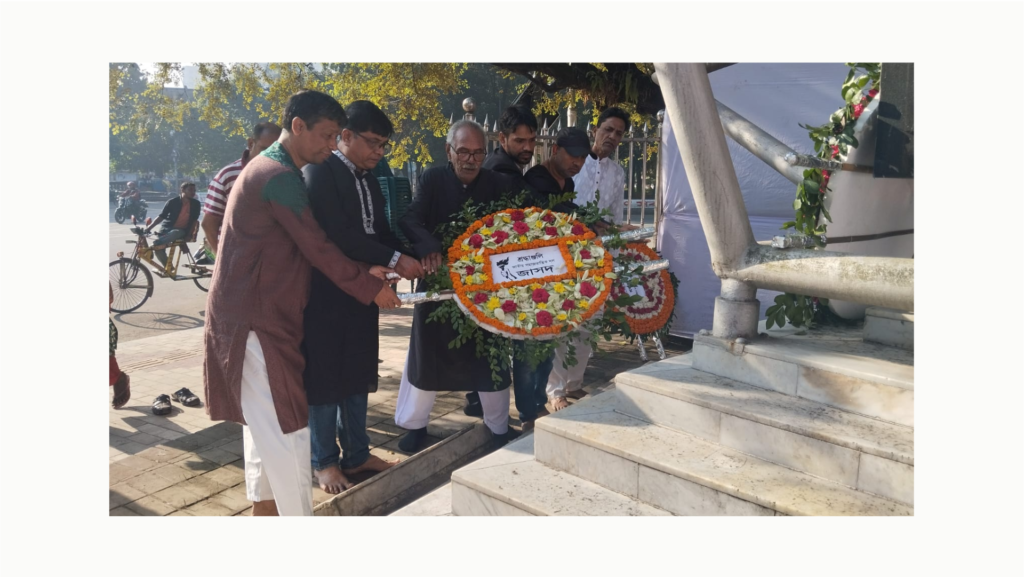
On the anniversary of his birth, the nation remembers his extraordinary contributions with profound respect and gratitude.