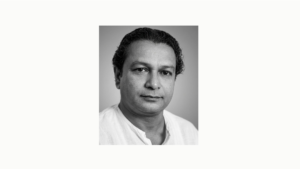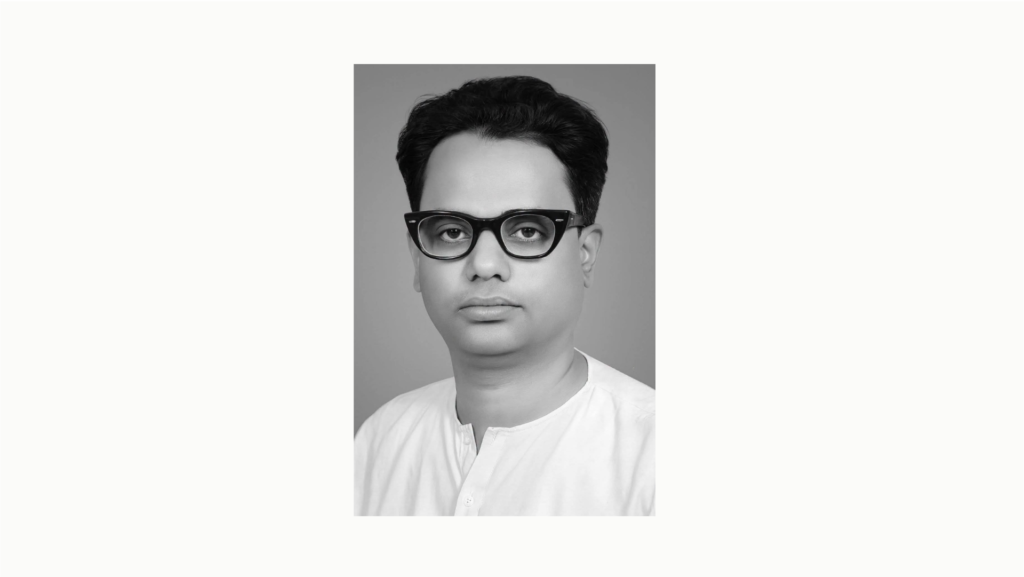
— Munier Chowdhury, Roktakto Prantor (Bloodied Battlefield)
Munier Chowdhury was a distinguished playwright, educationist, linguist, literary critic, translator and one of Bangladesh’s most celebrated intellectuals. His life and work left an enduring mark on Bengali literature, theatre, language and the country’s cultural identity. A committed participant in the Language Movement and a champion of progressive, secular ideals, he was also among the intellectuals abducted and killed during the final days of the 1971 Liberation War.
Born on 27 November 1925, in Manikganj, then part of Dhaka district, Abu Nayeem Mohammad Munier Chowdhury was the son of Khan Bahadur Abdul Halim Chowdhury, a district magistrate. He was the second among 14 siblings. His elder brother, Kabir Chowdhury, became a prominent educationist and writer, while his younger sister, Ferdousi Majumdar, established herself as a celebrated actress.
His ancestral home was in Gopairbagh village, Chatkhil, in Noakhali. From an early age, Munier Chowdhury displayed an exceptional intellectual aptitude, which would eventually lead him to become one of the most influential figures in Bengali literary and academic circles.
Academic excellence and a distinguished teaching career
Munier Chowdhury completed his matriculation from Dhaka Collegiate School in 1941 before pursuing higher education at Aligarh Muslim University. He subsequently graduated from the University of Dhaka with honours in English in 1946 and obtained his master’s degree in 1947.
His academic journey continued even during imprisonment. In 1954, while incarcerated for his political involvement, he completed a second master’s degree, this time in Bengali, securing first class and first position. His determination to pursue education despite the restrictions and hardships of prison demonstrated his extraordinary commitment to scholarship.
In 1958, he obtained a master’s degree in linguistics from Harvard University in the United States. His advanced studies in linguistics strengthened his understanding of language, literature and communication, contributing significantly to his later academic and literary work.
He began his teaching career at Brajalal College in Khulna, later moving to Jagannath College before joining the University of Dhaka. He taught in both the English and Bengali departments for more than two decades. In 1970, he was appointed professor, and in 1971, he became dean of the Faculty of Arts.
As a teacher, he was renowned for his intellectual depth, eloquence and ability to inspire students. His academic work extended beyond conventional teaching, encompassing literary criticism, linguistic research, translation and theatre.
A courageous voice in the Language Movement
Munier Chowdhury’s commitment to Bengali language and cultural identity was not confined to his academic work. He was actively involved in the Language Movement of 1952, which sought recognition of Bengali as one of the state languages of Pakistan.
On 21 February 1952, when police opened fire on students demonstrating for their linguistic rights in Dhaka, he protested against the killings. His opposition to the authorities led to his arrest and imprisonment.
The Language Movement became a defining moment in his life. It strengthened his conviction that language was inseparable from identity, dignity and political freedom. His subsequent literary works reflected this belief, often exploring oppression, resistance and the struggle for human rights.
His imprisonment, however, did not silence his creative voice. In 1953, while in jail, he wrote Kabar (The Grave), one of the most influential one-act plays in Bengali theatre.
The play portrays the brutality of political repression and the courage of people resisting injustice. Its symbolic language and dramatic intensity transformed the experiences of the Language Movement into a powerful theatrical statement.
Remarkably, Kabar was first staged inside the prison, with fellow inmates performing the roles. The prison that had been intended to suppress his protest became the birthplace of one of his most enduring literary works.
A pioneering figure in Bengali theatre
Munier Chowdhury is widely regarded as one of the leading figures in modern Bengali drama. His plays combined political consciousness, social realities, psychological conflict and human values, creating a distinctive literary style that continues to influence theatre practitioners.
Among his notable works are Kabar, Roktakto Prantor (Bloodied Battlefield), Chithi (The Letter), Dandakaranya, Palashi Barrack O Onnanno, Ek Tala Dui Tala, Keu Kichhu Bolte Pare Na and Mukhra Ramani Bashikaran.
His play Roktakto Prantor, written in 1959, is considered one of his finest works. Set against the backdrop of the Third Battle of Panipat in 1761, it explores the tragedy of war, the suffering of ordinary people, emotional conflict and the enduring importance of humanity.
Rather than glorifying military victory or religious divisions, the play draws attention to the human cost of conflict. It reflects his belief that compassion and human dignity should transcend communal identities and political boundaries.
His contributions to literary criticism were equally significant. Works such as Mir-Manas, Tulonamulak Samalochona and Bangla Gadya Riti demonstrate his analytical abilities and scholarly understanding of Bengali literature, prose style and linguistic expression.
He also translated foreign plays into Bengali and was involved in theatre, radio, television and film, extending his creative influence across several cultural platforms.
His contribution to Bengali language and technology
Munier Chowdhury’s achievements extended beyond literature and academia. In 1965, he developed a Bengali typewriter keyboard layout that became known as Munier Optima.
The keyboard arrangement was designed to make Bengali typing more efficient and practical. At a time when adapting regional languages to mechanical technology posed considerable challenges, his innovation represented an important step towards modernising Bengali typing.
His work remains a notable chapter in the history of Bengali language technology, reflecting his belief that the language should evolve alongside changing technological demands.
Standing against cultural repression
Munier Chowdhury was a progressive thinker who strongly opposed communalism and cultural repression. In 1967, when the Pakistani authorities sought to restrict the broadcasting of Rabindra Sangeet on radio and television, he joined the protest against the move.
The controversy reflected broader attempts by the Pakistani ruling establishment to undermine Bengali cultural identity. Munier Chowdhury regarded such restrictions as an attack on the language, heritage and artistic freedom of the people of East Pakistan.
In March 1971, he expressed solidarity with Bangabandhu Sheikh Mujibur Rahman’s non-cooperation movement, which mobilised the people of East Pakistan against Pakistani rule.
He also rejected the Sitara-i-Imtiaz, a prestigious state honour conferred upon him by the Pakistani government in 1966. In 1971, he returned the award, demonstrating that national freedom and cultural dignity mattered more to him than official recognition.
Abduction and martyrdom in 1971
As Bangladesh’s Liberation War approached its final victory in December 1971, the Pakistani military and its local collaborators carried out a systematic campaign to eliminate the country’s leading intellectuals.
On 14 December, one of the darkest days in Bangladesh’s history, Munier Chowdhury was abducted from his residence in Dhaka. Historical accounts identify members of the Al-Badr militia as responsible for taking him away.
He was never seen again, and his body was not recovered.
His disappearance was part of a calculated effort to destroy the intellectual, cultural and academic leadership of the emerging nation. Writers, teachers, doctors, journalists and other professionals were targeted in an attempt to leave the country deprived of the people who could help shape its future.
Munier Chowdhury’s death deprived Bangladesh of an exceptional scholar, playwright, linguist and educator. Yet the ideas he championed, the works he created and the principles for which he stood survived the violence.
Awards and recognition
His literary and cultural contributions earned him several prestigious honours during his lifetime and after his death.
-
1962: Bangla Academy Literary Award.
-
1965: Daud Prize.
-
1966: Awarded the Sitara-i-Imtiaz by the Pakistani government, which he later returned in 1971.
-
1980: Posthumously awarded the Independence Award, Bangladesh’s highest civilian honour.
-
1989: The theatre organisation Theatre introduced the Munier Chowdhury Memorial Award in his honour, recognising excellence in the country’s theatrical community.
These recognitions reflect the lasting significance of his contributions to literature, education and cultural development.
An enduring legacy
Munier Chowhury’s life offers a powerful lesson in intellectual courage and social responsibility. He believed that education was not merely a means of acquiring knowledge but also a responsibility to society. His writing challenged injustice, his scholarship enriched Bengali intellectual traditions, and his activism reflected an unwavering commitment to linguistic and cultural freedom.
The famous line from Roktakto Prantor — “People decay when they die; while alive, they change, for reasons or without reason” — continues to resonate because it captures the complexities of human nature and the changing realities of society.
On 27 November 2026, Bangladesh commemorates his 101st birth anniversary. Although his life lasted only 46 years, the depth of his intellectual achievements, creative works and political courage continues to inspire generations.
His martyrdom is also remembered on 14 December, Martyred Intellectuals Day, when the nation honours those who were killed in the final phase of the Liberation War. Their sacrifice remains a reminder of the devastating consequences of attempts to silence knowledge, culture and independent thought.
Munier Chowhury remains immortal in the history of Bengali language, literature, theatre and Bangladesh. His life was a testament to the power of ideas, the courage of conviction and the enduring value of human dignity.
On his 101st birth anniversary, the nation pays its deepest tribute to this remarkable playwright, educationist, linguist and martyred intellectual whose legacy continues to illuminate Bangladesh’s cultural and intellectual landscape.