A measles outbreak in Bangladesh is placing a heavy financial burden on affected households, with a large majority forced to borrow money to cover treatment-related expenses, according to a joint assessment by the Bangladesh Red Crescent Society (BDRCS) and the International Federation of Red Cross and Red Crescent Societies (IFRC).
The assessment found that around 89 per cent of families surveyed had taken on debt to meet the cost of treatment. Another 61 per cent had been compelled to use their savings, leaving many households with little financial cushion to cope with further medical or household expenses.
The findings were based on interviews with 2,746 families receiving care at 12 government medical colleges and district hospitals. The assessment was conducted to understand the social and economic consequences of the measles outbreak and to identify families requiring financial assistance.
Children accounted for the overwhelming majority of patients covered by the survey. Around 75 per cent of the patients were aged below four, while 19 per cent were between five and 17 years old. Patients aged 18 or above represented the remaining 6 per cent.
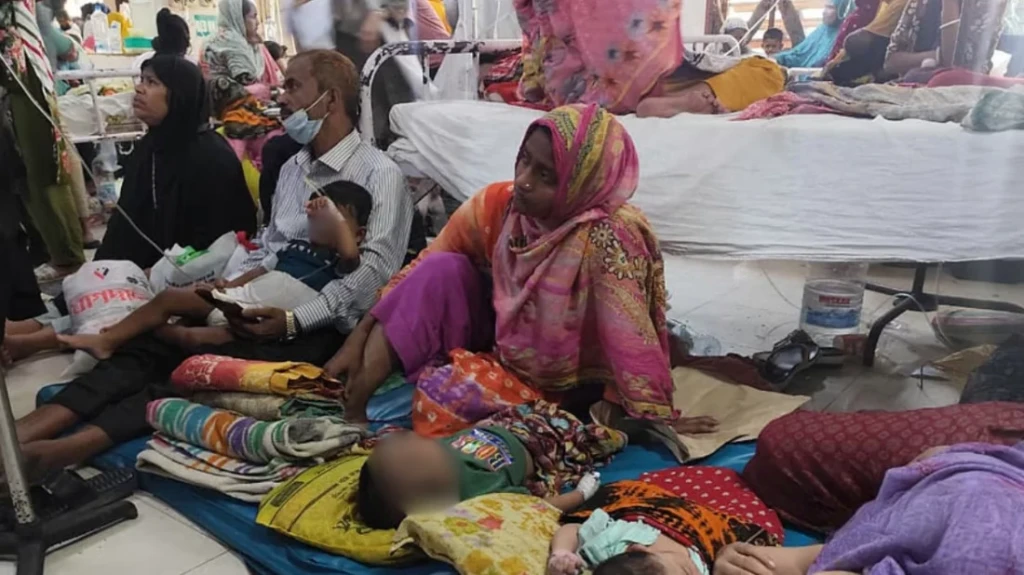
On average, each affected family spent about Tk 16,000 on medical treatment and related costs. Although treatment at government facilities may be provided without direct charges in many cases, families often face substantial additional expenses, including transport, medicines, diagnostic tests, food and accommodation for accompanying relatives.
The financial strain has pushed some households towards more severe coping measures. About 4 per cent of families reported selling assets to pay for treatment, while nearly 3 per cent relied on donations.
The economic impact has also extended beyond direct medical bills. Many family members had to remain in hospitals for prolonged periods to care for sick children or relatives, resulting in lost income and, in some cases, the loss of employment. Among families that provided occupational information, 78 per cent were engaged in informal-sector work, with monthly household incomes generally ranging between Tk 6,000 and Tk 20,000. For households dependent on daily wages or irregular earnings, prolonged hospital stays can quickly turn a health emergency into a wider financial crisis.
All families participating in the assessment said they needed financial support to manage the situation. Medicines were identified as the most urgent need by 35 per cent of households. Another 33 per cent sought assistance with water, sanitation and hygiene (WASH), while 22 per cent identified food support as a priority.
The experience of Hazera Khatun, from Rangpur, illustrates the pressure faced by families dealing with severe illness. She travelled to Dhaka in June with her 11-month-old daughter for treatment at Shaheed Suhrawardy Medical College Hospital. By then, the family had already spent more than Tk 70,000 on the child’s care.
Although treatment was available at a government hospital, Khatun said the associated expenses had become overwhelming. The family reportedly spent about Tk 20,000 simply to travel to Dhaka by ambulance, while daily food costs, medical tests and other necessities continued to add to the financial burden.
She said she had already borrowed money from relatives. Her husband, who works in Saudi Arabia, had also not received his salary that month, further worsening the family’s financial difficulties.
Based on risk criteria developed through the assessment, the organisations plan to provide emergency cash assistance of Tk 10,000 each to 2,400 of the most severely affected households. The initiative is intended to help families meet immediate needs and reduce the pressure to sell assets or take on additional debt.
BDRCS Secretary-General Kabir M Ashraf Alam said the assessment demonstrated that the outbreak had created a dual crisis for many households, combining health risks with significant financial hardship. He said emergency cash assistance was being provided to the most vulnerable families, alongside awareness activities within communities.
IFRC Head of Delegation in Bangladesh Alberto Bocanegra said the consequences of the measles emergency were reaching beyond hospital wards. Families caring for sick children or other relatives were facing serious financial constraints, he said, underscoring the need for both humanitarian assistance during public-health emergencies and stronger social protection mechanisms.
The findings also highlight the wider importance of prevention during infectious disease outbreaks. Treatment costs can place an especially heavy burden on low-income families, while prolonged illness may reduce household earnings at the same time that expenses increase. In such circumstances, timely vaccination and effective public-health communication remain critical tools for reducing both the health and economic consequences of disease.
With support from the IFRC and other partners, the Bangladesh Red Crescent Society is assisting the government’s nationwide measles vaccination campaign. More than 1,000 Red Crescent volunteers are also working at community level to raise awareness, support vaccination centres and encourage people to receive vaccines.
The assessment suggests that the response to the measles outbreak must extend beyond medical treatment alone. For vulnerable households, protecting health also means helping them avoid falling deeper into debt, losing essential assets or sacrificing their livelihoods while caring for sick family members.