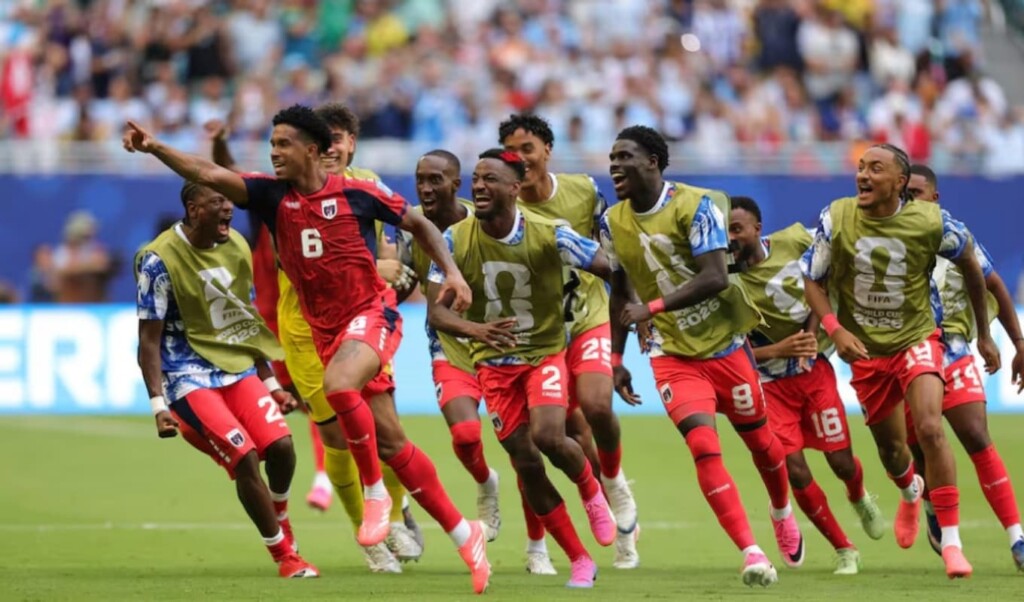
The Group H fixture between Uruguay and World Cup debutants Cape Verde at the Hard Rock Stadium established a unique milestone in international football. The match drew significant attention well before kickoff due to the demographics of the two competing countries, setting an outright tournament record for the lowest combined population between two opposing nations in the history of the FIFA World Cup.
The total collective population of both nations is estimated at approximately 3.9 to 4 million people. Uruguay, who lifted the trophy in 1930 and 1950, holds a prestigious footballing pedigree that stands in stark contrast to its domestic population of just under 3.5 million. Conversely, the African island nation of Cape Verde is participating on the world stage for the very first time. The country has a population of only 530,000, with roughly 120,000 residents living within the capital city of Praia.
First-Half Drama
Going into the match, both teams had a single point each in Group H, trailing group leaders Spain, who sit on four points following a 4-0 defeat of Saudi Arabia. Cape Verde, buoyed by a previous draw against the Spaniards, opened the scoring in sensational fashion.
In the 21st minute, Cape Verdean defensive midfielder Kevin Pina struck a ferocious direct free-kick from outside the penalty area to make it 1-0. The goal was Cape Verde’s first-ever strike at a World Cup. It additionally marked the first time in history that Uruguay had conceded a goal from a direct free-kick at a World Cup tournament, with their last such concession in a major competition occurring 19 years prior against Venezuela in the 2007 Copa América. Pina also became only the third African footballer to score via a direct free-kick in World Cup history.
Uruguay responded late in the half. In the 44th minute, an aerial ball into the penalty box caused an awkward challenge between two opposing players. Neither could make a clean connection, sending the ball against the post. Uruguayan midfielder Maximiliano Araújo reacted quickest to the rebound, slotting the ball home to equalise.
Uruguay struck again six minutes into first-half stoppage time. Midfielder Agustín Canobbio met a teammate’s header with a deft flick of his foot, guiding the ball past the keeper to give the South Americans a 2-1 lead at the break.
Varela Capitalises on Defensive Blunder
Cape Verde fought back tenaciously in the second half, finding their equaliser in the 61st minute courtesy of a severe defensive breakdown between Uruguayan defender Mathías Olivera and goalkeeper Fernando Muslera.
Olivera failed to clear the ball effectively, whilst Muslera had strayed significantly away from his goal line. Hélio Varela anticipated the error, took swift control of the loose ball, and launched a precise long-range shot into the vacant net to level the score at 2-2. The goal was Varela’s first international strike for his country.
The hard-fought draw successfully keeps Cape Verde’s hopes of progressing to the second round alive, concluding a historic encounter for the tournament newcomers.
Key Match Timeline and Demographics
| Category | Match Information & Statistics |
| Match Venue | Hard Rock Stadium |
| Uruguay Population | Just under 3.5 million |
| Cape Verde Population | Approximately 530,000 |
| Group H Context | Spain leads group with 4 points (beat Saudi Arabia 4-0) |
| 21st Minute | Goal: Kevin Pina (Direct free-kick) — Cape Verde 1-0 |
| 44st Minute | Goal: Maximiliano Araújo (Rebound strike) — Uruguay 1-1 |
| 45+6 Minute | Goal: Agustín Canobbio (Foot-flick) — Uruguay 2-1 |
| 61st Minute | Goal: Hélio Varela (Long-range strike) — Cape Verde 2-2 |