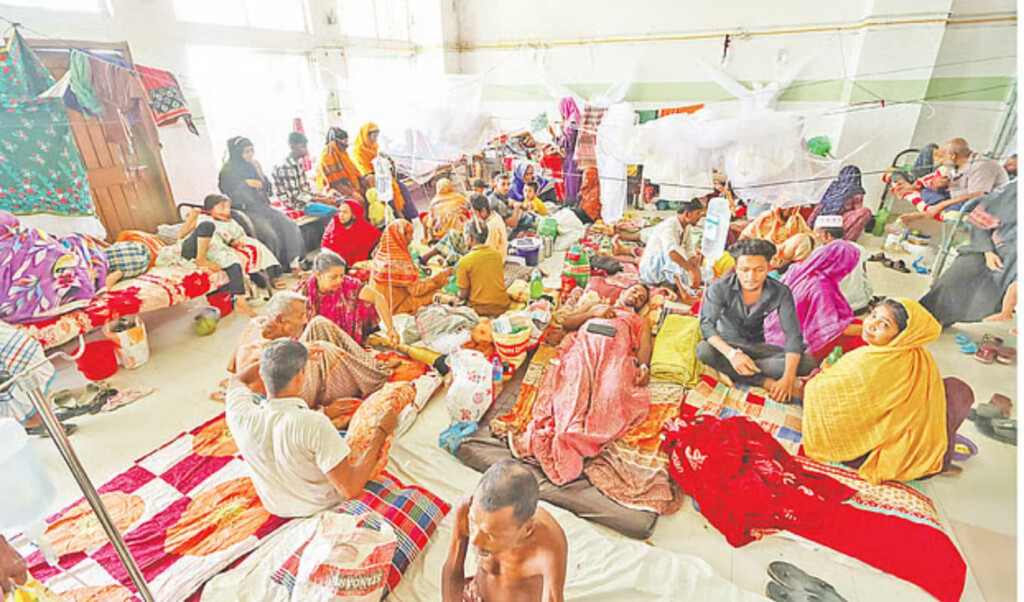
The death of ten-year-old Sudipta Chakma in Rangamati last July has highlighted the growing threat of mosquito-borne diseases in Bangladesh. After nearly a decade without fatalities, malaria has once again claimed lives in the hilly regions, alarming public health officials and signalling a broader resurgence of such illnesses nationwide.
According to district health authorities, malaria had previously been under control in Rangamati. However, the recent deaths have renewed concerns. In 2025, malaria-related deaths reached the highest number recorded in nine years, underscoring the country’s vulnerability to renewed outbreaks.
Four Major Mosquito-Borne Diseases
Bangladesh is currently contending with four principal mosquito-borne diseases: dengue, malaria, Zika, and chikungunya. While dengue and malaria have long been endemic, Zika and chikungunya have shown a marked increase since 2024. Once largely confined to urban areas, these diseases are now spreading into rural regions where healthcare facilities remain scarce.
| Disease | Mosquito Vector | Current Trend |
|---|---|---|
| Dengue | Aedes | Year-round spread |
| Malaria | Anopheles | Re-emergence in border regions |
| Zika | Aedes | Increasing cases |
| Chikungunya | Aedes | Rapid urban and rural expansion |
Climate Change and Mosquito Growth
Experts identify climate change as a key factor in rising mosquito populations. Research shows that mosquitoes reproduce most efficiently between 26°C and 30°C—conditions increasingly prevalent in Bangladesh.
| Climate Factor | Recent Change | Impact on Mosquitoes and Disease |
|---|---|---|
| Temperature | Gradual increase | Higher reproduction rates |
| Rainfall | Irregular and heavy rains | Increased standing water |
| Winter | Warmer than before | Extended breeding season |
Scientific reviews confirm that fluctuations in temperature, rainfall, and humidity directly influence mosquito lifecycles and disease transmission.
Malaria Resurgence
Although Bangladesh made substantial progress in reducing malaria over the past decade, the disease has not been eliminated. In 2025, sixteen deaths were reported, many among the Rohingya population. Experts warn that cross-border movement and the potential spread of drug-resistant malaria from Myanmar could exacerbate the situation.
Diagnostic challenges have also emerged. Genetic mutations in the malaria parasite are causing false negatives in rapid diagnostic tests, making early detection particularly difficult in remote areas lacking laboratory facilities.
Dengue as a Year-Round Threat
Dengue has evolved into a year-round disease affecting populations across the country. In 2023, Bangladesh recorded one of the highest dengue fatality rates globally, accounting for over a quarter of worldwide deaths. The financial burden is equally severe, with households spending an average of 19,000 taka per dengue case, often pushing families into debt.
Rising Concerns: Zika and Chikungunya
Zika virus, first detected in 2014, has re-emerged in recent years, posing significant risks, particularly for pregnant women due to birth defects. Chikungunya, though rarely fatal, causes severe joint pain and long-term disability. In 2025, thousands of cases were reported in Chattogram, indicating a re-emergence of the disease.
Emerging Threats
Experts warn that new mosquito species and diseases could appear soon. The prevalence of Culex mosquitoes raises concerns about Japanese encephalitis and West Nile virus, both capable of severe neurological damage.
Urgent Action Required
Public health specialists emphasise the need for immediate intervention. Strengthened mosquito control programmes, improved urban planning, and robust healthcare infrastructure are essential to counter this growing threat.
Without decisive action, mosquito-borne diseases could become the most serious public health challenge facing Bangladesh in the coming years.