Israeli Prime Minister Benjamin Netanyahu has raised the prospect of further military action against Iran, declaring that he and US President Donald Trump remain committed to bringing down the Iranian government. His remarks have renewed concerns about a possible escalation of hostilities in the Middle East, where tensions remain high following months of military confrontation.
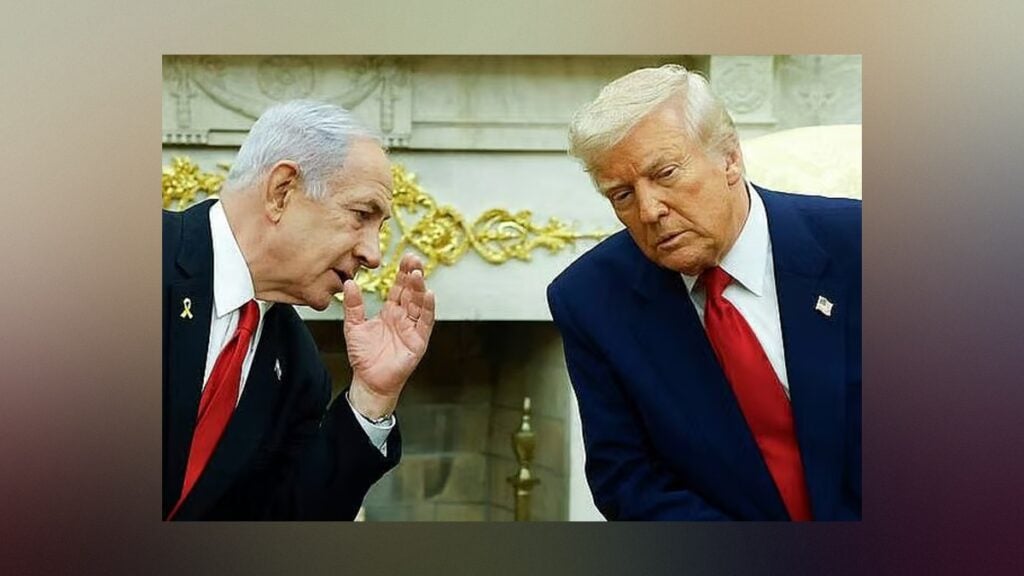
Netanyahu said he had discussed fresh initiatives aimed at removing Iran’s leadership during a conversation with Trump on Sunday. The Israeli leader indicated that the issue had featured repeatedly in their discussions, suggesting that Washington and Tel Aviv continue to coordinate their positions on Tehran.
The latest statements come against the backdrop of a conflict that began on 28 February, when the United States and Israel launched military strikes against Iran. Tehran responded by attacking targets in Israel and American military installations across several Middle Eastern countries.
The confrontation quickly extended beyond the immediate battlefield. Iran effectively closed the Strait of Hormuz, a strategically important maritime passage through which substantial volumes of the world’s oil and liquefied natural gas are transported.
The disruption triggered uncertainty in international energy markets, contributing to volatility in global fuel prices and raising concerns about the security of vital shipping routes.
Although the conflict has continued without a formal conclusion, Netanyahu’s latest comments have heightened speculation about the possibility of another round of military operations against Iranian targets.
In a statement addressing his discussions with the American president, Netanyahu reaffirmed his government’s determination to pursue political change in Tehran.
“We are committed to bringing down the Iranian regime. I have discussed this with President Trump many times, including yesterday,” Netanyahu said.
His remarks suggested that the removal of Iran’s current leadership remains a central objective in his discussions with Washington. However, the Israeli prime minister did not provide details of any proposed military operation, its potential timing or the measures being considered.
It therefore remains unclear whether his comments indicate preparations for imminent strikes or are intended to increase political and military pressure on Tehran.
The statements coincided with an unannounced visit to Israel by US Defence Secretary Pete Hegseth, who held discussions with Netanyahu on Monday.
The meeting focused on Iran and wider regional security concerns, reinforcing the significance of military cooperation between the two allies at a particularly sensitive moment.
Doron Spielman, a spokesman for the Israeli prime minister, confirmed that the discussions took place at Ovda Air Base in Israel’s southern Negev desert.
Speaking to Reuters, Spielman said Netanyahu and Hegseth had examined the US-Israeli partnership in addressing regional threats, including cooperation on both offensive and defensive military strategies.
The discussions reflected the importance both governments attach to coordinating their security policies amid continuing instability in the region.
Israel and the United States maintain extensive defence cooperation, particularly in intelligence sharing, military planning and systems designed to counter aerial threats. Such cooperation has become especially significant as the confrontation with Iran has raised concerns about missile attacks, regional military installations and the security of strategic infrastructure.
Nevertheless, Israeli officials did not disclose whether the meeting produced any specific agreement concerning additional military action against Iran.
The Pentagon, meanwhile, made no public comment on Hegseth’s unannounced visit or his discussions with the Israeli prime minister.
The absence of an official American statement leaves questions about Washington’s immediate intentions and whether the discussions could lead to further military measures.
The wider implications of renewed hostilities would extend well beyond Israel and Iran. Any additional disruption to shipping through the Strait of Hormuz could affect international energy supplies, maritime trade and the economies of countries dependent on imported oil and gas.
The strategic importance of the waterway means that developments involving Iran are closely connected to global energy security. Prolonged uncertainty over its accessibility can influence shipping costs, supply expectations and international commodity markets.
For Middle Eastern countries hosting American military facilities, the possibility of renewed confrontation also raises concerns about further retaliatory attacks and the risk of a broader regional conflict.
Netanyahu’s latest warning, combined with the US defence secretary’s unexpected visit, has brought renewed attention to the direction of American and Israeli policy towards Tehran.
While the Israeli leader has openly reiterated his commitment to removing Iran’s government, neither country has publicly announced a timetable or confirmed operational plans for another offensive.
For now, the prospect of renewed military action remains uncertain. The next steps taken by Washington and Tel Aviv, alongside Tehran’s response, could prove decisive in determining whether the confrontation intensifies or moves towards a negotiated settlement.