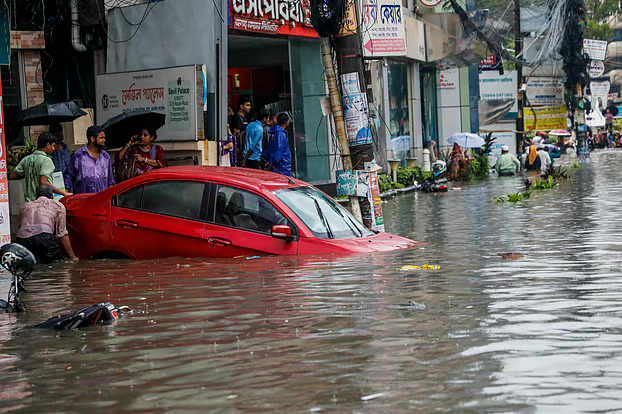
The Prime Minister has expressed deep regret over the severe waterlogging that has left residents of Chattogram city facing significant hardship, acknowledging the scale of disruption caused by persistent urban flooding. Speaking in Parliament on Wednesday, he apologised on behalf of the government and assured citizens that efforts are underway to resolve the crisis as quickly as possible.
Responding to a point of order raised by Member of Parliament Saeed Al Noman, representing Chattogram-10, the Prime Minister described the situation as one of extensive and prolonged water accumulation that has overwhelmed parts of the city. He noted that while immediate relief may take time, the administration is actively working to restore normal conditions.
“I sincerely express my regret to all citizens of Chattogram who are suffering due to this situation. We are doing everything possible to help them recover from this hardship as quickly as we can,” he stated in Parliament.
He further remarked that the severity of flooding in Chattogram was not an isolated incident, but part of a broader national challenge affecting several urban centres, including the capital. Even in Dhaka, he noted, rainfall frequently leads to significant water stagnation, reflecting a long-standing infrastructural problem.
The Prime Minister also referred to historical drainage and water management initiatives, noting that earlier large-scale excavation of canals and creation of water reservoirs had once helped mitigate flooding and waterlogging. He indicated that the current government has revived similar programmes, with renewed efforts already underway in several locations.
A key concern highlighted during the session was the role of unregulated waste disposal in worsening drainage congestion. Plastic bags, bottles, and other non-biodegradable materials frequently clog drains and canals, undermining cleaning and excavation work within days of completion.
Key Factors Behind Urban Waterlogging
| Factor | Description |
|---|---|
| Drain blockage | Accumulation of plastic waste and solid garbage |
| Poor drainage capacity | Outdated or insufficient urban drainage systems |
| Unplanned urbanisation | Reduced natural water flow due to construction |
| Heavy rainfall | Increasing intensity of seasonal monsoon rain |
| Maintenance gaps | Recurrent re-clogging after cleaning operations |
The Prime Minister stressed that while government-led initiatives such as canal excavation and drain cleaning are ongoing, long-term success depends heavily on public awareness and behavioural change. He urged Members of Parliament to take an active role in educating citizens about responsible waste disposal and reducing the use of plastic products such as bottles and polythene bags.
He added that sustained civic discipline and stronger public engagement could significantly reduce the recurrence of such urban flooding. According to him, without community cooperation, even extensive government interventions are likely to offer only temporary relief.
Earlier in the session, MP Saeed Al Noman described the worsening conditions in Chattogram, stating that large areas of the city were submerged and daily life had been severely disrupted. He called for urgent and effective measures to permanently address the chronic waterlogging problem affecting the port city.