Patients admitted to the Sherpur Upazila Health Complex in Bogura endure punishing heatwaves during power outages, as the facility’s standby generator remains idle due to a complete lack of fuel allocations.
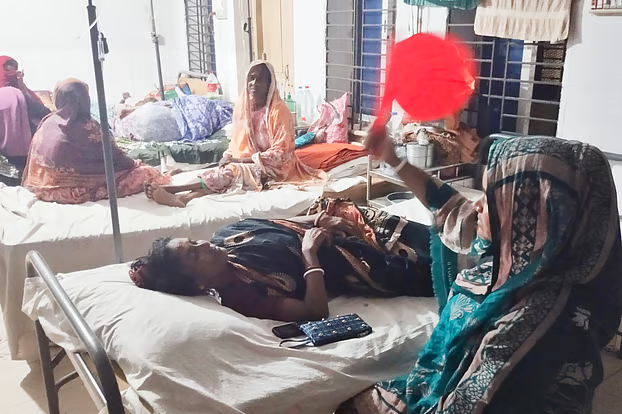
During a recent evening visit between half-past seven and half-past eight, conditions inside the men’s and women’s wards were intensely humid and stifling. The moment mains electricity fails, the ceiling fans grind to a halt, plunging the wards into sweltering darkness and discomfort. Relatives of the sick resort to manual labour, frantically waving palm leaf fans and plastic hand fans to cool suffering patients.
Up to eight o’clock that evening, the fifty-bed health complex was housing fifty-six patients across its primary wards. When blackouts strike, this overcrowding exacerbates the misery, hitting vulnerable individuals suffering from respiratory illnesses, fevers, and post-operative complications particularly hard.
Abdus Samad, a fifty-year-old resident of Gopalpur village, was admitted to bed forty-four in the men’s ward suffering from acute breathing difficulties. When the power cut hit, the stagnant heat aggravated his condition, prompting his wife, Champa Begum, to tirelessly fan him to keep his breathing steady until exhaustion overtook her as well. Describing the ordeal, she noted that power failures frequently stretch past an hour or two, turning the ward into an unbearable pressure cooker and draining her own physical strength.
Other patients and their visiting families echo these frustrations, pointing out that nighttime outages prove far more punishing than daytime disruptions. While nursing staff manage to illuminate the wards using backup energy-saving bulbs during blackouts, the infrastructure lacks any mechanism to keep the cooling fans operational for general patients.
Administrative records indicate that the facility maintains limited resilience. The emergency department utilizes an Instant Power Supply system to keep select lights and fans running, while the operating theatre possesses a dedicated generator reserved strictly for surgical interventions.
This infrastructure shortfall contrasts sharply with the institution’s notable administrative standing. The Sherpur Upazila Health Complex secured the top position nationwide in healthcare service standards in both 2024 and 2026. Yet, despite holding national recognition for excellence, the hospital cannot routinely operate its main generator for patient wards simply because fuel funding does not exist.
Addressing the crisis, Upazila Health and Family Planning Officer Amirul Islam acknowledged the administrative bottleneck, confirming that while the hardware is installed on-site, zero financial provision exists for diesel or petrol. He noted that if a regular fuel supply were officially sanctioned and delivered, authorities could immediately resolve the suffering by powering the ward fans during outages.