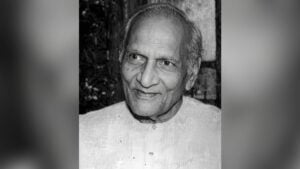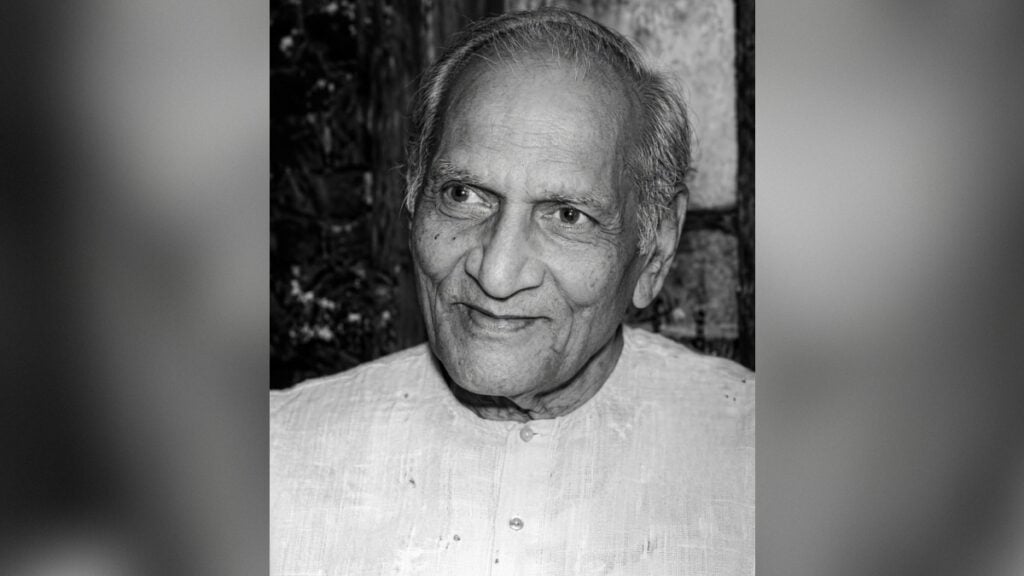
When talking pictures made their momentous debut in British India during the early 1930s, few could have anticipated how profoundly music would come to define the subcontinent’s cinematic identity. At the heart of this transformative movement stood Rai Chand Boral, a composer whose extraordinary aesthetic vision and technical ingenuity fundamentally reshaped the landscape of South Asian film score composition. Often hailed as the father of Indian cinema music, Boral was not merely a prolific composer; he was an innovator who introduced playback singing, sophisticated orchestrations, and seamless atmospheric background scoring to an industry in its infancy.
Born on 19 October 1903 in Calcutta (now Kolkata), Rai Chand was raised in an environment saturated with artistic excellence. His father, Lal Chand Boral, was an accomplished classical vocalist of immense repute, ensuring that the young Rai Chand was immersed in North Indian classical traditions from a tender age. He underwent rigorous training under revered masters of the Rampur and Gwalior gharanas, mastering both vocal forms and instruments like the tabla. This formidable classical grounding laid the bedrock for his future musical experiments.
In 1927, Boral joined the Indian Broadcasting Company in Calcutta, taking charge of musical programming during the pioneering days of radio transmission. This experience proved invaluable, giving him an acute understanding of acoustic delivery, sound engineering, and audience taste. When the talkie era dawned shortly thereafter, his transition to cinema was natural. Joining the famed New Theatres studio under the stewardship of foresightful leaders like B.N. Sircar, Boral embarked on a journey that would redefine film music forever.
His initial landmark came with the 1931 Bengali talkie Dena Paona, but his most enduring technological breakthrough arrived a few years later. In the early days of sound films, actors were required to sing live on set while concealed musicians played alongside them. This created immense logistical headaches, severely constraining camera movement and degrading audio quality. Working closely with director Nitin Bose and audio technician Mukul Bose, Boral pioneered the technique of pre-recording vocals and matching them to actors lip-syncing on set. First deployed on a grand scale in the 1935 Hindi feature Dhoop Chhaon (released in Bengali as Bhagyachakra), this breakthrough birthed the playback system. It liberated actors from vocal demands and allowed professional vocalists to take centre stage behind the mic, establishing the operational template that Indian cinema relies upon to this day.
Boral’s keen ear for talent also reshaped the star system itself. He was instrumental in mentoring and cultivating the legendary Kundan Lal Saigal, tailoring melodies that harnessed Saigal’s unique vocal texture and catapulted him to national stardom. Songs like Balam Aaye Baso More Man Mein from Devdas (1935) and Ek Bangla Bane Nyara from President (1937) became timeless classics, blending classical poise with accessible, deeply touching lyricism. He forged similarly stellar collaborations with iconic singer-actresses like Kanan Devi, blending ghazals, thumris, kirtans, and Western orchestral arrangements using sitars, violins, and cellos.
Over a celebrated career spanning decades, Boral provided memorable compositions for groundbreaking films including Chandidas (1932, 1934), Street Singer (1938), Sapera (1939), Udayer Pathe (1944), and Shree Chaitanya Mahaprabhu (1953). In recognition of his foundational contributions to Indian cinema, he was conferred with the Dadasaheb Phalke Award—the nation’s highest cinematic honour—in 1978, along with the Sangeet Natak Akademi Award.
Rai Chand Boral passed away in Kolkata on 25 November 1981 at the age of 78. Decades after his death, his legacy endures in every silver-screen melody, proving that his pioneering spirit paved the way for generations of music directors who followed in his footsteps.