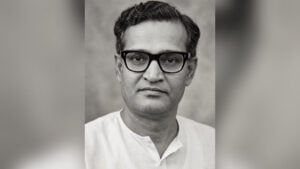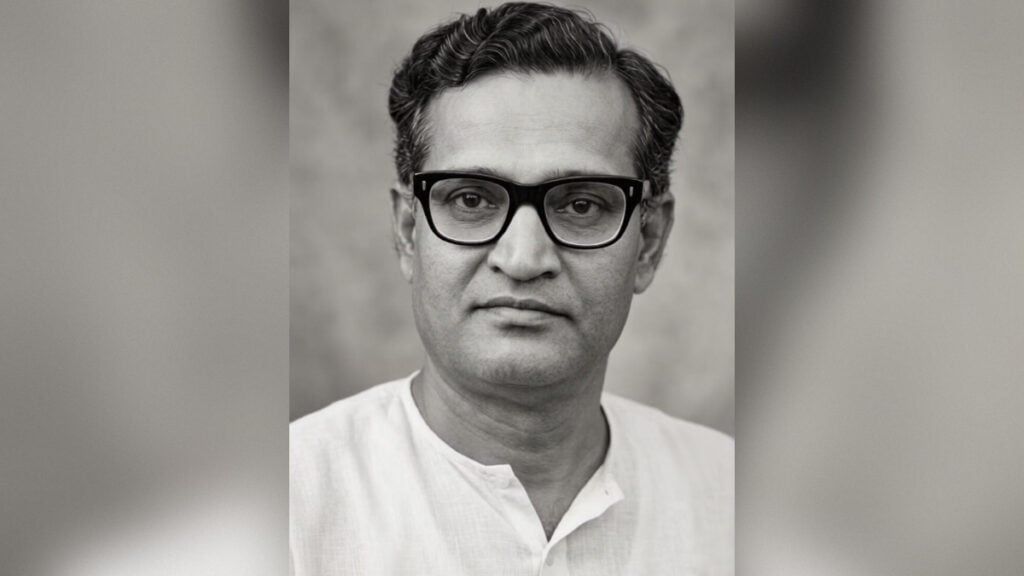
Barrister Snehasangshukanta Acharya was born into privilege but devoted his life to causes far removed from the comforts of his aristocratic upbringing. A distinguished Bengali lawyer, left-wing politician, humanitarian and committed democratic activist, he became known for standing with ordinary people and defending principles of justice and civil rights.
Acharya was born on 1 September 1913 into the prominent royal family of Mymensingh. He was the youngest son of Maharaja Shashikanta Acharya Chowdhury. His birth gave him access to considerable wealth, social standing and influence. Yet those privileges did not define the course of his life. Instead, he gradually turned towards political and social questions affecting workers, disadvantaged communities and ordinary citizens.
After completing his BA at Scottish Church College in Calcutta in 1936, Acharya travelled to London to study for the Bar. His years in Britain proved significant in shaping his political outlook. He became acquainted with progressive political circles and developed a growing interest in the lives and struggles of working people. During this period, he also played an important role in introducing Jyoti Basu, who later became Chief Minister of West Bengal, to senior figures in the Communist Party of Great Britain.
His experience in London marked a decisive change in his outlook. Despite coming from a royal household, Acharya increasingly identified himself with movements seeking greater social and political rights for ordinary people. When he returned to India in 1940, he joined the legal profession at the Calcutta High Court while becoming actively involved in the communist movement.
For Acharya, law was more than a profession. He regarded it as an instrument through which the rights of vulnerable and marginalised people could be defended. His legal career therefore developed alongside his political activities, placing him at the intersection of courtroom advocacy and wider struggles for democratic rights.
In 1946, the British authorities expelled him from Mymensingh. The region was then facing the devastating consequences of communal violence. Acharya became involved in relief and humanitarian efforts, working to assist people affected by the unrest. His response reflected his broader political outlook, which placed humanitarian concerns above divisions of religion, community and social class.
In 1947, he was elected to the provincial committee of the Communist Party of India. His political activities continued after independence, but they also brought severe personal consequences. Because of his political beliefs, he spent many years in detention without trial, remaining in prison until 1963. The prolonged period of imprisonment became one of the defining chapters of his life.
Acharya later recorded his experiences in prison in English. His prison memoir was subsequently translated into Bengali and published under the title Jelkhana Diary, or Jailhouse Diary. The work offers an account of political imprisonment, personal hardship, isolation and the determination required to remain committed to one’s convictions under difficult circumstances.
Following the division within the Communist Party, Acharya joined the Communist Party of India (Marxist). He also served as a member of the state legislative assembly for six years, combining his political responsibilities with an established career in law.
His contribution to the legal profession was particularly significant. In 1957, he was among the organisers of the Afro-Asian Lawyers’ Conference. The following year, in 1958, he became the first general secretary of the All-India Democratic Lawyers’ Association. These roles reflected his continuing interest in connecting the legal profession with wider questions of democracy, rights and social justice.
Acharya also held one of the most important constitutional legal offices in West Bengal. During the second United Front government, he became the state’s first Advocate General. When the Left Front came to power in 1977, he was appointed Advocate General once again and continued in the position until his death. His long experience as a barrister and his involvement in public affairs gave him a distinctive place in the state’s legal and political life.
His family connections also linked him closely with Bengal’s political and cultural circles. Acharya married Supriya Mukherjee, one of the prominent women leaders of the Communist Party. Through his marriage, he became the son-in-law of writer Sourindramohan Mukherjee and the brother-in-law of noted Rabindra Sangeet singer Suchitra Mitra.
Education and philanthropy formed another important part of his legacy. Acharya donated land that helped pave the way for the establishment of Jadavpur University. The land was transferred through a deed for a nominal price of just one rupee, reflecting his willingness to put personal property towards a wider educational purpose.
Acharya’s life was marked by a striking contrast between his origins and his chosen path. He was born into a royal family, yet he did not build his public identity around wealth or privilege. Instead, he became associated with the rights of ordinary people, democratic politics and the use of law as a means of seeking justice.
His years in prison tested his commitment to his political beliefs, while his legal career brought him to some of the highest offices in West Bengal’s legal establishment. Across these very different phases of his life, his public activities remained closely connected to questions of justice, political freedom and social responsibility.
Barrister Snehasangshukanta Acharya died on 27 August 1986, aged 72. His death brought to an end a life that had spanned the final years of British rule, the upheavals surrounding independence and several decades of political and legal change in India.
His legacy rests not simply on his aristocratic birth, his political career or his standing as a barrister. It lies in the choice he made to place public service above inherited privilege. In the courtroom, he pursued the cause of justice; in politics, he worked for democratic rights; and during years of imprisonment, he remained committed to his convictions.
For a man born into royalty, his most enduring distinction was perhaps that he chose to be remembered not as a prince of privilege, but as an advocate for people.