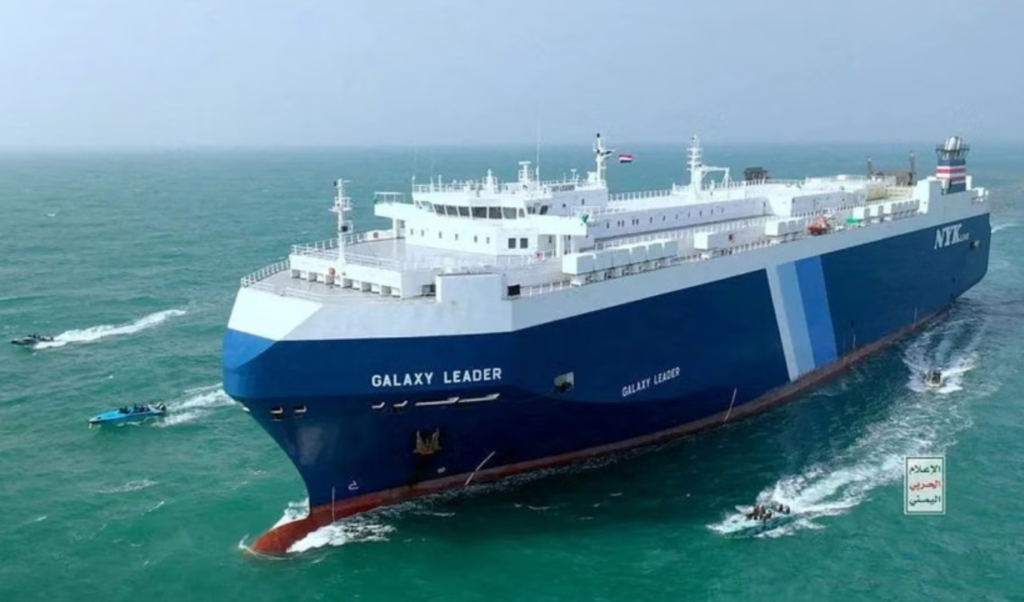
Two supertankers carrying Saudi crude oil bound for China and India abruptly reversed course in the Red Sea following explicit naval blockade threats issued by Yemen’s Iran-backed Houthi forces. The vessels—the Jin Long Yang and the Rhodos—altered their trajectories near the Bab el-Mandeb Strait, turning back toward the Suez Canal to avoid entering high-risk waters.
According to a report by British news agency Reuters, the standoff comes amid an existing closure of the Strait of Hormuz driven by broader regional conflicts involving Iran, the United States, and Israel. The emerging obstruction along the primary alternative shipping corridor through the Red Sea has raised fresh alarms over potential supply shocks across global energy markets.
The navigational shifts follow a formal maritime blockade declaration issued by Houthi authorities against Saudi Arabia. In emails dispatched to various international shipping firms, the group warned commercial operators against loading or discharging cargo at any Saudi port, cautioning that non-compliant vessels could be targeted anywhere within range of their military arsenal.
Ship-tracking data confirms that the Jin Long Yang, loaded with 2 million barrels of crude bound for China after departing Saudi Arabia’s Yanbu port, alongside the Rhodos, carrying approximately 700,000 barrels headed for India, both turned away from Bab el-Mandeb toward the Suez Canal. Additionally, a third tanker, the New Prime, which was originally heading to load crude at Yanbu, altered its course off the coast of Oman.
With Houthi forces holding positions along the coast of the strategic choke point, maritime war risk insurance premiums for Red Sea transit have surged. British maritime security firm Ambrey advised operators managing vessels calling at or departing from Saudi ports to re-evaluate their Red Sea routing strategies.
Maritime analysts warn that bypassing the Bab el-Mandeb Strait forces commercial vessels into lengthy detours around the Suez Canal, the Mediterranean, or Africa’s Cape of Good Hope to reach Asian markets, adding several weeks to transit times per shipment. As global energy distribution chains face heightened friction, this fresh maritime blockade risks placing further strain on the global economy.