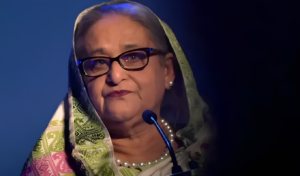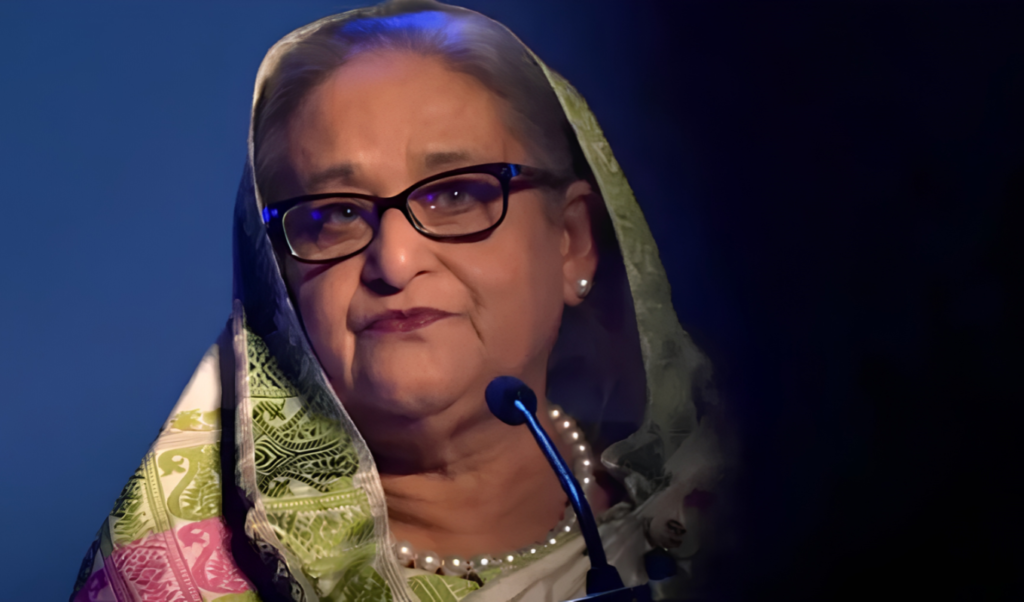
A fresh wave of intense debate has swept across Bangladeshi social media following revelations that ousted former Prime Minister Sheikh Hasina has formally applied for a new passport and National Identity Card (NID) to prepare for her return to the country. According to a letter seen by Reuters, the application was lodged on Monday, 9 November, through her London-based legal representatives at the Bangladesh High Commission in New Delhi. The report has reignited public discussions surrounding the legalities of issuing travel documents to a convicted fugitive, her potential extradition, and the broader political fallout of her return.
Lawyers from the London-based firm Matrix Chambers directed the formal request to Priti Rahman, the Acting High Commissioner at the Bangladesh High Commission in New Delhi. Citing reports that the interim administration and relevant state authorities had cancelled Sheikh Hasina’s previous passport and NID, her legal team requested immediate administrative steps to issue fresh documents. The letter emphasised her entitlement based on Bangladeshi nationality and urged swift processing under international human rights frameworks. Associates of the former prime minister indicated that she intends to return to Bangladesh to face judicial proceedings, adding that a specific date for her arrival would be announced once formal procedures are concluded.
The news triggered immediate commentary from prominent political figures, former government officials, and legal analysts. Writing under the title “Sheikh Hasina’s Mistake”, former interim government adviser Asif Nazrul argued that by requesting a passport, she has implicitly acknowledged that an environment for fair trial exists in Bangladesh. However, he stressed that as a convicted fugitive whose extradition has been formally requested by Dhaka, she does not require a passport to return. He noted that Indian authorities could simply arrest and hand her over, adding that her request undercuts claims of politically motivated prosecution. Echoing this legal perspective, senior journalist Anis Alamgir pointed out that under the Bangladesh Passport Order 1973, the government has no obligation to issue a passport to a convicted criminal or individual facing arrest warrants. Instead, the state can issue a one-way travel permit specifically designed to facilitate a fugitive’s return to face justice.
Reactions from key figures within the student movement and the administration were equally sharp. Nahid Islam, convener of the National Citizens Party (NCP), posted calls on his verified social media page for the execution of her sentence and the prosecution of her party, using campaign hashtags associated with the uprising. Fellow NCP leader and former interim adviser Asif Mahmud Sajib Bhuiyan remarked sarcastically that no passport would be required for her return, suggesting she would instead be brought back in custody. Meanwhile, interim government press secretary Shafiqul Alam observed that the former leader had acted prematurely, claiming that administrative and diplomatic mechanisms under Home Minister Salahuddin Ahmed and Minister of State for Foreign Affairs Humayun Kabir had already prepared for such contingencies, effectively blunting expectations surrounding her planned return.
Sheikh Hasina fled to India on 5 August 2024 amidst a massive public uprising. In November 2025, Bangladesh’s International Crimes Tribunal sentenced her to death in absentia for ordering lethal operations against student-led protests. While she continues to deny the charges from her exile in India, the latest application for travel documents has placed her legal status and the mechanics of her potential return at the centre of national attention.