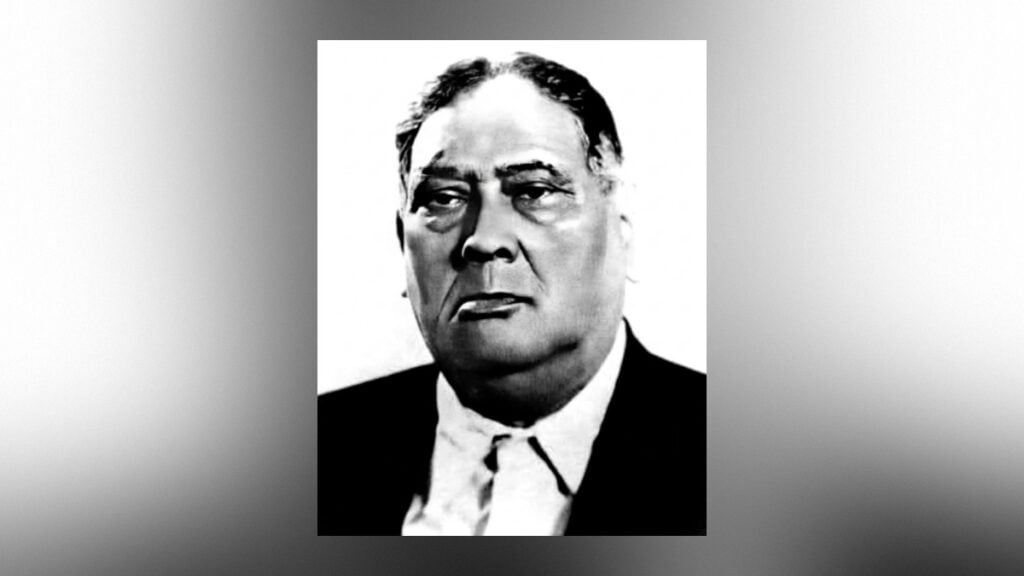
Known affectionately as ‘Huq Sahib’, he earned a special place in the hearts of farmers, tenants and disadvantaged communities. His political stature was recognised by generations of prominent leaders, including Sheikh Mujibur Rahman, Huseyn Shaheed Suhrawardy and Maulana Abdul Hamid Khan Bhashani.
For millions of people, Sher-e-Bangla represented the hope that political leadership could serve the interests of ordinary citizens rather than remain confined to the corridors of power.
Early Life, Education and Professional Career
Abul Kasem Fazlul Huq was born on 26 October 1873 in Saturia village, in what is now Barishal District, Bangladesh. His father, Muhammad Wazed, was a lawyer. From an early age, Fazlul Huq demonstrated exceptional intellectual ability and a strong commitment to education.
He pursued higher studies at Presidency College in Calcutta, where he distinguished himself academically. He obtained a postgraduate degree in mathematics and subsequently studied law. After earning his Bachelor of Law degree in 1897, he began practising as a lawyer.
He later joined the government service and worked as a deputy magistrate. However, disagreements with the colonial administration and its policies eventually led him to leave government employment and return to legal practice.
Although his professional career began in the courtroom, his ambitions extended well beyond the legal profession. He increasingly turned his attention to the social and economic problems confronting Bengal’s population. His understanding of the difficulties faced by ordinary people helped shape his political outlook and ultimately established him as a leading advocate for the disadvantaged.
Rise to Prominence in Indian Politics
During the early decades of the 20th century, Fazlul Huq emerged as a prominent figure in the political landscape of British India. He played an important role in the political developments surrounding the establishment of the All-India Muslim League in Dhaka in 1906, an organisation that would later become central to the movement for Pakistan.
In 1913, he was elected to the Bengal Legislative Council, marking an important stage in his political career. He subsequently served as president of the All-India Muslim League from 1916 to 1921. He was also associated with the Indian National Congress and served as its general secretary during 1918–1919.
His involvement in different political organisations reflected the complexity of the period. He advocated the educational, political and economic advancement of Muslims while also engaging with broader questions concerning constitutional reform, representation and relations between religious communities.
Fazlul Huq was associated with the political negotiations that culminated in the Lucknow Pact of 1916, an agreement between the Congress and the Muslim League concerning constitutional reforms and political representation.
His political journey was shaped by changing circumstances, competing interests and shifting alliances. Yet one concern remained central to his public life: the need to give disadvantaged communities a stronger voice in political decision-making.
A Champion of Peasants and Tenant Farmers
The struggle for the rights of peasants and tenants was the defining feature of Sher-e-Bangla’s political career. During British rule, Bengal’s rural economy was marked by widespread poverty, indebtedness and inequalities in land ownership. Many cultivators worked under oppressive landholding arrangements, while moneylenders charged debts that could leave farming families struggling for generations.
Despite producing the crops on which the rural economy depended, many peasants had little financial security. Poor harvests, mounting debts and exploitative arrangements could threaten their livelihoods and force families to surrender their land or property.
Fazlul Huq recognised that Bengal could not achieve meaningful progress without improving the economic conditions of its rural population. He made agrarian reform a central political priority, seeking to reduce the burden of debt and protect cultivators from exploitation.
In 1936, he established the Krishak Praja Party, or Peasants and Tenants Party, to organise rural communities and represent their interests in provincial politics. The party provided a political platform for groups whose concerns had often been overshadowed by the interests of landlords and established elites.
His efforts gained considerable momentum following the Bengal provincial elections of 1937. He became the premier of Bengal, taking office at a time when the province faced significant economic and social challenges.
His government sought to address rural indebtedness and reform the relationships between cultivators, landlords and creditors. Among its important initiatives were the Bengal Agricultural Debtors Act and legislation dealing with moneylending in 1938. Debt settlement mechanisms, including debt settlement boards, were established to help resolve disputes and ease the financial pressure on indebted farmers.
These measures represented significant attempts to address long-standing problems in Bengal’s rural economy. Although agrarian reform faced practical difficulties and competing political interests, the initiatives reflected Fazlul Huq’s conviction that the state had a responsibility to protect vulnerable sections of society.
For him, politics was not simply a means of acquiring office. It was a responsibility to improve people’s lives, reduce social inequality and provide a measure of security to those who had long endured economic hardship.
The Lahore Resolution and the Partition of Bengal
One of the most consequential moments in Fazlul Huq’s political career came on 23 March 1940, when he presented the Lahore Resolution at the annual session of the All-India Muslim League in Lahore.
The resolution called for the establishment of independent states in the Muslim-majority zones of north-western and eastern India. It subsequently became a major political foundation for the movement that led to the creation of Pakistan in 1947.
Fazlul Huq’s role in presenting the resolution secured his place in the history of the subcontinent’s political transformation. However, his relationship with the Muslim League and other political organisations was not always straightforward. Differences over policy, leadership and political strategy repeatedly influenced his decisions.
The final years of British rule brought difficult questions about Bengal’s future. As negotiations over independence and partition intensified, Fazlul Huq supported the idea of a united Bengal rather than its division along religious lines.
His position reflected the province’s complex social, economic and cultural connections, which extended across the communities that had lived together for generations. Nevertheless, Bengal was partitioned in 1947. West Bengal became part of India, while East Bengal joined Pakistan.
The division transformed the political geography of Bengal and had far-reaching consequences for its people. Families, communities and economic networks were disrupted, while the new international boundary reshaped political and cultural relationships between the two regions.
The partition remains one of the most consequential episodes in the history of Bengal, and Fazlul Huq’s position on the question forms an important part of his political legacy.
The Language Movement and the United Front Victory
Following the partition, Fazlul Huq continued to play a prominent role in the politics of East Bengal. The new political order brought growing tensions over representation, economic disparities and the recognition of Bengali identity.
Language soon became a central issue. The demand to recognise Bengali as a state language reflected a broader struggle for cultural dignity and political rights among the people of East Bengal. Fazlul Huq became associated with the political forces advocating greater recognition of Bengali interests.
A major turning point came in the provincial elections of 1954, when the United Front achieved a decisive victory against the ruling Muslim League. The coalition brought together political groups united by their opposition to the existing provincial administration and their demands for greater autonomy and recognition of the rights of the people of East Bengal.
Fazlul Huq became chief minister of East Bengal following the victory. His long political experience, reputation as a champion of rural communities and enduring popular appeal contributed to his standing within the province.
The election represented more than a change of government. It demonstrated the strength of public dissatisfaction with the existing political order and the growing demand for a system that reflected the aspirations of the Bengali-speaking population.
The United Front’s victory also illustrated how questions of language, economic justice and regional autonomy had become closely connected in East Bengal’s political life.
However, the new administration faced significant challenges amid tensions with the central government of Pakistan. The political instability of the period limited the scope for sustained provincial governance and underscored the difficulties confronting leaders seeking greater autonomy within the Pakistani state.
Later Responsibilities and Final Years
Fazlul Huq continued to hold important public positions in the years that followed. He served in Pakistan’s central government and was appointed governor of East Pakistan in 1956, a position he held until 1958.
His career spanned several distinct political eras: British colonial rule, the movement towards independence, the partition of the subcontinent and the early years of Pakistan. Few political figures of his generation experienced such dramatic changes in the constitutional and political structure of the region.
Throughout these transitions, his reputation remained closely connected to his advocacy for peasants and ordinary citizens. His political career also included disagreements, changing alliances and controversial decisions, reflecting the intense rivalries and competing ambitions that characterised the period.
Sher-e-Bangla died in Dhaka on 27 April 1962, aged 88. He was buried in the Mausoleum of Three Leaders, near the Dhaka University area, alongside other prominent political figures of Bengal’s history. His resting place remains an important historical landmark and a reminder of the political struggles that shaped the region.
A Legacy That Continues to Resonate
Sher-e-Bangla A. K. Fazlul Huq was a multifaceted public figure: a lawyer, political organiser, legislative leader and advocate for agrarian reform. His contribution to Bengal’s history cannot be understood solely through the offices he held or the political organisations he joined. His lasting significance lies in the way he brought the concerns of rural communities into the centre of political debate.
His efforts to address peasant indebtedness and challenge exploitative rural arrangements reflected an understanding that economic development must include those who produce a society’s wealth. For generations of farmers and tenants, his leadership offered a powerful example of political representation grounded in their everyday struggles.
His legacy, however, is not without complexity. His political alliances changed over time, and some of his decisions remain subjects for historical discussion. A balanced assessment of his life must recognise both his achievements and the limitations imposed by the political realities of his era.
Even so, his influence on the political development of Bengal remains undeniable. He helped establish agrarian concerns as a major issue in provincial politics and demonstrated how electoral mobilisation could give disadvantaged communities a stronger voice.
His life continues to offer lessons about social justice, public accountability and the responsibilities of political leadership. The questions that shaped his career — fair treatment for farmers, access to education, economic security and the rights of ordinary citizens — remain relevant to contemporary society.
The title ‘Sher-e-Bangla’ was more than an honorific. It came to symbolise the affection and trust he earned among the people whose interests he sought to represent.
As Bengal remembers his birth anniversary on 26 October, tribute is paid to a leader whose life was closely intertwined with the aspirations and struggles of its people. His name endures in the region’s collective memory as that of a champion of farmers, a friend of the common people and a determined advocate for the rights of the disadvantaged.