Khaborwala International Desk
Published: 28 Nov 2025, 08:30 am
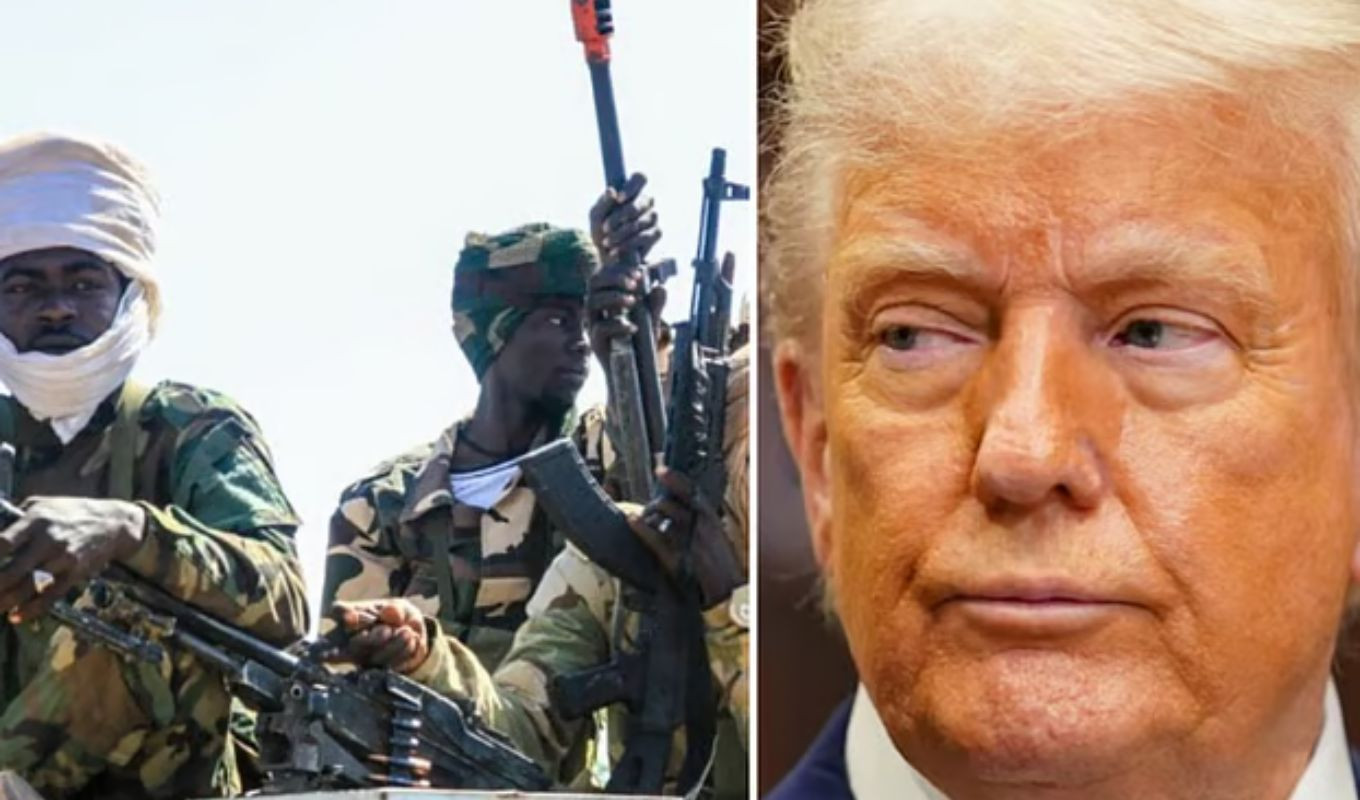
Following Saudi Arabia’s Crown Prince Mohammed bin Salman’s recent visit to Washington, the issue of Sudan’s civil war has once again appeared on the agenda of US President Donald Trump.
The White House had already expressed interest in Sudan’s complex situation, particularly the ongoing conflict between the Sudanese Armed Forces (SAF) and the Rapid Support Forces (RSF) since April 2023. However, the crown prince’s visit appears to have strengthened that interest further.
For the United States, the Red Sea is a highly significant national security zone. Counterterrorism efforts and the push for regional stability have shaped their strategic priorities accordingly.
Earlier, the White House warned that the war in Sudan poses a direct threat to US national security. The US State Department has been working actively to pave the way for peace. As part of this initiative, multiple rounds of discussions have taken place, leading to a recent effort by the so-called ‘Quad’—the United States, Saudi Arabia, Egypt and the United Arab Emirates—to halt the conflict.
Last week, Trump commented that Sudan’s war was not initially on his “agenda”, but he took it seriously following a request from the crown prince. The remark does not indicate any major strategic shift; rather, it appears to be a diplomatic courtesy gesture.
This presents an opportunity for Mohammed bin Salman to position himself more prominently as a regional leader and peace mediator on whom Washington can rely regarding Middle Eastern affairs. It also reflects Trump’s endorsement of Saudi-led diplomacy and his interest in promoting peace globally.
Following Trump’s remarks, US engagement on the Sudan issue has intensified. On Friday, US Secretary of State Marco Rubio spoke with UAE Foreign Minister Sheikh Abdullah bin Zayed, signalling deeper American involvement and ongoing coordination with Quad partners.
The United Nations has repeatedly stated that Sudan is facing one of the world’s worst humanitarian crises. Earlier intervention could have saved many lives. For example, the recent RSF takeover of El Fasher might have been prevented, avoiding widespread atrocities against civilians. Severe shortages of food and clean water, destruction of essential infrastructure and mass displacement have worsened the humanitarian catastrophe.
Globally, Sudan’s conflict is often referred to as a “forgotten war”, as major powers deprioritise the issue. While Trump’s involvement may temporarily draw international attention, it is likely to fade again over time.
Sudan’s Sovereign Council, led by President Abdel Fattah al-Burhan, immediately welcomed Saudi Arabia’s initiative and responded positively to Trump’s comments.
Although they had indirectly rejected the Quad’s proposal for a humanitarian ceasefire in recent weeks, their position now appears to have shifted. This may stem from the renewed significance of the peace process under Trump’s oversight or from assurances on potential internal consequences of accepting US mediation.
Meanwhile, the RSF welcomed America’s involvement but accused those “controlling the army’s decisions” of obstructing the path to peace. They also highlighted the need to address the root causes of the crisis.
What happens next remains uncertain. It would be wrong to assume that the Saudi-Trump understanding will fundamentally alter the framework previously developed and supported by the White House for the Quad. However, Trump’s involvement may accelerate implementation of any agreements.
Significant challenges remain on Sudan’s path to peace. Groups benefiting from the conflict may resist any settlement. Even if a ceasefire holds, it may only be temporary and could collapse once political negotiations begin.
Trump’s involvement carries dual implications: it may strengthen political influence within the country, but it may also tie Sudan’s future to global geopolitical bargaining.
Although Burhan’s reaction signals a window of opportunity for peace, achieving lasting success requires genuine implementation, an inclusive Sudanese-led transition and concrete assurances.
If the moment is used wisely, Sudan may move towards a civilian-led future; otherwise, the opportunity risks turning into yet another tragedy.
Osama Abuzayd
Researcher and Coordinator, Grassroots and Human Security Project
Taken from Middle East Eye, abridged from English
Khaborwala/TSN

> Fire Breaks Out Aboard Moored Luxury Launch
> Madaripur Hunger Strike Over Alleged Marriage Dispute
> Legal Notice Demands Disclosure of Bribery Allegation Names
> Iran Warns of Costly War Against US Ground Forces
> UAE Prepares Military Role in Hormuz Strait Push
> Seven Arrested Over Robbery Plot in Narayanganj
> Former Child Star Simrin Lubaba Marries Spiritual Transformation
> Chattogram Court Hands Nine Life Sentences
> Dhaka Raid Nets Liquor Worth Tk 70 Lakh in Kafrul
> Father’s Poison Attack Leaves Two Sons Critical, Alive
> Woman Dies Waiting For Doctor During Lunch Break
> Bangladesh Faces Energy Constraints Amid Global Crisis
> Dhaka Launches Week-Long Drive Against Street Encroachments

A legal notice has been issued to Member of Parliament (MP) Mufi Amir Hamza, demanding that he publi...
Iran has issued a stark warning that any United States-led ground invasion would face overwhelming a...
The United Arab Emirates (UAE) is reportedly undergoing a significant strategic shift in response to...
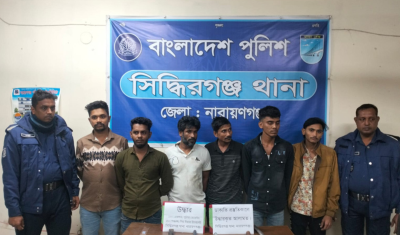
Police in Narayanganj have arrested seven individuals during a special overnight operation on suspic...

Rail communication between Sylhet and the rest of Bangladesh has been completely suspended after a f...

Spanish football sensation Lamine Yamal has issued a strong public condemnation following the emerge...
A sudden and concerning rise in measles infections has been reported in Manikganj, where 14 children...

Global commercial insurance premiums are projected to reach approximately $1.4 trillion in 2025, sig...

The outlook for Sompo Japan Insurance Inc. remains stable, though execution risks linked to its rece...

A growing number of Australians are expressing regret over delaying private health insurance, as pre...

Popular singer and songwriter Arzin has returned with a strikingly original musical release that ble...
An Islamic preacher accused of promoting extremist rhetoric and antisemitic views has been deported...


Availabe for iphone & ipads

Available in google play
 বাংলা
বাংলা