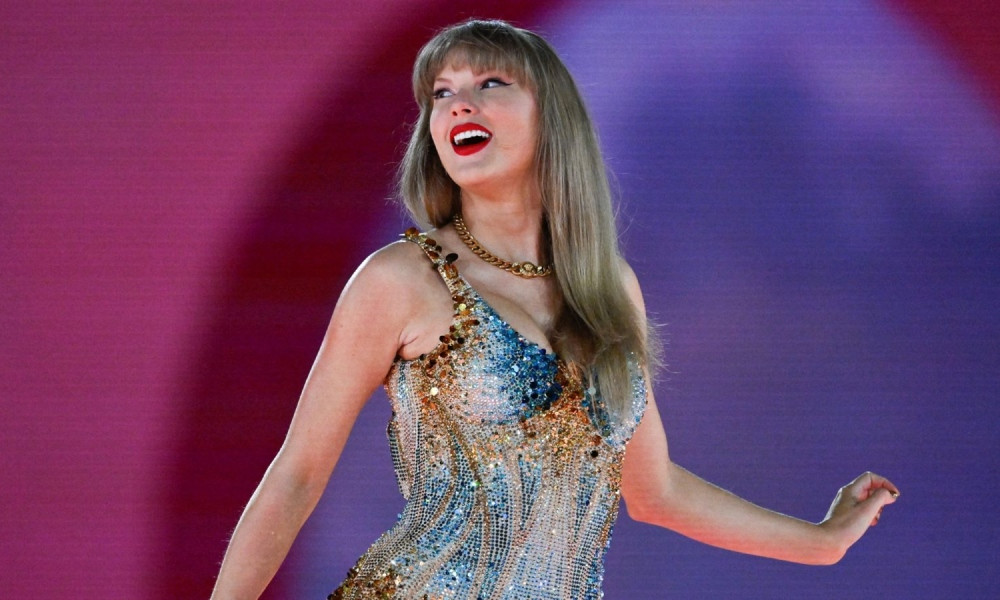
Taylor Swift has taken legal steps to safeguard her voice and likeness amid growing concerns over the misuse of artificial intelligence in the entertainment industry. The American pop star has filed applications to trademark aspects of her vocal identity and physical image, aiming to strengthen protections against unauthorised digital replication.
According to filings submitted on Friday, 24 April, to the United States Patent and Trademark Office, Swift’s company lodged three separate applications. The move follows a similar strategy previously adopted by actor Matthew McConaughey, who secured trademark protection for his well-known phrase “Alright, alright, alright!”
The decision comes at a time when AI-generated content is increasingly capable of reproducing celebrities’ voices and appearances with alarming accuracy. In recent years, Swift herself has been targeted by such technology, including the circulation of AI-generated explicit images and the use of manipulated visuals resembling her in political propaganda.
Her legal team argues that formalising trademark protection could provide a stronger basis for legal action against such misuse. While personal identity elements are not typically covered under trademark law, her lawyers believe this approach may help establish clearer grounds in federal court cases involving AI-generated impersonation. In practical terms, it would allow Swift to pursue claims similar to those used by film studios protecting copyrighted characters and franchises from unauthorised reproduction.
The strategy reflects a broader shift in how public figures are responding to AI-related risks, particularly in industries where voice and image are central to commercial value.
Swift is currently also involved in separate legal proceedings concerning intellectual property. Artist Maren Wade has alleged that Swift’s 2025 album The Life of a Showgirl infringes upon an existing trademark held by Wade. That dispute remains ongoing and has not yet reached a resolution.
Summary of Trademark Filings
| Filing | Subject | Purpose | Intended Legal Benefit |
|---|---|---|---|
| Application 1 | Vocal identity | Prevent AI voice replication | Strengthen claims against deepfake audio |
| Application 2 | Physical likeness | Restrict image misuse | Legal basis for image-based AI impersonation cases |
| Application 3 | Combined identity rights | Broader brand protection | Support federal litigation against digital imitation |
Legal experts suggest that such filings may become increasingly common as AI tools evolve and blur the line between authentic and synthetic media. For high-profile artists like Swift, whose identity is closely tied to commercial output, the potential for reputational and financial harm from unauthorised digital reproduction has become a pressing concern.
The development signals a proactive shift in safeguarding personal brand identity in an era where technology can convincingly replicate human performance without consent.