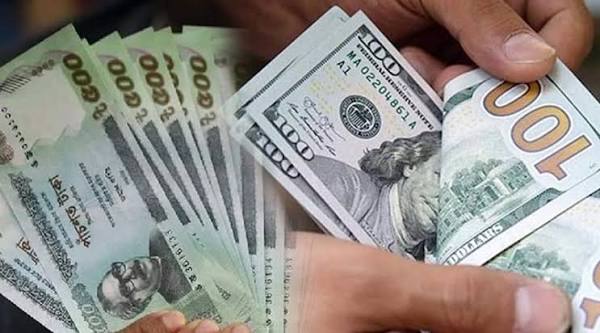
The foreign exchange market in Bangladesh saw steady trading dynamics as Bangladesh Bank released the official buying and selling exchange rates for major global currencies. According to the central bank’s updated figures published for late October 2026, the Bangladeshi Taka (BDT) maintained a stable position against major international transaction standards, including the United States Dollar, the British Pound, and the Euro.
Under the current pricing framework, the US Dollar is quoted at a buying rate of 123.60 Taka and a selling rate of 123.72 Taka. This narrow spread between the buying and selling rates reflects the ongoing stabilization measures implemented by financial authorities to curb volatility in the interbank and retail foreign exchange markets.
European currencies continue to command significant value against the local currency, driven by international trade volume and cross-currency valuations. The British Pound (GBP) is listed at a buying rate of 164.73 Taka against a selling rate of 164.92 Taka. Meanwhile, the Euro (EUR) stands at 138.91 Taka for buying and 139.06 Taka for selling.
Among Asian and regional partner currencies, the Indian Rupee (INR) remains pegged closely at a parity rate of 1.30 Taka for both buying and selling transactions. The Chinese Yuan (CNY) is positioned at 18.48 Taka buying and 18.51 Taka selling, while the Japanese Yen (JPY) trades at 0.78 Taka for both buying and selling. Further afield in the Asia-Pacific region, the Australian Dollar (AUD) stands at 85.83 Taka buying and 85.99 Taka selling, alongside the Singapore Dollar (SGD), which is recorded at 96.59 Taka buying and 96.69 Taka selling.
Monitoring foreign exchange rates remains crucial for commercial importers, exporters, remittance senders, and overseas travellers across Bangladesh. Central bank exchange metrics serve as the official benchmark for commercial banks, authorized dealers, and exchange houses throughout the country. Financial institutions use these reference rates to process international trade settlements, manage foreign currency reserves, and handle inbound non-resident remittances. Market observers note that maintaining stable exchange rates helps ease inflationary pressures on imported essential commodities while ensuring predictable revenue for domestic exporters.