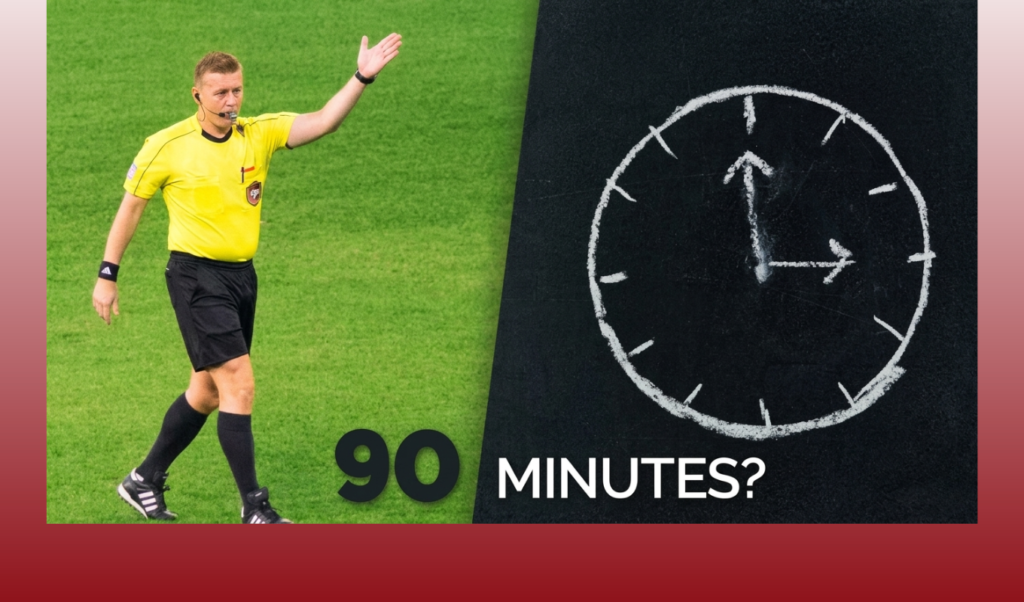
When the referee blows the whistle to commence a high-stakes World Cup match, the event triggers far more than a sporting contest between twenty-two athletes; it ignites the emotions of billions of people. People separated by vast geographical distances, diverse linguistic backgrounds, disparate religious beliefs, and conflicting political ideologies find themselves synchronised as participants in a singular, breath-taking narrative that spans ninety minutes of intensity.
The 2022 FIFA World Cup Final in Qatar attracted an estimated global audience of 1.5 billion people, while the tournament’s sixty-four matches collectively reached approximately 5 billion individuals. This vast global engagement occurred despite the fact that the spectacle involved only 832 registered footballers and was witnessed by 3.4 million spectators present within the stadiums. The overwhelming majority of the audience followed the action from thousands of miles away—in residential homes, cafes, dormitories, offices, or public viewing spots featuring giant screens. Irrespective of their physical location, every pass, dribble, shot, goal, and decision by the referee transformed these disparate individuals into participants in a unified global story.
For the 2026 World Cup, the tournament format has expanded to include 48 participating nations, granting 1,248 footballers the opportunity to compete on the pitch. An estimated 5 to 6 million spectators are expected to attend the 104 matches in person. Simultaneously, over 5 billion people are projected to engage with this emotional journey via television and digital platforms.
Countries with substantial populations—such as India, China, Pakistan, Bangladesh, Indonesia, the Philippines, and Nigeria—do not traditionally qualify for the final tournament stages. Nevertheless, millions of residents in these nations effectively adopt the identities of Brazil, Argentina, Germany, Spain, France, Portugal, England, Belgium, Morocco, or other Latin American, African, Arab, and Asian states. Many of these supporters have never visited these countries, do not possess citizenship, and cannot speak the native languages. Despite this, they experience moments of jubilant celebration when their adopted team scores, and deep silence when a goal is conceded.
In the current World Cup, hosted by the North American nations of the United States, Canada, and Mexico, audiences in South and Southeast Asia are often required to view matches during late-night, early-morning, or peak working hours. However, this temporal divide has failed to diminish the enthusiasm of football supporters. Millions stay awake or rise early to witness high-intensity matches, voicing immediate reactions to the referee’s decisions from 8,000 to 10,000 miles away. They actively debate on social media platforms, present detailed statistics, and recount the historical success records of their preferred teams.
While supporters often debate which nation holds a superior historical record or higher current FIFA ranking, the ultimate significance lies beyond the success of an individual team. It is a celebration of the global culture defined by football. The tournament possesses a unique ability to transcend the personal identities of spectators, uniting individuals from vastly different backgrounds into a singular, shared experience.
Recent tournaments have further highlighted themes of equality and brotherhood. Even as anti-immigration nationalist political sentiments gain traction in various developed nations, many stars within the squads of finalists, runners-up, and semi-finalists are children of migrant families. These athletes possess roots in Africa, the Middle East, Latin America, or Asia. Their talent, labour, and achievements are now integral to the national pride of their respective countries.
Conversely, African football powers such as Morocco, Senegal, and Algeria have demonstrated that their international success is heavily supported by talented players who were born or raised in immigrant families within Europe, where they received their foundational training. For instance, Achraf Hakimi of Morocco was born in Spain, Hakim Ziyech was raised in the Netherlands, Kalidou Koulibaly of Senegal was born in France, and Riyad Mahrez of Algeria was born and trained within the French football structure before opting to represent the nation of his ancestors. Their ability to utilise European training facilities while representing their ancestral lands exemplifies the World Cup as a story of migration, diversity, opportunity, and global connectivity.
The 2022 Final statistics underscore a profound reality: although 48 nations may participate, the emotional landscape of the tournament encompasses the entire planet. Football is not merely a sporting competition; it is one of humanity’s most significant collective experiences. Few events possess the capacity to hold such a massive audience in a state of unified emotion for ninety minutes. The protagonists are not exclusively the stars on the field, but the billions of spectators who, despite speaking different languages and living under different flags, react in unison to the drama of a goal or the tension of the referee’s whistle. While the sound of the whistle may not end global conflicts or resolve political disputes, it provides a ninety-minute realisation that human commonalities are significantly more influential than divisions.