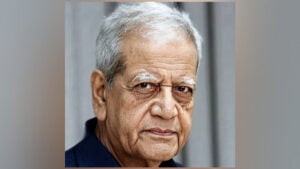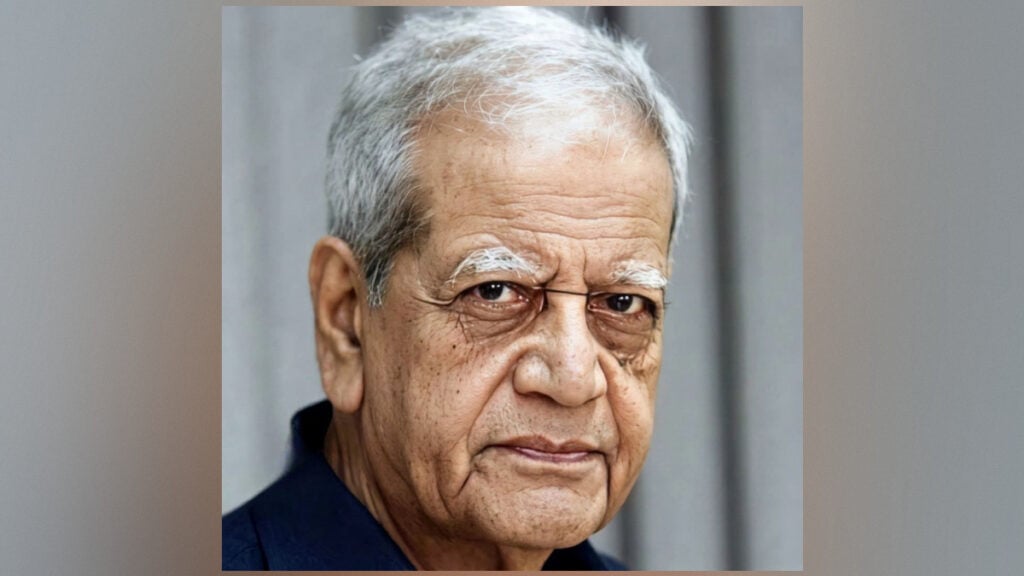
Some voices remain part of a nation’s memory long after they fall silent. Towab Khan, a veteran journalist, editor and freedom fighter, was one such figure whose professional life was closely intertwined with several defining chapters in Bangladesh’s history.
Born on 24 April 1934 in the historic village of Rasulpur in Satkhira, Towab Khan grew up in a family with strong connections to journalism and intellectual life. His father was Abdul Hakim Khan and his mother was Azra Khanam. Renowned journalist Maulana Akram Khan was his maternal uncle, while prominent journalist Abed Khan was his brother.
His family background introduced him to journalism, but his own professional ability, judgement and dedication shaped the career for which he became widely recognised.
A career built around newspapers
Towab Khan entered journalism in 1953 through the weekly Janata. Two years later, he joined the daily Sangbad, where his professional reputation developed steadily. In 1961, he became the newspaper’s news editor, taking on a senior editorial responsibility at a relatively early stage of his career.
In 1964, he joined the then Daily Pakistan as news editor and remained in that position until 1972. Following Bangladesh’s independence, the newspaper was renamed Dainik Bangla, and Towab Khan became its editor in the same year.
For him, journalism extended beyond simply reporting events. His long career reflected an understanding of the relationship between news, society, public life and the responsibilities of the press.
A voice of the Liberation War
One of the most significant chapters of Towab Khan’s life came during the 1971 Liberation War. He joined Swadhin Bangla Betar Kendra, the radio station that became an important platform for Bangladesh’s independence movement.
The station played a major role in encouraging people during the war, supporting the morale of freedom fighters and countering propaganda from the Pakistani authorities. In that environment, journalists, broadcasters, writers and performers used their voices and creative work as part of the wider struggle for independence.
Towab Khan became particularly known for the programme Pindiro Prolap, which was broadcast from Swadhin Bangla Betar Kendra. Through satire, political commentary and sharp criticism, the programme addressed the propaganda of the Pakistani authorities and contributed to the wider broadcast effort during the war.
His contribution to the Liberation War therefore extended beyond conventional newspaper journalism. He was among those who used broadcasting and political commentary as instruments of the independence struggle.
Press secretary to Bangabandhu
After independence, Towab Khan took on another significant responsibility. From 1973 to 1975, he served as press secretary to Sheikh Mujibur Rahman.
It was a formative period for the newly independent country, as Bangladesh was establishing its institutions and managing a range of domestic and international challenges. As press secretary, Towab Khan worked closely with the country’s political leadership and was involved in the communication of government activities and national developments.
His career later expanded into public information administration. He served as the Chief Information Officer of the government and also became Director General of the Press Institute of Bangladesh (PIB).
These positions reflected the breadth of his professional experience, which covered newspaper journalism, editorial leadership, state information services and journalism development.
An editor for generations of journalists
Towab Khan later joined Dainik Janakantha as its adviser editor. He subsequently returned to Dainik Bangla as editor.
Over the course of his long career, he worked alongside and influenced several generations of journalists. His experience as a reporter, news editor and newspaper editor gave him a broad understanding of newsroom operations and the changing nature of journalism.
For younger journalists, senior editors such as Towab Khan represented a professional tradition in which accuracy, editorial judgement and responsibility were regarded as central to the craft. His career also demonstrated how journalism in Bangladesh evolved through periods of political change, war and the development of an independent national media.
National recognition
The Bangladesh Government awarded Towab Khan the Ekushey Padak in 2016 in recognition of his contribution to journalism. In the same year, he was elected a Fellow of Bangla Academy.
The honours came after decades of work across several important areas of public life. His professional record included newspaper editing, wartime broadcasting, government information services and journalism education and development.
His significance, however, is also tied to the historical periods through which he worked. His career began in the 1950s, continued through the political turbulence of the 1960s, took a different form during the 1971 Liberation War and extended into the post-independence development of Bangladesh’s media institutions.
A career reflecting Bangladesh’s history
Looking at Towab Khan’s professional life also offers a way of tracing several stages in the country’s modern history.
He entered journalism during the 1950s, when newspapers were an important space for public debate. He worked through the political tensions of the 1960s, took part in the broadcasting effort of the Liberation War, and then became involved in the communication and information structure of the newly independent state.
His work therefore crossed the boundaries between journalism, broadcasting and public information. At different stages, he served as a journalist, editor, broadcaster and government information official.
That range made his career distinctive within Bangladesh’s media history.
His final years
Towab Khan died on 1 October 2022 at the age of 87 while receiving treatment in Dhaka.
His death marked the end of a career spanning nearly seven decades of journalism and public service. By then, he had witnessed and participated in many of the major changes that shaped Bangladesh’s press and political history.
His professional journey had begun in Rasulpur, Satkhira, and eventually took him to major newspapers, Swadhin Bangla Betar Kendra, the office of the country’s founding political leadership and senior positions within the national information system.
His passing brought an end to his personal journey, but the record of his work remains part of Bangladesh’s journalistic history. His role during the Liberation War, his years as an editor and his contributions to the country’s information institutions continue to form important parts of that record.
Towab Khan is remembered as a veteran journalist, editor, freedom fighter and Ekushey Padak recipient whose career connected journalism with some of the most consequential periods in Bangladesh’s history. His life remains a significant chapter in the story of the country’s press and the people who shaped it.