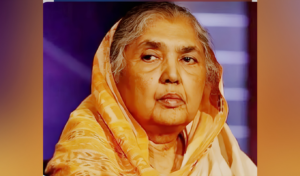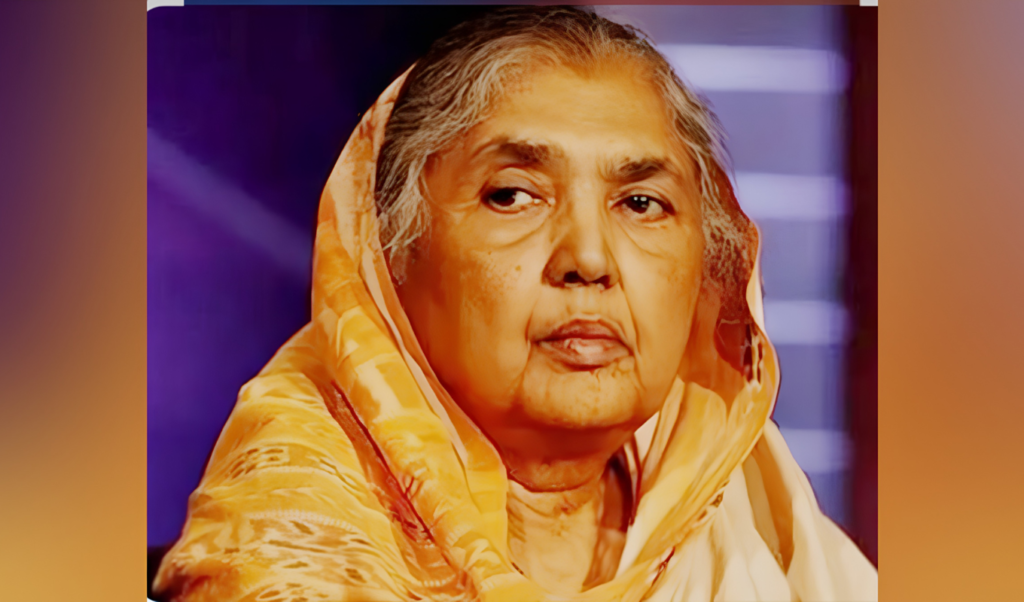
In Bangladesh’s political history, a few extraordinary leaders transcend party lines, official designations, and the trappings of power. Their lives become a vivid reflection of an era, an enduring symbol of struggle, and an inspiration for future generations. Known affectionately as Ognikonnya or the “Firebrand Woman,” Motia Chowdhury carved out a legendary status in national politics through her fiery rhetoric, unyielding principles, political fortitude, and unwavering commitment to farmers and working-class citizens.
Her second death anniversary is observed today. Across the country, citizens, political figures, and civic organisations pay rich tribute to this courageous woman who made monumental contributions to Bangladesh’s democratic movements, the 1971 Liberation War, and agricultural reform. From the fierce street protests of her youth to the highest halls of national decision-making, her long political journey was marked by steadfast courage, resilience, and dedicated public service.
Born on 30 June 1942, Motia Chowdhury began her political activist journey during her student years at the University of Dhaka. In the 1960s, as East Pakistan’s student community rose in rebellion against autocratic military rule, state discrimination, and the suppression of democratic rights, she emerged as one of the most articulate and fearless voices of that rebellious generation. Her commanding presence in campus politics, combined with her powerful speeches against injustice, quickly distinguished her from her peers. Her thunderous, impassioned speeches earned her the title Ognikonnya—a moniker that was not merely an emotional nickname, but a recognition of a young woman’s fearless stand against tyranny and exploitation.
Her rise occurred during an era when political leadership was overwhelmingly male-dominated. Navigating those challenges, she established a distinctive identity through sheer intellect, bravery, and organisational competence. Within the history of Bangladesh’s student movements, her name stands out not simply as a prominent female leader, but as an iconic symbol of resistance politics.
Throughout the Pakistani regime, Motia Chowdhury played an active role in movements fighting for democracy, regional autonomy, and civil liberties. She suffered multiple imprisonments and endured severe hardship under military rule, yet repression failed to shake her political conviction. Her life serves as a reminder that politics is far more than a ladder to power; it is fundamentally a battle for human rights, social equity, and a just society.
When the struggle for Bengali self-determination escalated into an armed war for independence in 1971, she actively mobilised political support and organised efforts to advance the liberation cause. For her, the Liberation War represented not only the emancipation of a territory, but a vision of human dignity, democratic rights, and an egalitarian, secular nation. Following independence, she remained active in national politics, steering through democratic movements and state administration.
A defining chapter of her career was her tenure as the Minister of Agriculture. In an agrarian nation like Bangladesh, where food security and rural livelihoods form the backbone of the economy, managing the agriculture ministry carried enormous responsibility. As minister, she spearheaded policies to modernise agricultural inputs, streamline seed and fertilizer distribution networks, and significantly boost national crop yields. Her deep engagement with farming issues earned her the popular title Krishoker Motia
Transitioning from street agitator to a key figure in parliament reflected her vast experience and organizational maturity. Having served as a Member of Parliament, Cabinet Minister, and Deputy Leader of Parliament, she demonstrated a rare ability to bridge grassroots activism with governance and policy execution. Her journey offers valuable lessons for younger politicians, underscoring that long-term political impact demands discipline, perseverance, and genuine connection with the public.
Despite occupying high office, Motia Chowdhury was widely respected for her modest, unpretentious personal lifestyle. At a time when political power often brings display of wealth and detachment from everyday people, her austerity stood out as a core part of her public legacy. Sharp-tongued, firm, and uncompromising in her political principles, she remained a central historical figure in contemporary Bangladesh.
Motia Chowdhury passed away in Dhaka on 16 October 2024, leaving behind a legacy that spans over six decades of nation-building. On her second death anniversary, her life remains a compelling reminder of political courage, dedication to public welfare, and selfless service to the nation.