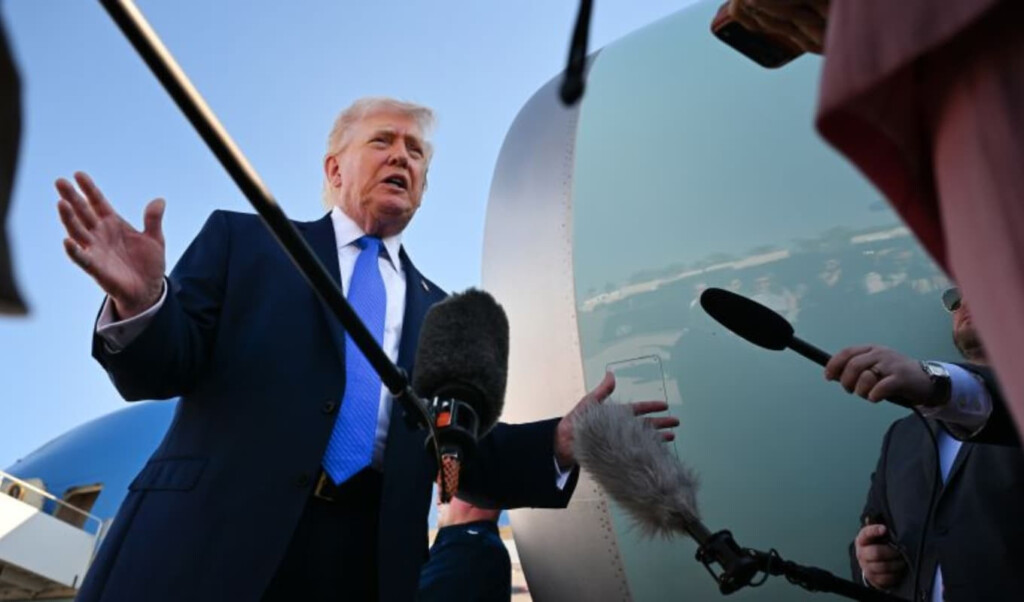
United States President Donald Trump is reportedly seeking to bring the ongoing confrontation with Iran to a swift conclusion within a matter of weeks, avoiding what he views as the risk of a prolonged conflict, according to a report by The Wall Street Journal.
The newspaper, citing individuals familiar with internal discussions, stated that in recent private conversations with advisers, Trump has expressed a clear preference for a short and decisive resolution rather than an extended military engagement. He is said to believe that the current phase of tensions is approaching its “final stage” and has set an informal target of stabilising the situation within four to six weeks.
According to the report, the President has instructed senior officials to align their planning with this timeframe, signalling a desire for accelerated diplomatic and strategic efforts aimed at de-escalation.
Reported Strategic Outlook
| Aspect | Reported Position |
|---|---|
| Preferred outcome | Rapid resolution, avoiding prolonged war |
| Estimated timeline | 4–6 weeks |
| Current assessment | Conflict seen as nearing “final stage” |
| Administrative focus | De-escalation planning and time-bound strategy |
Domestic and Political Pressures
The report further suggests that the Iran situation is increasingly drawing attention away from other key domestic priorities within the Trump administration. Rising inflationary pressures, particularly the cost of living and broader economic strain, are said to be demanding greater focus from the White House.
Officials are reportedly concerned that prolonged external military tensions could complicate efforts to manage internal economic challenges, including price stability and public financial confidence.
Foreign Policy Considerations
In addition, the White House is understood to be preparing for a potential visit by President Trump to China in mid-May. Diplomatic sources suggest that Washington is keen to ensure that any major escalation in the Middle East does not overshadow or disrupt high-level engagements with Beijing.
Analysts note that this timing could add further urgency to efforts aimed at reducing tensions with Iran, as the administration seeks to maintain momentum on broader foreign policy initiatives while avoiding multiple simultaneous geopolitical crises.
Unverified Nature of Claims
It is important to note that while the report references internal discussions and policy intentions, there has been no independently verified confirmation from official U.S. government statements regarding specific timelines for resolving the Iran situation or the operational details of any military or diplomatic strategy.
Similarly, claims relating to the scale, timing, and nature of the reported conflict remain uncorroborated by publicly available, independently verified international sources.
Broader Context
The reported stance reflects a wider strategic tension often faced by U.S. administrations: balancing external security commitments with domestic economic priorities. Analysts argue that any attempt to rapidly de-escalate a complex geopolitical confrontation would require coordinated diplomatic engagement, regional cooperation, and sustained negotiation efforts.
As developments continue, attention remains focused on whether Washington will pursue intensified diplomacy, maintain current pressure, or adjust its approach in response to evolving conditions on the ground.