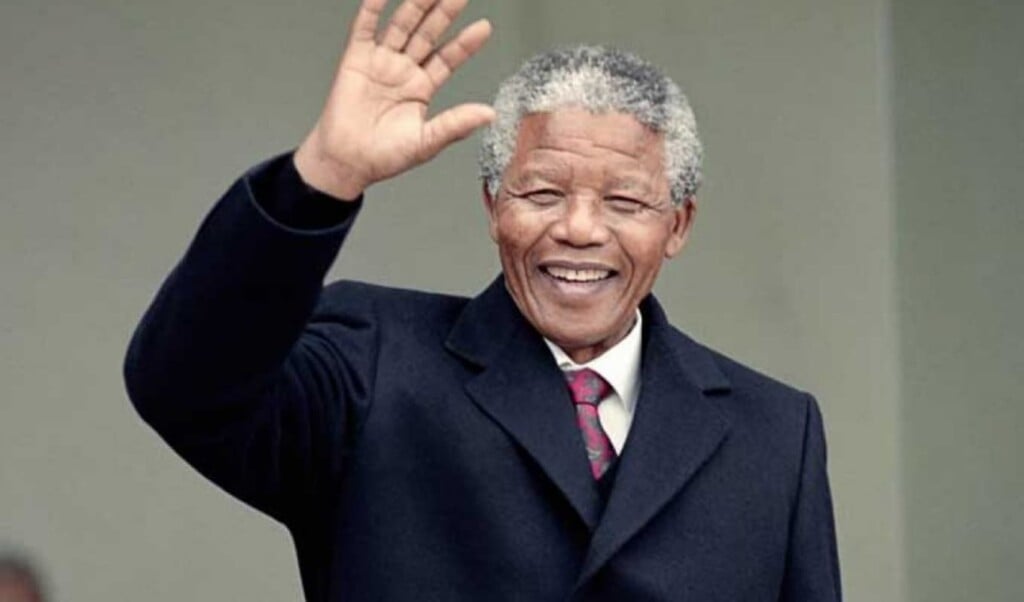
The global community continues to reflect upon the profound life and enduring impact of Nelson Rolihlahla Mandela, the legendary anti-apartheid revolutionary, global statesman, and universal champion of human rights. Born on 18 July 1918 into the noble Thembu royal family in the village of Mvezo, within South Africa’s Eastern Cape province, Mandela’s journey from a traditional rural upbringing to the global political stage altered the course of modern history. Each year, his birth anniversary is formally observed worldwide as Nelson Mandela International Day—a global initiative officially sanctioned by the United Nations to honour his sixty-seven years of public service by encouraging individuals to dedicate time to humanitarian causes.
Mandela’s political and intellectual consciousness took shape during his higher education at the University of Fort Hare and the University of the Witwatersrand, where he studied law. Upon qualifying, he co-founded South Africa’s first black-led legal practice in Johannesburg alongside his close political ally Oliver Tambo. The firm provided affordable legal counsel to non-white citizens who were systematically targeted by the discriminatory laws of the land. It quickly became clear to Mandela, however, that fighting institutionalised injustice within a compromised legal framework was insufficient; a total transformation of the nation’s political structure was required.
In 1943, Mandela committed himself entirely to the liberation struggle by joining the African National Congress (ANC). Seeking a more dynamic approach to combatting racial segregation, he co-founded the ANC Youth League in 1944. As the white-minority government formalised its apartheid policies after 1948, Mandela became a central figure in organizing non-violent civil disobedience campaigns, most notably the 1952 Defiance Campaign. However, as the regime met peaceful protests with escalating state violence—culminating in the tragic Sharpeville massacre of 1960—Mandela concluded that non-violent resistance alone would not suffice. He subsequently helped establish Umkhonto we Sizwe (Spear of the Nation), the armed wing of the ANC, to lead an organised resistance against minority rule.
The minority government regarded Mandela as an existential threat to its authority. In 1956, he was arrested alongside 150 other activists on charges of high treason. Though the subsequent Treason Trial concluded after five years with the acquittal of all defendants, Mandela’s freedom was short-lived. Following his arrest in 1962 for leaving the country without permission, he was tried again in the famous Rivonia Trial of 1963–1964. It was here that Mandela delivered his historic speech from the dock, declaring that a democratic and free society was an ideal for which he was prepared to die. The trial ended with Mandela receiving a sentence of life imprisonment.
Mandela spent the next twenty-seven years behind bars, isolated from the public but transformed into a universal symbol of resilience. The majority of his sentence was served at the notorious Robben Island prison, where he endured harsh physical conditions and hard labour in a lime quarry. Rather than silencing his voice, his long imprisonment amplified it, turning him into the world’s most significant political prisoner. International campaigns fiercely demanded his release, and his name became synonymous with the global struggle against racial prejudice.
On 11 February 1990, facing intense international economic sanctions and mounting domestic unrest, President F.W. de Klerk ordered Mandela’s unconditional release. Emerging from captivity, Mandela astounded the world by entirely eschewing calls for vengeance. Instead, he chose the path of forgiveness and reconciliation, leading complex negotiations with the apartheid government to peacefully dismantle the segregationist regime. These efforts culminated in South Africa’s historic first fully democratic election on 27 April 1994, where citizens of all races were granted the right to vote.
The timeline below outlines the key chronological milestones of Nelson Mandela’s journey from institutional captivity to global statesmanship.
Mandela co-founded the Youth League to push the broader African National Congress toward more assertive mass action.
Following the high-profile Rivonia Trial, Mandela was sentenced to life imprisonment for conspiracy to overthrow the state.
Mandela walked free from Victor Verster Prison, signaling the beginning of formal negotiations to end apartheid.
Mandela and F.W. de Klerk were jointly awarded the Nobel Peace Prize for their peaceful transition planning.
Mandela was inaugurated as South Africa’s first black president, heading a Government of National Unity.
Mandela passed away at his home at the age of 95, leaving behind an unparalleled legacy of human rights advocacy.
Elected overwhelmingly as President, Mandela governed from 1994 to 1999 with a steadfast focus on nation-building. He famously utilised the nation’s hosting of the 1995 Rugby World Cup to foster a shared national identity amongst deeply divided communities. He also established the Truth and Reconciliation Commission, chaired by Archbishop Desmond Tutu, which prioritised restorative justice and truth-telling over punitive retribution. By voluntarily stepping down after a single five-year term, Mandela set a profound example of democratic leadership for the African continent and the wider world.
Though he passed away on 5 December 2013 at the age of 95, Mandela’s moral philosophy remains a guiding light. He famously observed that hatred is not an inherent human trait, but a learned behaviour—and because it is learned, humanity can ultimately be taught to love instead. His life stands as an eternal testament that genuine leadership is defined not by the accumulation of power, but by the capacity to forgive, to unite, and to champion the intrinsic dignity of every human being.