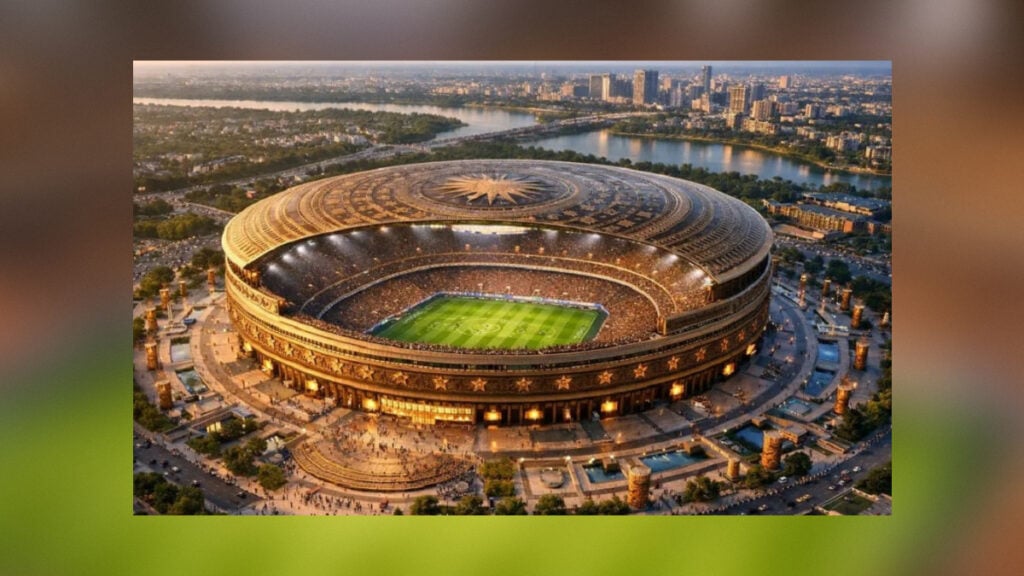
Vietnam is embarking on an ambitious sporting infrastructure project that could reshape the global stadium landscape. A new 135,000-seat venue, named VinFast Trong Dong Stadium, is under development in the capital, Hanoi, and could become the world’s largest stadium by spectator capacity when it opens, potentially in 2028.
The project is expected to surpass India’s Narendra Modi Stadium in Ahmedabad, which currently has a capacity of approximately 132,000 spectators. If completed according to the proposed specifications, the Vietnamese venue would set a new benchmark for stadium size, placing the country firmly on the international sporting map.
The stadium forms part of a wider international sports city development planned for Hanoi. Its scale reflects Vietnam’s ambition to strengthen its sporting infrastructure and create a venue capable of hosting major international competitions, entertainment events and large-scale cultural programmes.
A multi-billion-dollar investment
The foundation stone for the project was laid on 19 December 2025. The planned investment stands at approximately US$2 billion, equivalent to around Tk 247.3 billion, or Tk 24,730 crore, according to the figures provided for the project.
The development represents a substantial commitment to large-scale infrastructure. A stadium of this size requires more than extensive seating capacity; it also needs carefully designed access routes, crowd-management systems, emergency exits, security arrangements and supporting facilities to accommodate tens of thousands of visitors safely.
As part of a wider sports city, the venue is intended to serve as a major destination for sporting and entertainment activities. Its eventual impact will depend not only on the construction itself but also on how effectively the surrounding infrastructure and operational arrangements support large events.
Ancient Vietnamese heritage inspires the design
One of the most distinctive features of the planned stadium is its architectural inspiration. The design draws on the traditional Dong Son bronze drums, important artefacts associated with ancient Vietnamese culture.
By incorporating elements inspired by these historic objects, the project seeks to combine contemporary architecture with the country’s cultural identity. The approach gives the stadium a symbolic dimension beyond its sporting function, presenting it as a potential landmark that reflects Vietnam’s historical heritage.
The Dong Son culture is particularly associated with sophisticated bronze craftsmanship, and its drums are recognised for their elaborate decorative patterns. Drawing inspiration from this tradition offers a way to connect a modern public venue with a significant part of the country’s cultural past.
A retractable roof for sport and entertainment
The planned stadium will feature an automatically retractable roof that can open and close according to requirements. This is expected to make the venue suitable for a wider range of events and provide greater flexibility in managing different weather conditions.
Alongside sporting competitions, the stadium is intended to host major concerts and other large-scale gatherings. Such versatility could help extend its use beyond the sporting calendar, making it a destination for entertainment and cultural events throughout the year.
Retractable-roof technology is used in several major stadiums around the world, allowing venues to adapt to changing weather and event requirements. Its successful operation, however, depends on the engineering design, maintenance arrangements and the practical demands of each event.
Can Vietnam meet its 2028 target?
According to the project’s stated timetable, construction is targeted for completion by August 2028. However, it remains uncertain whether the deadline will be met, and the planned opening date should not yet be treated as confirmed.
Projects of this scale can face complex engineering requirements, construction challenges and logistical demands. The completion schedule will therefore depend on progress at the site and the successful delivery of the planned facilities.
If the stadium opens with its proposed capacity and features, it could become one of Vietnam’s most prominent infrastructure landmarks. Its size would also strengthen the country’s ability to accommodate major sporting events and international entertainment productions.
For Vietnam, the ambition extends beyond building a larger stadium than its competitors. The project represents an effort to combine modern facilities, cultural identity and international visibility in a single development.
Whether the venue ultimately earns the title of the world’s largest stadium will depend on its completed capacity and official operational status. For now, the proposed 2028 completion date places the VinFast Trong Dong Stadium among the most ambitious stadium projects to watch in the coming years.