Published: 08 Nov 2025, 07:17 pm
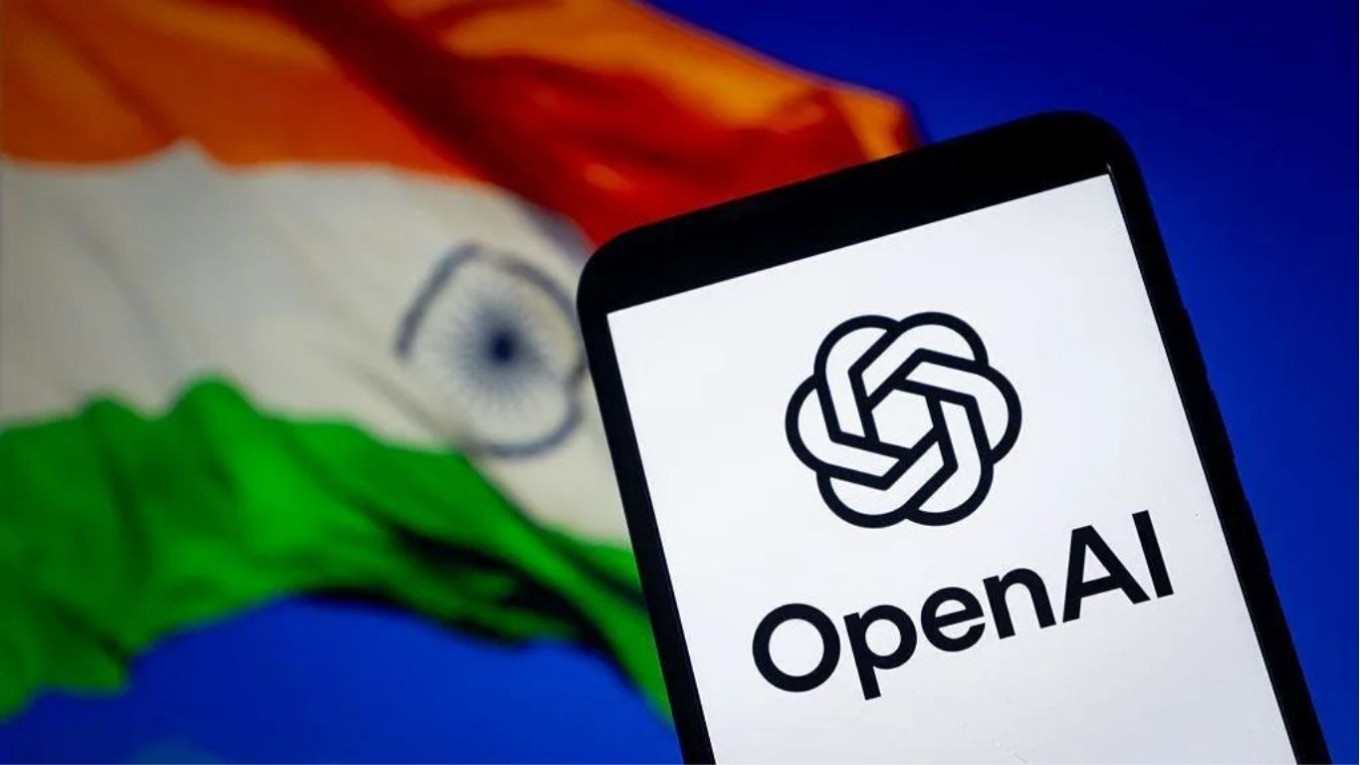
Beginning this week, millions of Indians will enjoy one year of complimentary access to ChatGPT’s new low-cost “Go” AI chatbot.
The move follows a series of similar announcements in recent weeks from Google and Perplexity AI, both of which have partnered with Indian mobile operators to provide users with free or discounted access to their AI tools for a year or longer.
Perplexity has collaborated with Airtel, the country’s second-largest mobile network provider, while Google has joined forces with Reliance Jio, India’s biggest telephony giant, to bundle AI tools with monthly data packs.
Analysts caution that these initiatives should not be mistaken for acts of generosity, but rather as strategic investments and long-term bets on India’s digital future.
“The plan is to get Indians hooked on generative AI before asking them to pay for it,” Tarun Pathak, an analyst at Counterpoint Research, told the BBC.
“What India offers is scale and a young audience,” Mr Pathak explained, noting that while other major markets such as China may rival India in terms of user numbers, their tightly regulated tech environments restrict foreign access.
India, by contrast, provides an open and competitive digital marketplace. Global tech firms are seizing this opportunity to recruit millions of new users to help train their AI models.
OpenAI, Perplexity and Google did not respond to the BBC’s requests for comment.
India has over 900 million internet users and some of the world’s lowest data costs. Its online population is predominantly young – most internet users are under 24 – representing a generation that lives, works, and socialises online via smartphones.
By bundling AI tools with mobile data plans, tech companies are tapping into an enormous opportunity, as India’s data consumption far exceeds that of most other countries. The more Indians engage with these platforms, the more valuable first-hand data companies can collect.
“India is an incredibly diverse country. The AI use cases emerging from here will serve as valuable case studies for the rest of the world,” said Mr Pathak.
“The more unique, first-hand data they gather, the better their models – particularly generative AI systems – become.”
While these arrangements are a clear win for AI companies, they raise concerns from a consumer standpoint, particularly regarding data privacy.
“Most users have always been willing to give up data for convenience or something free, and that will continue,” said Delhi-based technology writer and analyst Prasanto K Roy.
However, he added that this is where government oversight becomes essential.
“Regulation will need to increase as authorities figure out how to manage the broader issue of people giving away their data so freely,” said Mr Roy.
At present, India lacks a dedicated law governing artificial intelligence. The broader Digital Personal Data Protection Act (DPDP) 2023 addresses issues around digital media and privacy, but it has yet to be implemented.
Experts say that while the Act introduces broad protections concerning personal data, its implementation rules are still pending, and it does not yet address AI systems or algorithmic accountability.
Once enacted, however, “it will probably be one of the most advanced from a digital privacy perspective,” Mahesh Makhija, technology consulting leader at Ernst & Young, told the BBC.
For now, India’s flexible regulatory environment enables companies like OpenAI and Google to bundle free AI tools with telecom plans – something far more challenging in other regions.
For example, the European Union’s AI regulations impose strict standards for transparency and data governance, while South Korea’s forthcoming laws go a step further, requiring labels on AI-generated content and making operators legally accountable for how their systems are used.
In such regions, similar offers would trigger compliance obligations around user consent and data protection, making them far more difficult to deploy at scale.
Mr Roy believes India needs both stronger user awareness and clearer regulation – but without stifling innovation.
“At this point, we need light-touch regulation, but that will have to evolve as the extent of potential harm becomes clearer,” he said.
Until then, global AI firms will hope that by offering these free tools, they can replicate India’s earlier digital revolution, when millions of new users came online through deeply discounted internet data.
Although AI is unlikely to follow a heavily monetised model and is instead expected to evolve as a low-cost, value-driven service, India’s massive user base presents a substantial opportunity.
“For instance, even if just 5% of free users become subscribers, that’s still a significant number,” said Mr Pathak.

> Nachiketa Sings Bhalobasho Composition
> Bangladesh and Five Other Nations’ Ships Safe in Hormuz: Iran Announces
> Prothom Bangladesh Reimagined for Independence Day
> Gold Slides as Downtrend Fears Grow
> Road Tragedy Claims Pedestrian Life
> Four Dead, 41 Missing After Bus Sinks at Daulatdia Ferry Terminal
> Road Deaths Spike During Eid Holiday: Discrepancies Highlighted
> Nabin Fashion Branches Remain Open Amid Controversy
> Shepherd Secures $42M to Transform Commercial Insurance
> Fuel Card Rule Enforced for Motorcyclists
> Flights Suspended Amid Regional Tensions


Amid escalating tensions in the Middle East, Iran has announced that it will allow “friendly nations...
A leading international relations scholar has argued that the United States has long underestimated...

Following disappointment at the 1954 World Cup, Italy appointed Alfredo Foni, a manager who had alre...
The United States diplomatic mission in Iraq has issued an urgent directive advising all American ci...

As part of their build-up to the 2026 FIFA World Cup, Argentina are set to play two international fr...

Pakistan has extended warm felicitations to Bangladesh on the occasion of its Independence Day, reaf...

A consortium of high-profile American investors has emerged as the leading bidder to acquire the Raj...

In a message marking the occasion of Bangladesh’s Independence Day, United States Secretary of State...

Western intelligence agencies have reported that the Russian Federation is providing significant ass...

A protracted blaze continues to engulf a fuel storage facility at Kuwait International Airport more...

In celebration of its 25th anniversary, Allianz Malaysia Berhad has launched a year-long campaign gr...

Liberty Specialty Markets has broadened its presence in Asia with the launch of its fine art and spe...


Availabe for iphone & ipads

Available in google play
 বাংলা
বাংলা