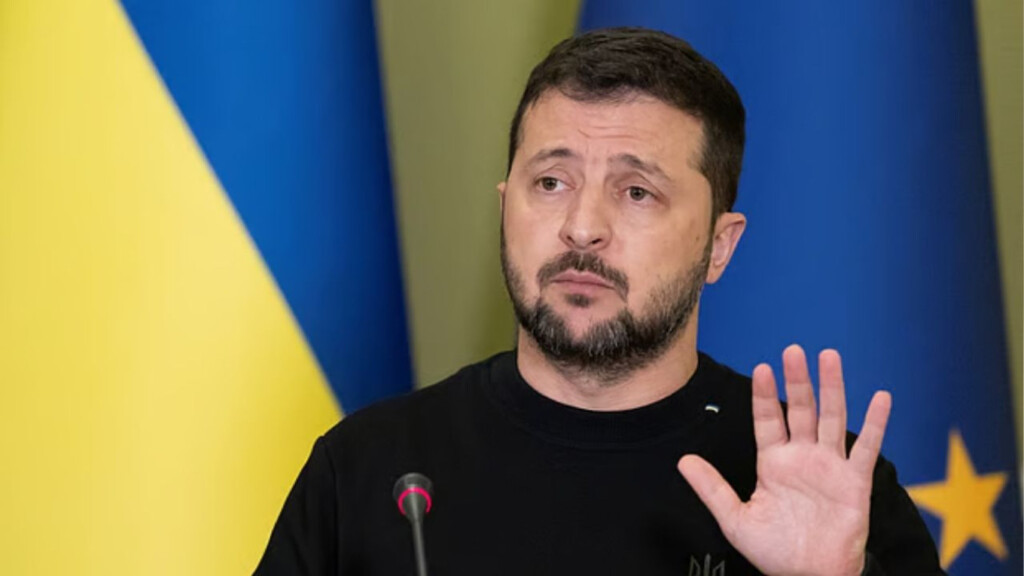
In a striking reversal of the traditional security assistance dynamic, President Volodymyr Zelenskyy has revealed that eleven nations, including the United States, have formally requested Ukraine’s expertise in neutralising Iranian-manufactured drones and mastering electronic warfare (EW). This development underscores Ukraine’s transition from a recipient of Western aid to a vital repository of frontline combat intelligence.
Following a high-level briefing with military and government officials on Monday, Zelenskyy took to X (formerly Twitter) to confirm that requests for security cooperation have arrived from various quarters, including the US, several European partners, and nations neighbouring Iran.
“We have received requests from various countries for security cooperation regarding Iranian ‘Shahed’ drones and similar challenges. We have reviewed these requests in detail,” Zelenskyy stated.
A Strategic Pivot in Global Security
Ukraine’s strategic value to its allies is no longer merely its role as a democratic bulwark; it is now a hub for real-time innovation. Having endured four years of full-scale Russian aggression, Kyiv has developed a “unique experience” in downing Iranian loitering munitions, which are increasingly appearing in Middle Eastern conflicts.
By sharing these hard-won tactics, Ukraine aims to bolster its bargaining power with allies. Zelenskyy noted that “concrete decisions and special assistance” have already been authorised for certain partners. Notably, he recently informed the New York Times that, at Washington’s behest, Ukraine dispatched a specialist team and advanced drone-interception systems to protect US military bases in Jordan.
Understanding the Arsenal: Electronic Warfare (EW)
The requests focus heavily on Electronic Warfare, a sophisticated domain that US military experts categorise into three primary pillars: Electronic Attack (EA), Electronic Protection (EP), and Electronic Support (ES).
The most prevalent tactic is jamming, which disrupts radio or radar frequencies. A prime example is Russia’s R-330ZH Zhitel jammer, capable of severing GPS, satellite communications, and mobile networks within a 10km radius. Beyond mere disruption, EW involves deception—sending false signals to confuse enemy radar. In 2014, Russian forces famously used the RB-341V Leer-3 system to hijack mobile networks in Eastern Ukraine to broadcast disinformation, often extending their reach via Orlan-10 drones.
Comparing Key Electronic Warfare Capabilities
| System / Tactic | Origin | Function | Impact on Battlefield |
|---|---|---|---|
| Shahed-136 | Iran | Loitering Munition | Low-cost “suicide” strikes on infrastructure. |
| R-330ZH Zhitel | Russia | Jamming Station | Disrupts GPS and SATCOM within 10km. |
| RB-341V Leer-3 | Russia | Mobile Network Hijacking | Intercepts signals and broadcasts fake commands. |
| UA Counter-Drone | Ukraine | Interception & EW | Real-time kinetic and electronic neutralisation. |
Ultimately, Zelenskyy emphasized that Ukraine is prepared to respond “positively” to those who have supported its freedom, transforming the nation into a primary consultant for 21st-century electronic and autonomous warfare.