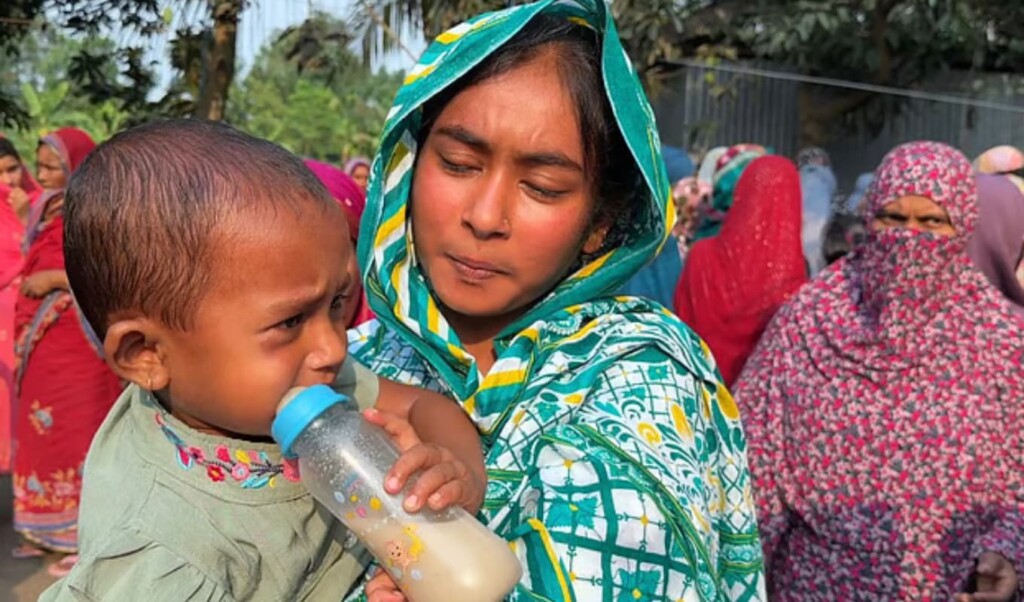
A catastrophic outbreak of measles has emerged across Bangladesh, resulting in more than 32,000 recorded infections and at least 250 fatalities since mid-March 2026. According to a comprehensive report published by the esteemed scientific journal Science, the majority of the deceased are children. Investigative findings suggest that the current public health emergency is a direct consequence of a national vaccine shortage, precipitated by fundamental policy shifts in procurement during the tenure of the previous interim administration.
Administrative Decisions and the Genesis of the Crisis
For decades, Bangladesh maintained an internationally acclaimed record for paediatric immunisation, achieving high coverage through the support of UNICEF and Gavi, the Vaccine Alliance. Traditionally, Measles-Rubella (MR) vaccines were procured directly through UNICEF’s established channels, ensuring a consistent and certified supply.
However, the report in Science indicates that in September 2025, the interim government led by Dr Muhammad Yunus opted to terminate the direct procurement agreement with UNICEF. The administration shifted toward an open tender system for vaccine acquisition. At the time, UNICEF representatives expressed vigorous opposition to this transition. Rana Flowers, the UNICEF Representative to Bangladesh, reportedly issued multiple warnings to the then Health Adviser, Nurjahan Begum, cautioning that such a move could destabilise the national immunisation framework.
The transition to an open tender process was subsequently plagued by bureaucratic impediments and delays. Consequently, the steady influx of vaccines was effectively halted, leading to a nationwide depletion of stocks and the severe disruption of routine immunisation schedules.
Critical Status of Healthcare Facilities
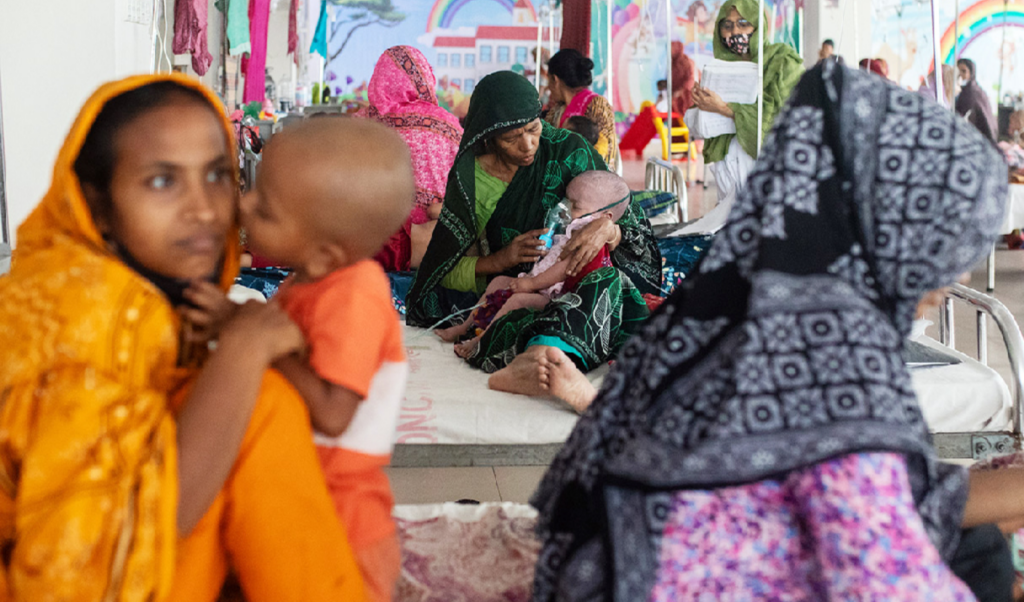
The medical infrastructure in Dhaka is currently under immense strain as hospitals contend with an influx of infected patients. Specialised infectious disease wards have reached maximum capacity, necessitating the treatment of paediatric patients on hospital floors due to a critical shortage of beds.
On 7 April 2026, a significant tragedy was recorded at the Dhaka Shishu (Children’s) Hospital. A mother, identified as Konika Akhter, lost her six-month-old twin daughter, Risa, to measles-related complications. Her second twin, Ruhi, remains in a critical state within the same Intensive Care Unit (ICU), highlighting the severe clinical progression of the disease in the absence of prior immunisation.
Epidemiological Spread and Nutritional Vulnerability
Data from the World Health Organisation (WHO) reveals that the current outbreak originated in January 2026 within the Rohingya refugee camps situated near the border with Myanmar. The highly contagious virus subsequently proliferated with exceptional speed, affecting 58 out of the 64 districts in the country.
ASM Alamgir, the former Chief Scientific Officer of the Institute of Epidemiology, Disease Control and Research (IEDCR), noted that the mortality rate has been exacerbated by underlying nutritional deficiencies. Since 2024, three scheduled national campaigns for Vitamin A distribution were suspended. The resulting Vitamin A deficiency among children has significantly weakened their immune responses, making the measles infection more lethal.
Legal Accountability and Governmental Response
The public health failure has sparked widespread condemnation and legal action against members of the former interim government. On 12 April 2026, Advocate Biplob Kumar Das filed a formal complaint with the Anti-Corruption Commission (ACC). The petition alleges corruption and gross negligence regarding the failure to maintain a viable vaccine procurement system.
In a correspondence with Science, the former Health Adviser, Sayedur Rahman, defended the policy shift, claiming that the transition to the open tender system was intended to ensure transparency by adhering to conventional procurement rules rather than relying on emergency legislation. However, the administration has not provided a definitive explanation for the procedural failures that led to the supply cessation.
Emergency Measures Under the Current Administration
The newly elected government, which assumed office on 17 February 2026, has initiated emergency interventions to contain the epidemic. Ziauddin Hyder, Special Assistant to the Prime Minister on Health, confirmed that direct vaccine procurement through UNICEF was reinstated in April.
Recent containment efforts include:
-
Emergency Immunisation: A targeted campaign commenced on 5 April in high-risk zones.
-
National Rollout: A nationwide immunisation drive for children aged six months to five years began on 20 April.
-
Public Health Warnings: Experts, including Mohammad Mushtuq Husain, an adviser to the IEDCR, have urged the immediate declaration of a ‘Public Health Emergency’ to facilitate rapid resource mobilisation.
Despite these measures, epidemiologists warn that the current rate of transmission poses a significant challenge, and the stabilisation of the outbreak may remain difficult in the immediate term.