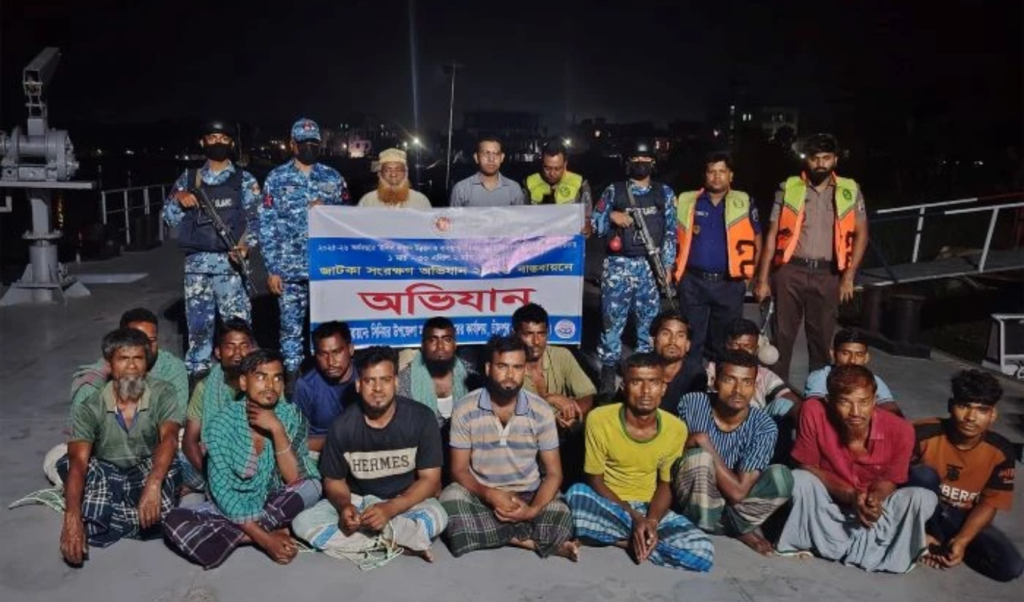
The Chandpur District Fisheries Department has confirmed that 209 fishermen were sentenced to various terms of imprisonment during a two-month enforcement operation conducted in March and April. The legal actions were taken as part of a concerted effort to protect Jatka (juvenile Hilsa) within the designated sanctuary areas of the Padma and Meghna rivers, where fishing was strictly prohibited during this period.
At approximately 8:30 pm on Thursday, 30 April 2026, the Chandpur District Fisheries Officer, Mohammad Fakhrul Islam, provided a comprehensive summary of the enforcement measures. In addition to the custodial sentences, the authorities collected fines totalling 469,900 BDT from those found in breach of the fishing regulations.
Scale of the Task Force Operations
From 1 March to 30 April 2026, the district and upazila task forces maintained a continuous presence across a 70-kilometre stretch of the riverine sanctuary. This protected zone extends from Shatnol in the Matlab North Upazila to Char Bhairabi in the Haimchar Upazila.
According to official records, the task force executed a total of 609 operations during the 61-day ban. These interventions resulted in the initiation of 237 legal cases against individuals apprehended for illegal fishing activities. To ensure swift justice, 36 mobile courts were convened, presided over by Executive Magistrates from the Deputy Commissioner’s office, as well as Upazila Nirbahi Officers (UNOs) from the Matlab North, Chandpur Sadar, and Haimchar regions.
Seizures and Resource Distribution
The enforcement actions led to the significant seizure of fishing equipment and illegal catches. Specifically:
-
Vessels: In Matlab North Upazila, confiscated boats were disposed of via public auction, generating 28,000 BDT in revenue.
-
Fishing Nets: Large quantities of illegal nets were seized and subsequently destroyed by fire to prevent further illicit use.
-
Fish Catch: All recovered fish were distributed amongst local orphanages, madrasas, and the underprivileged community, ensuring that the biological resources were not wasted.
The District Fisheries Officer noted that the task force operated on a 24-hour basis, conducting both day and night patrols to deter poachers. These rigorous measures were supported by various law enforcement agencies, including the Coast Guard and the Police, who assisted fisheries officials in navigating the vast riverine territory.
Economic and National Objectives
The primary objective of the annual two-month ban is to facilitate the unimpeded growth of Jatka, thereby ensuring the sustainability of the Hilsa (Tenualosa ilisha) population. As the national fish of Bangladesh, Hilsa plays a vital role in the country’s economy and food security.
Officer Mohammad Fakhrul Islam stated that these local enforcement successes are instrumental in achieving the national production target of 600,000 metric tonnes of Hilsa. “The strict adherence to the ban during March and April ensures that the juvenile fish reach maturity, which ultimately benefits the broader fishing community in the coastal regions once the season reopens,” he explained.
To mitigate the economic impact on the local community during the ban, the government typically provides food assistance under the Vulnerable Group Feeding (VGF) programme. Thousands of registered fishermen in Chandpur received rice allotments during these two months to support their livelihoods while they refrained from fishing in the sanctuary areas.
The conclusion of the ban on 30 April marks the transition to the next phase of fisheries management, with officials expressing optimism that the high levels of compliance and successful enforcement in Chandpur will lead to a bountiful Hilsa harvest in the coming months.