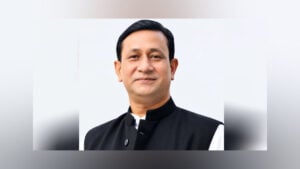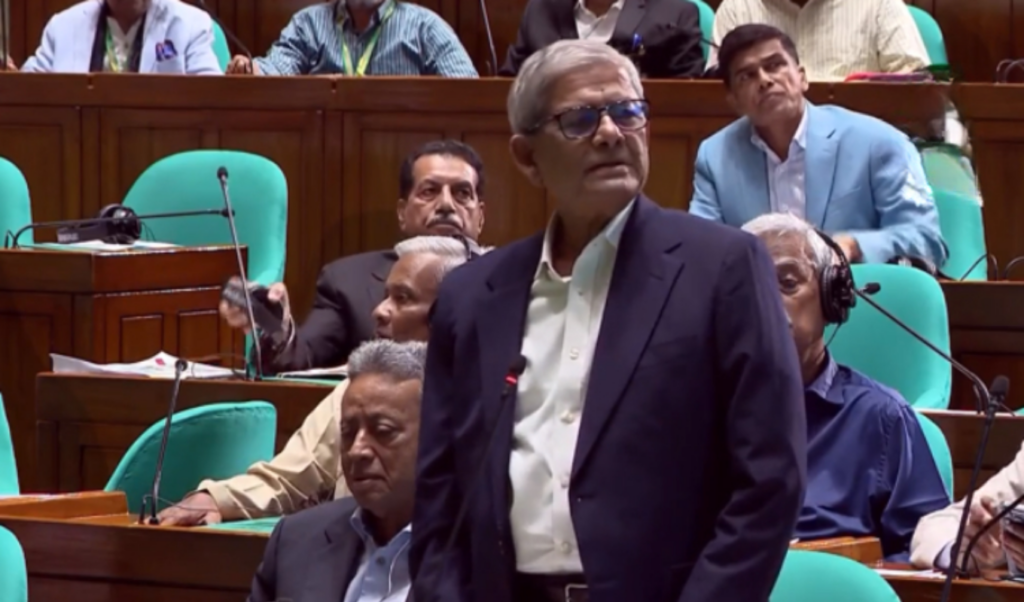
In a significant parliamentary intervention on Thursday, 30 April 2026, the Minister for Local Government and Secretary General of the Bangladesh Nationalist Party (BNP), Mirza Fakhrul Islam Alamgir, emphasised the necessity of upholding constitutional institutions. Speaking during the discussion on the vote of thanks following the President’s speech in the National Assembly, Mr Alamgir asserted that the protection of the Presidency was a strategic necessity for the stability of the state.
Addressing the House, the Secretary General clarified that the party’s support for the Presidency was not a matter of individual allegiance but a commitment to the office as a fundamental institution. He remarked:
“Regardless of who the President may be, the office is an institution, not a mere individual. We have protected that institution out of necessity for the sake of the nation.”
Constitutional Integrity and the Legacy of Independence
Responding to allegations regarding the party’s rigid adherence to the current constitutional framework, Mr Alamgir maintained that the Constitution of Bangladesh is inextricably linked to the nation’s identity. He argued that the document represents more than just a legal framework, describing it as an embodiment of the sacrifices made during the 1971 Liberation War.
“We have indeed endeavoured to uphold the Constitution because it is intertwined with our very existence and our emotions,” he stated. “This Constitution is soaked in the blood of millions of martyrs from 1971. It is for this Constitution that we fought and struggled; it is the fundamental charter of an independent Bangladesh.”
He further corroborated statements made by fellow lawmaker Salahuddin Ahmed, reiterating that the preservation of the Presidency following the political upheaval of 5 August 2024 was the primary barrier against total state collapse. Mr Alamgir suggested that had the institution of the Presidency been abolished or left vacant during that critical juncture, the resulting “anarchy and lawlessness” might have made it impossible to safeguard the country and its citizens.
A Retrospective on Political Struggle and Human Rights
The Secretary General used the parliamentary platform to address criticisms directed at his leadership and the BNP’s record. He reminded the Speaker and the House of the fifteen-year struggle against what he described as a “fascist regime,” noting the personal toll taken on the party’s high command.
Mr Alamgir cited the prolonged imprisonment of party chairperson Begum Khaleda Zia and the forced exile of acting chairman Tarek Rahman, who remains abroad due to what the Secretary General termed “falsified cases.” He provided a grim statistical overview of the judicial and extrajudicial pressures faced by political activists during the previous administration:
-
Legal Harassment: Approximately six million individuals were reportedly subjected to “false cases.”
-
Fatalities: Roughly 20,000 party leaders and activists were killed.
-
Enforced Disappearances: An estimated 1,700 activists, including high-profile figures such as M. Ilias Ali and Chowdhury Alam (Parvez Hiru), became victims of enforced disappearances.
In a rare moment of emotional reflection, the Minister recalled the plight of the families of the “disappeared,” specifically mentioning the young daughter of a missing activist who continues to seek her father’s return during festive periods. He noted that such humanitarian crises remain a collective trauma for the political community.
Political Context and the Road to 2026
The Minister’s speech arrives at a time when the interim and subsequent governing structures are navigating the complex transition from the events of late 2024. By framing the Presidency as a vital “institution” rather than a political appointment, Mr Alamgir appears to be seeking a middle ground that ensures executive continuity while the nation prepares for further democratic consolidation.
His defence of the Constitution also serves to counter calls from various political quarters for a wholesale rewrite of the national charter. Instead, the BNP Secretary General’s stance suggests a preference for working within established legal boundaries to prevent the “anarchy” he cautioned against. As the parliamentary session continues, these remarks are expected to set the tone for the government’s approach to institutional reform and the pursuit of justice for victims of past political violence.