Washington D.C., 7 October 2025 – President Donald Trump said that Canadian Prime Minister Mark Carney would be “very happy” following their trade talks at the White House on Tuesday, but did not offer any immediate concessions regarding the steep US tariffs affecting Canadian goods.
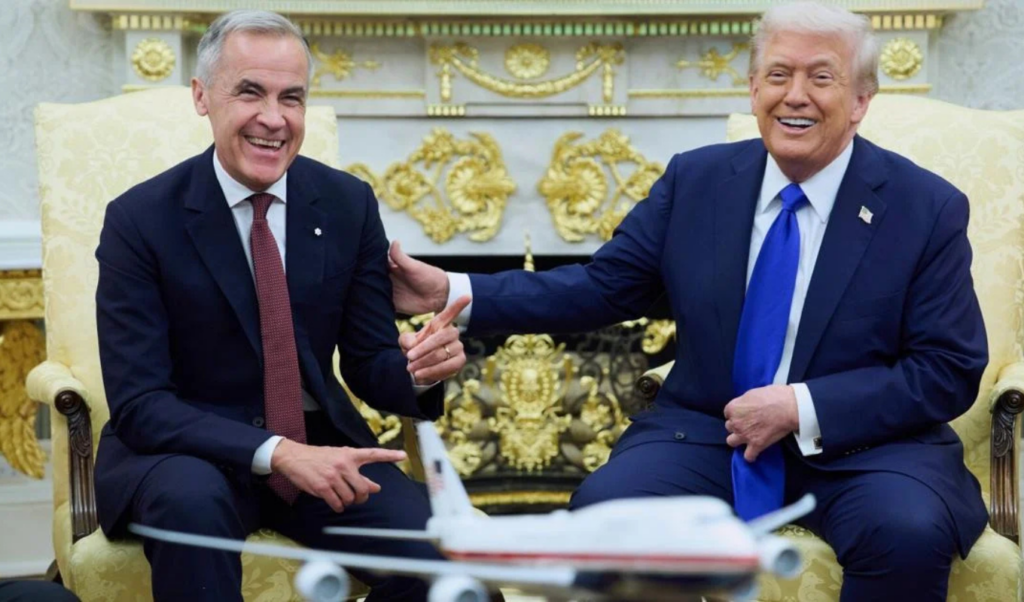
Striking a cordial tone in the Oval Office, Trump praised Carney as a “world-class leader”, adding that the former central banker was a “nice man” who could also be “very nasty.”
However, Carney, who faced mounting pressure at home to secure a favourable deal during his second White House visit since April, left without any firm promises that tariffs would be lifted.
“I think they’re going to walk away very happy,” Trump told reporters. He acknowledged a “natural conflict” between the two economies, but added that they had “come a long way over the last few months.”
Carney expressed confidence that Canada would “get the right deal” from the United States, its primary economic partner.
Despite the high-stakes negotiations, the two leaders shared a series of light-hearted exchanges, including laughter at Trump’s joke about a Canadian “merger,” a tongue-in-cheek reference to his past calls for Canada to become the 51st US state.
Nevertheless, the discussions remained vague on concrete measures to ease US tariffs on lumber, aluminium, steel, and automobiles.
On Monday, Trump had announced 25 percent tariffs on all imported heavy trucks, set to take effect 1 November.
Following the visit, Carney’s statement indicated that little firm agreement had been reached. He said only that both leaders recognised areas of competition and potential for collaboration.
“We’re focused on building these new opportunities,” he wrote on X.
Carney, 60, entered politics less than a year ago, campaigning on his crisis management experience as a way to counter Trump’s tariff measures and threats of annexation.
Although the USMCA (United States–Mexico–Canada Agreement) protects most of Canada’s trade, Trump has demanded revisions ahead of its upcoming renegotiation.
| Economic Indicator | Canada | US |
| Percentage of exports to US | 75% | – |
| GDP change, Q2 2025 | -1.5% | – |
| Targeted tariffs | Lumber, aluminium, steel, automobiles, heavy trucks | – |
Prior to the visit, Canada’s opposition parties pressed Carney to secure tangible results: “If you return with excuses, broken promises and photo ops, you will have failed our workers, our businesses and our country,” Conservative leader Pierre Poilievre wrote in an open letter.
Criticism also surrounds Carney’s concessions to Trump, which many view as one-sided. For instance:
- In June, Carney cancelled a tax targeting American tech giants after Trump called it “outrageous.”
- He also lifted many tariffs imposed by Canada’s previous government.
“Mark Carney has no choice; he must return from Washington with progress,” said Daniel Beland, political scientist at McGill University, highlighting steel and aluminium tariffs as key issues.
At least Carney managed to navigate the Oval Office visit for a second time, an encounter that has previously been tricky for leaders such as Ukraine’s Volodymyr Zelensky.
“These meetings can easily go off track, and everything plays out publicly,” said Genevieve Tellier, political scientist at the University of Ottawa.
While the talks concluded with optimism on both sides, the concrete details on tariff relief remain uncertain, leaving Canada’s government under pressure to deliver tangible results to its businesses and citizens.
| Key Takeaways | Details |
| Meeting tone | Friendly, cordial, light-hearted jokes |
| Outcome | No firm promises on tariff relief |
| Critical sectors | Lumber, steel, aluminium, automobiles, heavy trucks |
| Domestic pressure | High for Carney to secure a deal |
| Next steps | Ongoing negotiations, monitoring Trump’s commitments |
The visit highlighted the delicate balancing act for Carney: managing domestic expectations while negotiating with a US president known for public displays and high-stakes diplomacy.