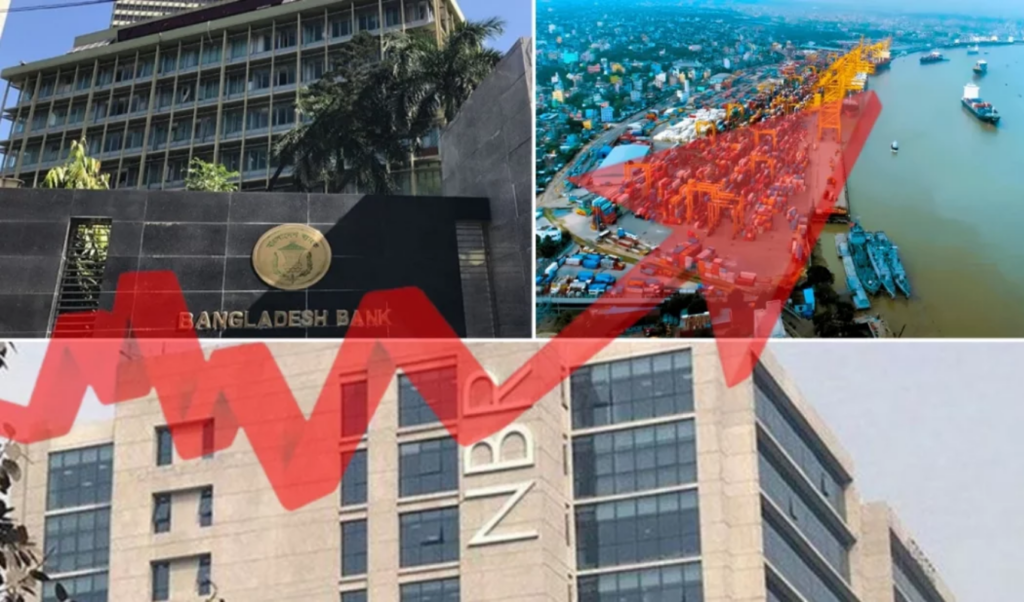
The past year has been one of strain, reform and cautious reconstruction for Bangladesh’s economy. A confluence of global economic uncertainty, geopolitical tensions, persistently high inflation and an acute foreign currency shortage compelled the government to adopt a series of difficult and often unpopular policy decisions. An examination of data from various government agencies and policy institutions reveals a mixed picture: while the economy has managed to avert a deeper crisis, progress towards meaningful structural reform remains uneven. For ordinary citizens, however, relief has been limited. Inflation continues to hover above 8 per cent—currently the highest in South Asia—eroding purchasing power and daily living standards.
Long-standing challenges such as energy shortages, elevated interest rates, declining real incomes and subdued consumer demand were already weighing heavily on the economy. After the interim government assumed office, further weaknesses came to light, particularly within the banking sector and public administration. Disruptive protests by officials of the National Board of Revenue (NBR) significantly hindered revenue collection, compounding fiscal stress. Despite these setbacks, the interim administration’s most notable achievement has been its effort to restore a degree of macroeconomic stability.
Economic Adviser Dr Salehuddin Ahmed has repeatedly stated that his priority was to pull the economy back from the brink. To some extent, those efforts have yielded results. Remittance inflows have risen, and the sharp decline in foreign exchange reserves has been halted. The US dollar, which had already reached a record high before the interim government took charge, has since stabilised at an elevated level. This stability has enabled authorities to move closer to a market-based exchange rate regime. There has also been a modest uptick in foreign investment, suggesting an improvement in overall macroeconomic conditions compared with the previous administration.
Yet two defining features of the past year have been uncertainty and instability. Business confidence has suffered, leaving investors hesitant to commit capital. Investment stagnation, which had existed earlier, appears to have deepened over the past year, despite a relative reduction in industrial unrest in 2025 compared with 2024.
Inflation has been the most persistent source of hardship. After showing signs of easing mid-year, prices surged once again towards the end of the year. Essential commodities such as rice, cooking oil and onions experienced repeated price fluctuations. According to the Bangladesh Bureau of Statistics, inflation rose to 8.29 per cent in November, up from 8.17 per cent in October, while wage growth stood at just 8.04 per cent. As a result, real household incomes—particularly among low- and lower-middle-income groups—continued to decline.
The banking sector remains a critical concern. Years of mismanagement, mounting non-performing loans and allegations of financial malpractice during the previous government culminated in a full-blown crisis by 2025. Although the central bank introduced reforms and tough regulatory measures, stability has yet to be fully restored. Official data indicate that more than one-third of all loans disbursed by banks are now classified as non-performing. In a major restructuring move, Bangladesh Bank initiated the merger of five Shariah-based banks, creating the country’s largest state-owned Islamic bank with a paid-up capital of Tk 35,000 crore.
Investment activity, however, remains subdued. Private sector credit growth fell to 6.23 per cent in October 2025, down from 8.30 per cent a year earlier. Economists warn that declining investment appetite has reduced demand for capital machinery, further dampening credit growth and industrial expansion.
Revenue mobilisation also suffered due to prolonged unrest at the NBR, including a complete shutdown that disrupted trade operations at Chattogram Port. Meanwhile, the implementation of the Annual Development Programme (ADP) continues to lag. Despite a reduced allocation, only 11.75 per cent of the ADP was implemented in the first five months of the current fiscal year.
On a more positive note, improvements in remittance inflows and foreign exchange reserves have offered some relief. By 18 December, gross reserves rose to USD 32.57 billion, up from approximately USD 25 billion in August 2024. Overseas employment and remittance earnings have both increased significantly, providing a crucial buffer for the economy.
Key Economic Indicators at a Glance
| Indicator | Latest Figure |
|---|---|
| Inflation Rate (Nov) | 8.29% |
| Wage Growth | 8.04% |
| Foreign Exchange Reserves | USD 32.57 billion |
| Private Sector Credit Growth | 6.23% |
| Non-Performing Loans | Over 33% |
| ADP Implementation (Jul–Nov) | 11.75% |
| Remittances (Jul–Nov) | USD 13.04 billion |
| Overseas Employment | 500,000 workers |