Winter in Rangpur signals the peak season for weddings, religious ceremonies, and cultural festivities. For local artisans working with shola—a lightweight pith material used in traditional handicrafts—this period marks their busiest months. As in previous years, demand for shola products has surged, driven by weddings, annaprashan ceremonies, pujas, and other celebratory events.
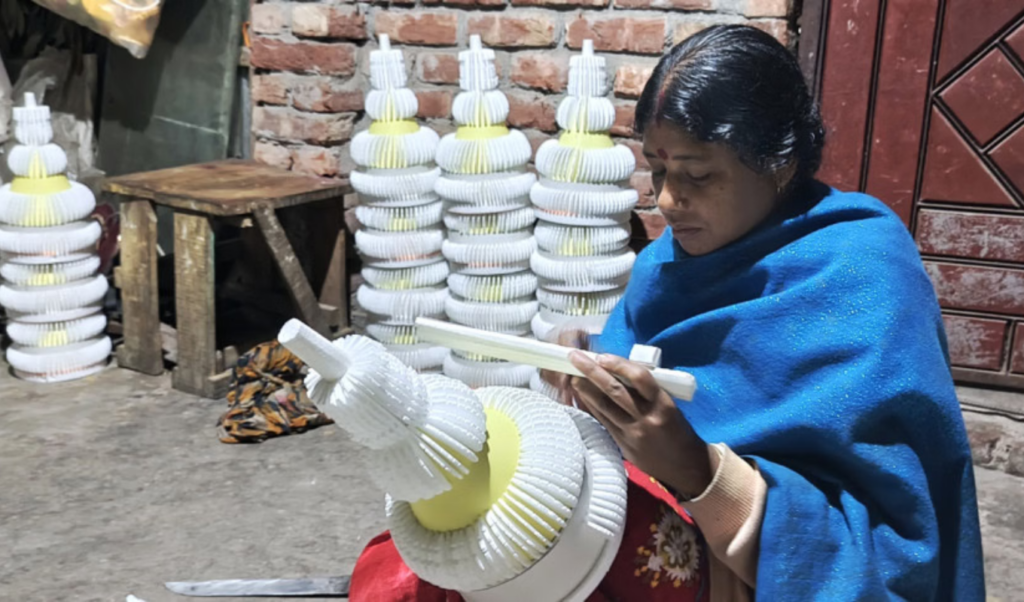
According to the Bangladesh Small and Cottage Industries Corporation (BSCIC), over 500 families in the Rangpur region are engaged in the shola craft industry. These artisans produce a wide array of items, ranging from ceremonial crowns for weddings and annaprashan rituals to idols of deities, traditional toys, and decorative pieces used for festive embellishments.
The period from November to April is considered the most lucrative for sales. Retailers and wholesalers confirm that a single shola crown typically sells for 700–800 taka. Many artisans, like Ramanuj Barman (50) from Sadhutari village in Lalmonirhat, learned the craft from their fathers at a young age and now run small workshops from home. Visiting his workshop recently, one can observe workers busy cutting, painting, and assembling shola pieces. Barman explained:
“We work on shola items year-round, but winter is the busiest. Wholesalers place advance orders for wedding and annaprashan crowns. Each crown sells for 400–600 taka, yielding a profit of 250–350 taka. We sell around 7–8 lakh taka worth of shola items annually.”
Despite rising sales, many artisans report that the cost of raw shola has increased, reducing their net earnings. Nevertheless, they continue the craft to preserve a centuries-old tradition. Basana Rani (44), also from Sadhutari, stated:
“Our family has worked with shola for generations. Wearing shola crowns during Hindu weddings and annaprashan rituals remains essential, so demand never disappears. A skilled artisan can make five to six crowns per day if materials are available.”
However, sourcing shola has become increasingly difficult. Sudhir Chandra Sen (65), a craftsman from Mahiganj, Rangpur, explained, “We used to obtain shola from nearby villages, but now we must source it from distant regions. Despite seasonal demand, the younger generation is reluctant to join the craft because it requires immense patience.” He adds that his annual sales reach around 10 lakh taka.
Local community leaders emphasise the cultural importance of the craft. Hiralal Roy (70) from Lalmonirhat said, “Shola items may not be expensive, but they are visually striking. Generations have relied on these crowns and decorative figures for weddings and festivals. The government should support preserving this heritage.”
Shola Craft Sales Overview in Rangpur Region
| Item Type | Unit Price (Taka) | Artisan Profit (Taka) | Units Produced per Year | Annual Sales (Taka) |
|---|---|---|---|---|
| Wedding/Annaprashan Crown | 400–800 | 250–350 | 1,000–2,000 | 4–8 lakh |
| Deity Idols | 500–1,000 | 300–400 | 500–1,000 | 3–6 lakh |
| Decorative Items | 200–500 | 100–250 | 2,000–3,000 | 3–5 lakh |
Rangpur’s shola artisans continue to work tirelessly during the winter months, balancing cultural demand with the challenges of rising material costs and dwindling participation from the younger generation. The craft remains a vital part of local traditions, and experts stress the need for institutional support to safeguard this heritage.