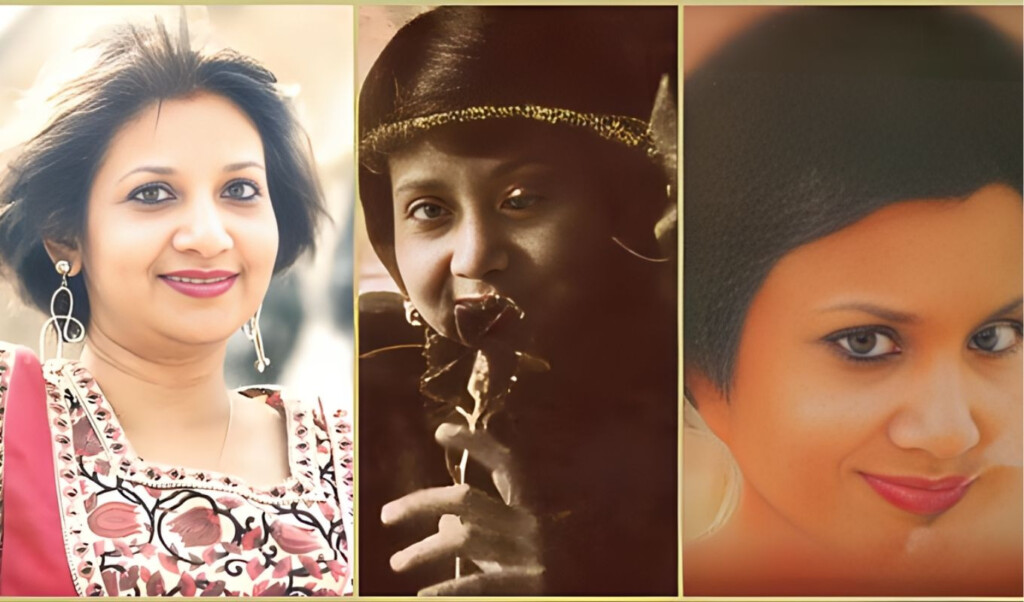
In 1976, the iconic song Aay Khuku Aay was recorded, pairing Hemanta Mukhopadhyay’s deep baritone with the fresh voice of Shrabanti Majumdar. Few could have predicted that the song would eventually reach households across both Bengal and Bangladesh, becoming a timeless classic. Decades later, it even featured in the Bangladeshi film The Father. This year marks the golden jubilee of the beloved track. On 3 January, one of its principal singers, Shrabanti Majumdar, celebrated her birthday, and Masum Apu spoke to her over WhatsApp to commemorate the song’s 50-year milestone.
From the Isle of Man, in the Irish Sea, Shrabanti’s familiar, sweet voice carried over the phone. “Hello, this is Shrabanti… calling from Bangladesh? How wonderful!” she exclaimed. For audiences today, her voice is more than a name—it is nostalgia incarnate. Many of her jingles for products like Boroline cream or hair oil remain popular on YouTube and social media, where even advertising became musical art under her rendition. Her voice became, in a sense, a household emblem, entwined with everyday Bengali life.
The song’s journey, Shrabanti recalled, was not straightforward. Lyricist Pulak Bandopadhyay and composer V. Balsara created it for her Puja album, not Hemanta’s repertoire. Pulak-da showed her the lyrics, and the words moved her to tears. “I said, ‘Pulak-da, I won’t just sing this—I want to sing it with Hemanta-da.’ He was thrilled,” she remembered. After presenting it to Hemanta Mukhopadhyay, they recorded together, giving life to the lines: “Katay na shomoy jokhon ar kichute, bondhur telephone-e mon bose na…” The song captured a father’s tender love and a child’s longing, cementing Shrabanti’s place in music history.
Interestingly, the song initially struggled for popularity. Shrabanti revealed, “Even two years after its release, people didn’t want to hear it. I began performing it alone on stage. Gradually, I noticed everyone asking only for Aay Khuku Aay.” Its later use in The Father brought the song renewed recognition in Bangladesh, although permission had not been sought beforehand. Reflecting on its emotional resonance, she admitted that personal loss and distance from her father in later years made her perform it with heartfelt tears.
Shrabanti’s musical journey broke conventions. Trained in classical music under Ustad Sudhir Bandopadhyay, she was drawn to modern Bengali songs, Hindi film melodies, and even English pop. Her voice transformed seemingly trivial advertising jingles into works of musical charm, challenging societal expectations for women performers.
Even decades later, her influence persists. After moving to Douglas on the Isle of Man twenty-five years ago, she remains deeply connected to Bengali music and culture, collaborating with artists like Runa Laila, Ali Zaker, and Fakir Alamgir. From Chittagong to Dhaka, her performances are remembered fondly. Despite living abroad, her Bengali remains fluent, and she continues to bridge hearts across continents with her songs.
Key Milestones in Shrabanti Majumdar’s Career
| Year | Event | Notes |
|---|---|---|
| 1976 | Aay Khuku Aay recorded | With Hemanta Mukhopadhyay; lyrics by Pulak Bandopadhyay |
| 1978 | Album release | Initially slow reception |
| 1980s | Advertising jingles | Boroline, hair oil, others; elevated everyday products musically |
| 2000s | Film feature | The Father in Bangladesh; renewed popularity |
| 2001 | Relocation | Moved to Douglas, Isle of Man |
| 2026 | 50th anniversary | Interview reflects on song’s enduring legacy |
Through decades of experimentation—from romantic duets to folk fusion—Shrabanti’s voice has remained versatile, emotive, and deeply Bengali. Her journey embodies a rare blend of classical discipline and popular appeal, proving that music can transcend time, borders, and generations.