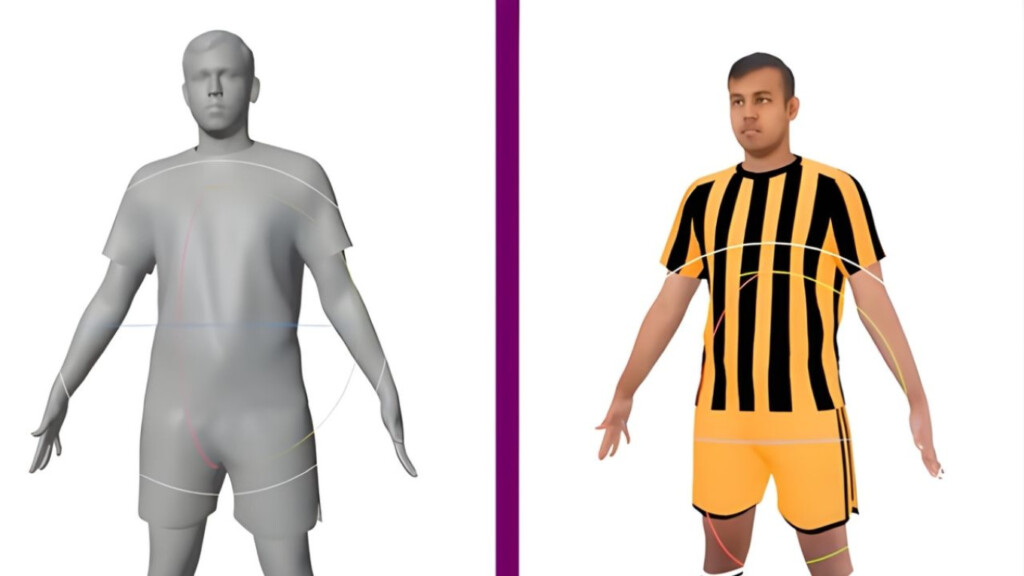
In a groundbreaking leap for sporting officiating, FIFA has announced that every footballer participating in the 2026 World Cup will undergo high-precision body scanning to create individual AI-powered 3D “avatars”. This initiative, unveiled by FIFA President Gianni Infantino during his keynote address at the Consumer Electronics Show (CES) in Las Vegas, aims to eliminate the margin of error in Semi-Automated Offside Technology (SAOT).
Digital Precision for 1,248 Athletes
The scale of the project is unprecedented. With the tournament expanding to 48 teams, each boasting a 26-man squad, FIFA’s technical team will generate digital replicas for a total of 1,248 players. These scans will be conducted within a specialised chamber during pre-tournament media sessions. The process is remarkably efficient, requiring only a single second to capture the skeletal and muscular dimensions of an athlete.
Infantino described the upcoming tournament—hosted across the United States, Canada, and Mexico—as the “greatest show on Earth,” asserting that AI integration is essential for the integrity of its 104 matches. By using an athlete’s actual body shape rather than a generic skeletal model, the technology can track limbs with surgical precision, even when players are obscured by opponents or moving at high velocity.
Solving the “Generic Model” Crisis
Current offside technologies, including those used in the Premier League, rely on up to 30 cameras and 10,000 data points per player. However, the graphical representations often fail to match a player’s true physique. A recent controversy in a Newcastle versus Manchester City fixture highlighted this flaw, where the SAOT graphic of Ruben Dias did not align with the live television footage.
By utilizing bespoke 3D avatars, FIFA ensures that the “virtual limb” used to determine an offside call is a 1:1 match of the physical player. This technology has already undergone successful trials during the Intercontinental Cup, featuring scanned players from Flamengo and Pyramids FC.
Table: Comparison of Traditional vs. AI-Avatar Offside Technology
| Feature | Current SAOT (Standard) | 2026 World Cup AI-Avatar Tech |
|---|---|---|
| Data Basis | Generic skeletal models | Bespoke 3D body scans |
| Player Coverage | Variable accuracy for limb tracking | 1:1 anatomical replicas |
| Scan Duration | N/A | 1 second per player |
| Tracking Points | Approx. 29 points per player | Comprehensive surface-area tracking |
| Offside Resolution | Can lead to graphical “mismatches” | Matches real-time physical posture |
Beyond the Offside Line
FIFA is not stopping at offside calls. The governing body is currently testing “Real-Time 3D Recreation” to assist with “Line of Sight” offside decisions—determining if an offside player is obstructing a goalkeeper’s vision. Furthermore, new sensors are being trialled to determine with absolute certainty whether a ball has crossed the touchline or goal line before a goal is scored.
These advancements represent a total digital overhaul of the beautiful game, ensuring that the 2026 World Cup is defined by athletic prowess rather than officiating ambiguity.