Armed clashes in the northern Syrian city of Aleppo have intensified sharply, triggering one of the gravest humanitarian crises the city has witnessed in recent years. Fighting between government forces and the Kurdish-led Syrian Democratic Forces (SDF) has escalated following a large-scale security sweep by the Syrian army in the Sheikh Maqsoud district, plunging surrounding neighbourhoods into fear and uncertainty.
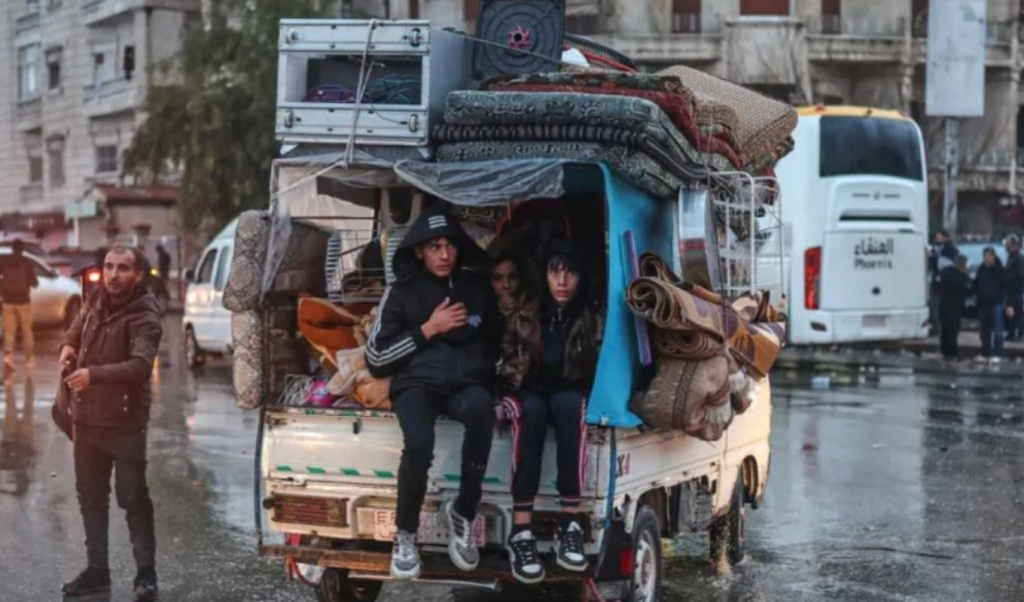
According to Mohammed al-Rajab, head of local emergency services, at least 162,000 residents have been forced to flee their homes over the past several days. The majority of those displaced come from the densely populated Ashrafiyah and Sheikh Maqsoud areas, where shelling, aerial strikes and ground operations have made civilian life untenable. Families have sought refuge in safer parts of Aleppo or neighbouring districts, often with little more than what they could carry.
As of Saturday, 10 January, Syrian military officials claim that government forces have taken control of approximately 55 per cent of Sheikh Maqsoud. The operation began on Friday evening, 9 January, after a deadline expired for Kurdish fighters to withdraw from the area. That deadline followed the collapse of efforts to implement a previously announced agreement to integrate SDF units into the national armed forces, an initiative that has stalled amid deep mistrust on both sides.
Earlier on Friday, Syria’s Ministry of Defence announced a temporary ceasefire and issued a six-hour ultimatum, urging Kurdish fighters to return to their semi-autonomous north-eastern regions. The Kurdish council in Aleppo rejected the proposal outright, vowing to continue resistance. Soon afterwards, Syrian forces launched air and drone strikes on Sheikh Maqsoud, significantly intensifying the confrontation.
The SDF has accused government forces of striking a hospital during the operation, describing the incident as a war crime. The Defence Ministry, however, denied targeting civilians and claimed the building was being used as an arms depot. These competing narratives have heightened international concern over the protection of civilians and critical infrastructure.
Since fighting erupted on Tuesday, 6 January, at least 22 people have been killed and 173 wounded. Observers note that this is the deadliest bout of violence in Aleppo since the current government, led by Ahmed al-Sharaa, assumed power a year ago. The administration has prioritised bringing oil-rich, Kurdish-controlled territories under central authority, but the slow implementation of a March agreement has exposed widening cracks between Damascus and Kurdish leadership.
Regionally, Turkey has voiced strong support for the Syrian government’s actions. Turkish Defence Minister Yasar Guler stated that Syria’s security is inseparable from Turkey’s own national security. Internationally, United Nations Secretary-General António Guterres has expressed deep alarm and urged all parties to return to dialogue. France and the United States are also reportedly engaged in diplomatic efforts to de-escalate the crisis.
Despite these calls, Syrian officials have reiterated their determination to eliminate what they describe as “illegal armed presence” in Aleppo, raising fears that further displacement and civilian suffering may lie ahead.
Key Facts at a Glance
| Category | Details |
|---|---|
| Displaced civilians | Approximately 162,000 |
| Areas most affected | Ashrafiyah, Sheikh Maqsoud |
| Fatalities | At least 22 |
| Injured | 173 |
| Territory under government control | Around 55% of Sheikh Maqsoud |
| Conflict escalation | Since 6 January |
The unfolding situation underscores Aleppo’s continued vulnerability and highlights the fragile balance between military objectives and humanitarian imperatives in war-torn Syria.