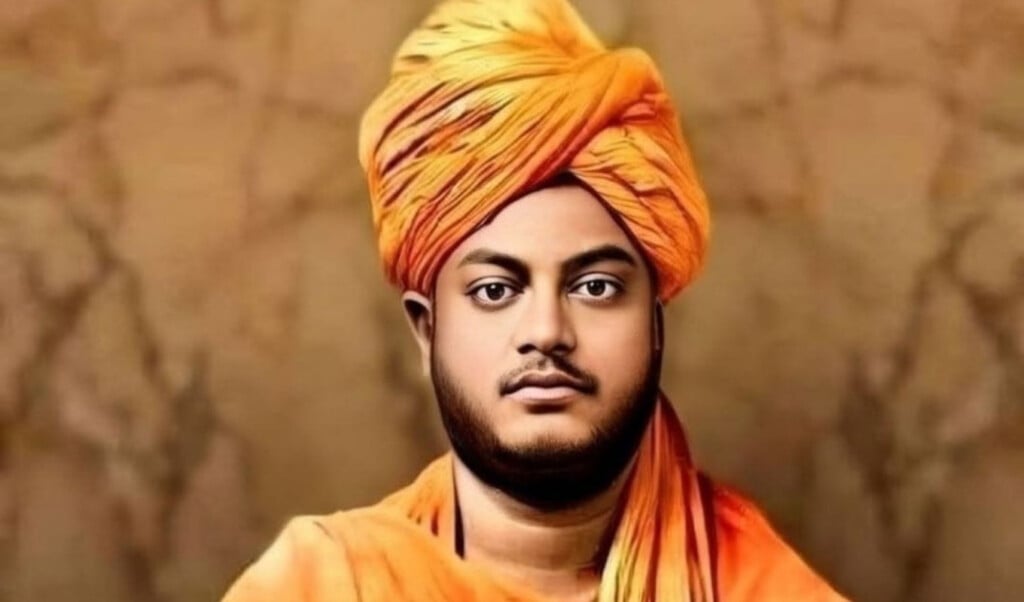
Swami Vivekananda remains one of the brightest stars of India’s renaissance, an enduring source of inspiration for youth, and a seminal architect of modern Indian consciousness. His thoughts, actions, and words continue to awaken confidence, compassion, and spiritual aspiration in people across the world.
| Fact | Details |
|---|---|
| Birth Name | Narendranath Datta |
| Date of Birth | 12 January 1863 |
| Place of Birth | Kolkata, India |
| Parents | Vishwanath Datta (father), Bhubaneshwari Devi (mother) |
| Spiritual Guide | Sri Ramakrishna Paramahamsa |
| Major Contributions | Vedanta Society, Ramakrishna Mission, Global Lectures on Hindu Philosophy |
| Death | 4 July 1902, aged 39 |
Early Life and Formative Influences
Born into a distinguished and highly educated family, Narendranath Datta inherited a rare combination of intellect and spirituality. His father, Vishwanath Datta, was a liberal-minded lawyer and rationalist, while his mother, Bhubaneshwari Devi, was deeply spiritual and morally steadfast. This blend of rational inquiry and spiritual devotion laid the foundation for Narendranath’s unique character and philosophical outlook.
From an early age, he exhibited a profound spiritual curiosity and an intense yearning to experience the Divine. His quest—“Have you seen God?”—led him to the guidance of Sri Ramakrishna Paramahamsa, whose simplicity, direct experience of God, and universal approach to faith profoundly shaped Narendranath’s spiritual path. Eventually, he emerged as Ramakrishna’s chief disciple, becoming the principal torchbearer of his master’s vision.
Global Recognition
In 1893, Swami Vivekananda made history at the World’s Parliament of Religions in Chicago, representing Hinduism. His iconic address, opening with the words “Sisters and Brothers of America”, brought the audience to a prolonged standing ovation. This speech was not merely a personal triumph but a recognition of the dignity and universality of Eastern wisdom.
Over the following years, he delivered lectures across the United States, England, and Europe, captivating audiences in universities, philosophical societies, and public forums. He presented Vedanta, Yoga, and Hindu philosophy in a scientific, rational, and accessible manner, earning admiration and respect in the West.
Social Vision and Humanitarian Legacy
Vivekananda founded the Vedanta Society in America and England, pioneering the global spread of Indian philosophy. Returning to India in 1897, he established the Ramakrishna Math and Ramakrishna Mission, organisations dedicated to education, healthcare, disaster relief, and character building. His central teaching—“Service to humanity is service to God”—embodied a philosophy that combined spirituality with social reform.
Influence and Commemoration
Swami Vivekananda profoundly influenced luminaries such as Mahatma Gandhi, Jawaharlal Nehru, Subhas Chandra Bose, Aurobindo Ghosh, and Sarvepalli Radhakrishnan. His 12 January birthday is celebrated across India as National Youth Day, inspiring generations to uphold his ideals of courage, self-confidence, and service.
Final Years
Swami Vivekananda passed away on 4 July 1902, at the age of 39, while in meditation. Though his life was brief, his legacy remains eternal, continually reminding humanity:
“Arise, awake, and stop not till the goal is reached.”