Thursday, 20th August 2026

Khabor Wala Desk
Published: 13th January 2026, 11:50 AM
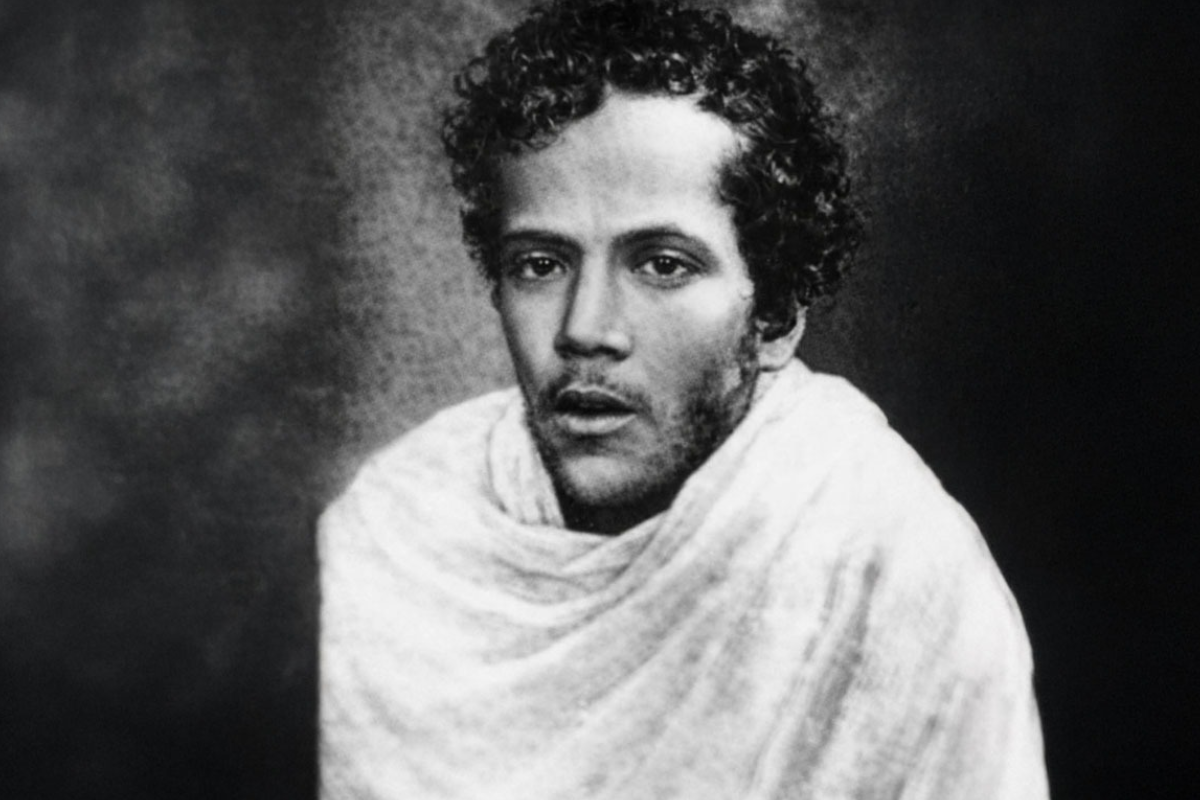
Krishnachandra Majumdar, a luminary of nineteenth-century Bengali literature, was an eminent poet, journalist, and editor whose works embodied moral insight, humanistic philosophy, and lucid expression. His poetry combined reflections on life and self-inquiry with profound philosophical depth and accessible wisdom drawn from folk traditions.
Born on 10 June 1834 in Senhati village, Dighalia, Khulna District, Majumdar was the son of Manikya Chandra Majumdar. Financial constraints prevented him from pursuing higher education. Early in life, he lived under the patronage of the Kirtipasha Zamindar of Barisal, which allowed him to continue his literary and educational pursuits. In 1914, in tribute to his memory, the Krishnachandra Institute was established in his native Senhati village, which continues to preserve his legacy.
Majumdar began his professional career in 1854 as the head pandit at Barisal Kirtipasha Bengali School. Later, he taught at Dhaka Normal School but resigned in 1860 due to differences with the administration, subsequently joining Model School. Over a teaching career spanning nearly 19 years, he influenced generations of students profoundly.
His literary contributions were extensive. His first and most celebrated poetry collection, “Sadbhav Shatak”, consisted largely of moral and ethical poems inspired by Sufi poets and Hafez’s Persian verse. Other notable works include his autobiographical “Ramer Itibritta”, “Mohobhog”, based on the Mahabharata episode “Basab-Nahush-Songbad”, the philosophical treatise “Kaibalyatattva”, and the posthumously published drama “Ravanbodh”. Scholars estimate that around fifteen of his works remain unpublished.
His poetry was so resonant that lines like:
“Kanta heri khanto keno komol tulite,
Dukkho bina sukh lav hoy ki mohite?”
once featured in school textbooks, highlighting his widespread influence.
Majumdar was also an accomplished editor. He served as editor for publications including “Monoranjika”, “Kobita Kusumavali”, “Dhaka Prakash”, and “Bijnapani”. In 1886, he published and edited “Dwaibhashiki”, a bilingual journal significant for its contributions to contemporary literary and linguistic discourse.
He spent his final years in Senhati, engaging in music composition and literary pursuits, until his death on 13 January 1907. Today, his poetry, thought, and moral philosophy continue to inspire readers and scholars of Bengali literature.
| Aspect | Details |
|---|---|
| Full Name | Krishnachandra Majumdar |
| Birth | 10 June 1834, Senhati, Dighalia, Khulna |
| Death | 13 January 1907, Senhati, Khulna |
| Occupation | Poet, Journalist, Editor, Teacher |
| Early Career | Head Pandit, Barisal Kirtipasha Bengali School |
| Notable Literary Works | Sadbhav Shatak, Ramer Itibritta, Mohobhog, Kaibalyatattva, Ravanbodh |
| Editorial Roles | Monoranjika, Kobita Kusumavali, Dhaka Prakash, Bijnapani, Dwaibhashiki |
| Legacy | Moral philosophy, literary influence, educational contributions |
Krishnachandra Majumdar’s works remain a testament to the enduring power of ethical thought, literary brilliance, and humanistic insight, continuing to illuminate Bengali literature over a century after his passing.




Comments