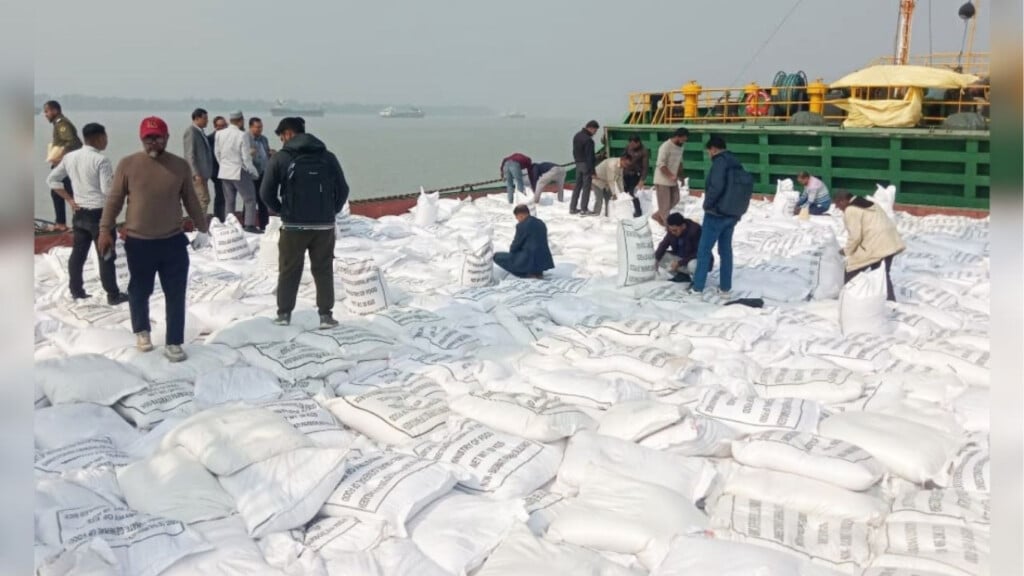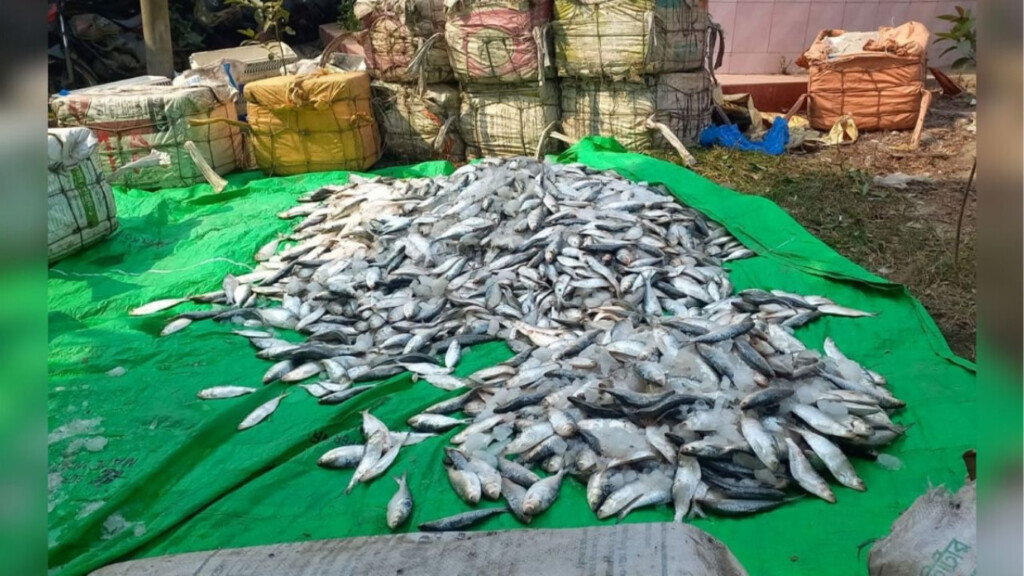
In a significant blow to illegal fishing syndicates, the Noakhali District Detective Branch (DB) has intercepted a massive shipment of 2,500 kilograms of juvenile Hilsa, locally known as Jatka. The midnight operation, carried out in the early hours of Wednesday, 14 January 2026, resulted in the apprehension of six individuals involved in the unlawful transport of the national fish.
Precision Strike at Mannan Bazar
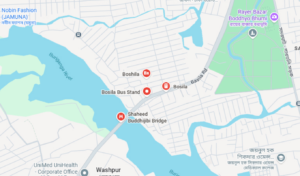
Acting on a confidential tip-off, a specialised team from the District Detective Branch established a checkpoint in the Mannan Bazar area along the Sonapur-Chairman Ghat road. At approximately 1:30 am, officers intercepted two pickup vans speeding through the quiet thoroughfare. Upon inspection, the vehicles were found to be laden with roughly 2.5 metric tonnes of undersized Hilsa.
According to Md. Ashraf Uddin, the Officer-in-Charge (OC) of the Noakhali DB Police, the suspects were caught red-handed while attempting to smuggle the fish to local markets. The sale and transport of Hilsa smaller than 25 centimetres is strictly prohibited under the current eight-month nationwide ban, which is in effect until 30 June 2026.
Judicial Proceedings and Penalties
Following their arrest, the six suspects—all residents of Subarnachar Upazila—were produced before a mobile court on Thursday afternoon. The court was presided over by Shahnewaz Tanveer, the Assistant Commissioner (Land) and Executive Magistrate of Noakhali Sadar.
The accused confessed to their crimes during the hearing. Under the Protection and Conservation of Fish Act, 1950 (Sections 4 and 5), the magistrate imposed a financial penalty on each individual.
Summary of Legal Action:
| Parameter | Details |
|---|---|
| Quantity Seized | 2,500 kg (2.5 Metric Tonnes) |
| Suspects Apprehended | 6 (Residents of Subarnachar) |
| Legal Provision | Protection & Conservation of Fish Act, 1950 |
| Individual Fine | 5,000 BDT |
| Total Fines Collected | 30,000 BDT |
| Alternative Sentence | One month of simple imprisonment |
As all six defendants paid their fines immediately, they were released from custody with a stern warning.
Humanitarian Distribution
In accordance with standard government procedure for perishable seized goods, the 2,500 kg of Jatka was not wasted. Following the court’s order, the DB Police coordinated the distribution of the fish to various orphanages and religious institutions throughout the district. This ensures that while the illegal trade was halted, the high-protein resource benefited the most vulnerable members of the community.
Sustaining the National Resource
The conservation of Hilsa is a matter of national importance in Bangladesh. Authorities have reiterated that such “special drives” will continue across Noakhali and adjacent coastal regions. If allowed to mature, these 2.5 tonnes of juvenile fish could have contributed significantly to the adult Hilsa population, ensuring the long-term sustainability of the industry and the livelihoods of thousands of legitimate fishermen.