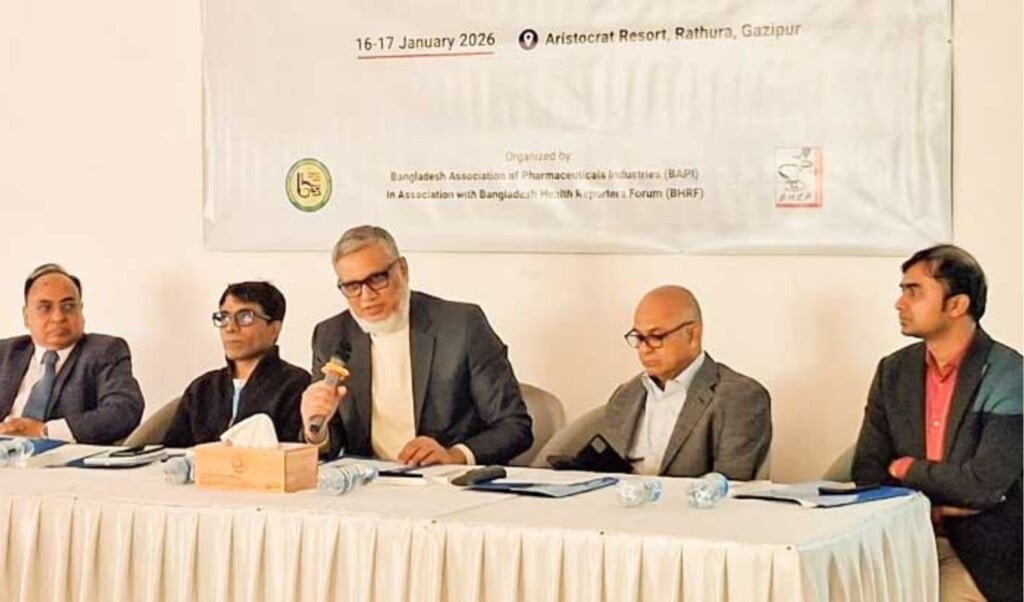
Dhaka, Bangladesh – The nation’s pharmaceutical sector is facing an unprecedented crisis, with over half of the industry’s companies now reported to be in a vulnerable state. According to the Bangladesh Association of Pharmaceutical Industries (BAPI), nearly 60% of the country’s drug manufacturers are struggling, while approximately 40% are either already closed or teetering on the brink of closure. Industry leaders have warned that if this trend continues, both national self-sufficiency in medicine and the health security of future generations could be severely compromised.
These alarming insights were presented at a BAPI-organised workshop on Saturday in Gazipur, titled “Bangladesh Pharma Industry: Present Challenges and Future Prospects.”
BAPI President, Abdul Mukhtadir, highlighted that the backbone of Bangladesh’s pharmaceutical strength has traditionally been small and medium-sized enterprises (SMEs). “Now, that very foundation is crumbling,” he warned. Of the 100 listed pharmaceutical companies, only 15–20 are in relatively healthy financial positions. The remaining firms are in a precarious situation, with companies ranked 50 to 100 facing the gravest challenges.
| Company Rank | Condition | Notes |
|---|---|---|
| 1–15 | Stable | Relatively strong financial health |
| 16–50 | Struggling | High operational pressure, rising costs |
| 51–100 | Critical | Risk of closure; unsustainable pricing |
Abdul Mukhtadir stressed that many companies have been forced to sell medicines at the same price for 30–40 years. “The prices fixed in 1990 remain unchanged in 2025–26, despite soaring production costs, raw material prices, labour expenses, and compliance obligations,” he noted. “Under these conditions, survival is virtually impossible.”
The BAPI president urged journalists to publicly highlight the plight of these struggling companies and called on the government to intervene urgently. “We seek policy support to rehabilitate the 60% of companies in distress and return the industry to the 1994 regulatory framework, which laid the groundwork for Bangladesh’s pharmaceutical self-sufficiency,” he said.
Mukhtadir referred to the 1994 pharmaceutical policy as the foundation of the industry’s “golden era,” enabling both domestic self-reliance and international competitiveness. He warned that excessive government control since 2016, combined with inequitable policies and decisions detached from industry realities, has weakened the sector. Drawing a parallel with Venezuela, he cautioned that over-regulation could similarly devastate Bangladesh’s once-thriving industry.
Small and medium enterprises’ collapse would not only impact the industry but also the domestic market. “If SMEs fail, larger companies will focus on exports, creating uncertainty in medicine availability, pricing, and quality at home,” he added.
The workshop also featured presentations from BAPI Secretary General and Delta Pharma Managing Director, Dr. Md Zakir Hossain, who criticised the government for unilaterally expanding the list of essential medicines and fixing prices without consultation. He emphasised that while price control is acceptable, ignoring production costs and market realities renders such measures unsustainable, hinting at potential legal recourse.
Additional speakers included BAPI Organisational Secretary Md. Mizanur Rahman, Treasurer Halimuzzaman, and Bangladesh Health Reporters Forum leaders Pratik Ijaz and Mujahid Shuvo.