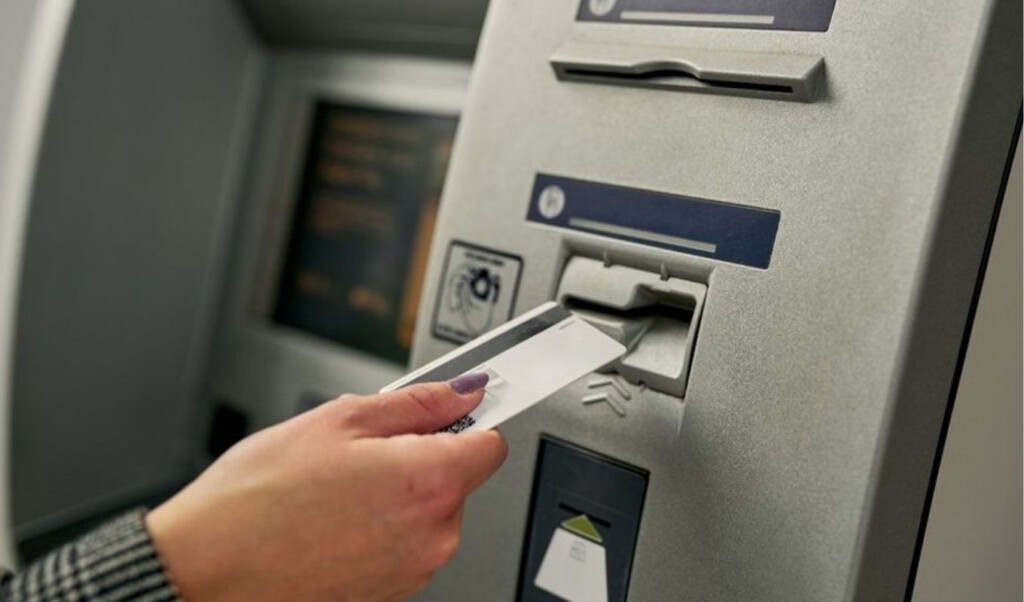
In today’s fast-paced world, imagining modern life without automated teller machines (ATMs) is almost impossible. These ubiquitous devices have simplified banking, allowing people to perform transactions at any hour, thereby transforming daily life. The concept of an ATM was first envisioned by Luther Simjian in 1939. He proposed the “Hole-in-the-Wall” machine and applied for 20 patents. Although Citibank experimented with it, public reluctance led to its discontinuation after just six months.
The modern ATM, however, owes its lineage to Scotland’s James Goodfellow, who patented the first design in 1966. A year later, John Shepherd-Barron successfully installed the world’s first operational ATM at Barclays Bank in London. In 1968, American inventor Don Wetzel developed the ATM concept in the United States, leading to widespread adoption by the late 1980s.
According to BBC News and Barclays Bank archives, the first ATM was installed on 27 June 1967 at Barclays’ Enfield branch in North London. The machine used special cheques containing trace amounts of carbon-14, which were verified against a PIN number to dispense cash. Interestingly, Shepherd-Barron initially proposed a six-digit PIN, but his wife Caroline suggested four digits—a convention still used today. For security reasons, this invention was protected as a commercial secret rather than a patent.
Don Wetzel’s American version emerged in 1968 in Dallas. He and the Docutel company team spent approximately $5 million developing the modern ATM. Wetzel received a patent in 1973, with the first machine installed at Chemical Bank in New York. Early ATMs solely dispensed cash. By 1971, the “Total Teller” enabled deposits, transfers, and credit card advances. Magnetic stripe cards were also pioneered by Wetzel’s team, laying the foundation for today’s banking convenience.
| ATM Milestone | Year | Location / Inventor | Key Feature |
|---|---|---|---|
| Hole-in-the-Wall machine | 1939 | Luther Simjian, USA | Experimental, short-lived |
| First patent for modern ATM | 1966 | James Goodfellow, Scotland | PIN-based authentication |
| First operational ATM | 1967 | Barclays, London | Special cheque & PIN system |
| First US ATM | 1968 | Don Wetzel, Dallas | Modern cash dispensing |
| Total Teller | 1971 | USA | Deposits, transfers, credit advances |
Shifting from cash to digital intelligence, Meta has recently taken precautionary measures regarding AI use by minors. Teen users will temporarily be barred from interacting with AI characters across all Meta apps, including Facebook and Instagram. This is part of an initiative to create a safer, age-appropriate AI experience for children and teenagers.
Future updates will include parental controls, enabling guardians to set limits on AI interaction. Meta has yet to announce an official rollout date. These measures respond to prior concerns over overly familiar or inappropriate chatbot behaviour. As global regulatory scrutiny of AI intensifies, particularly in the United States, this move represents a timely step to protect young users while addressing parental and policy-maker concerns.
By pausing teen access, Meta not only mitigates potential safety risks but also sets a precedent for responsible AI deployment, ensuring that the next generation’s digital interactions are safer and more controlled.