Bangladesh’s Advisor on Education, Professor Chowdhury Rafiqul Abrar (C R Abrar), has called for urgent prioritisation of science education and research, warning that the country risks falling behind in building a knowledge-based economy and addressing future challenges. Speaking at a critical juncture, he said, “We are at a moment where both student enrolment in science education and the pace of research are alarmingly low. This is a deeply concerning situation for any nation.”
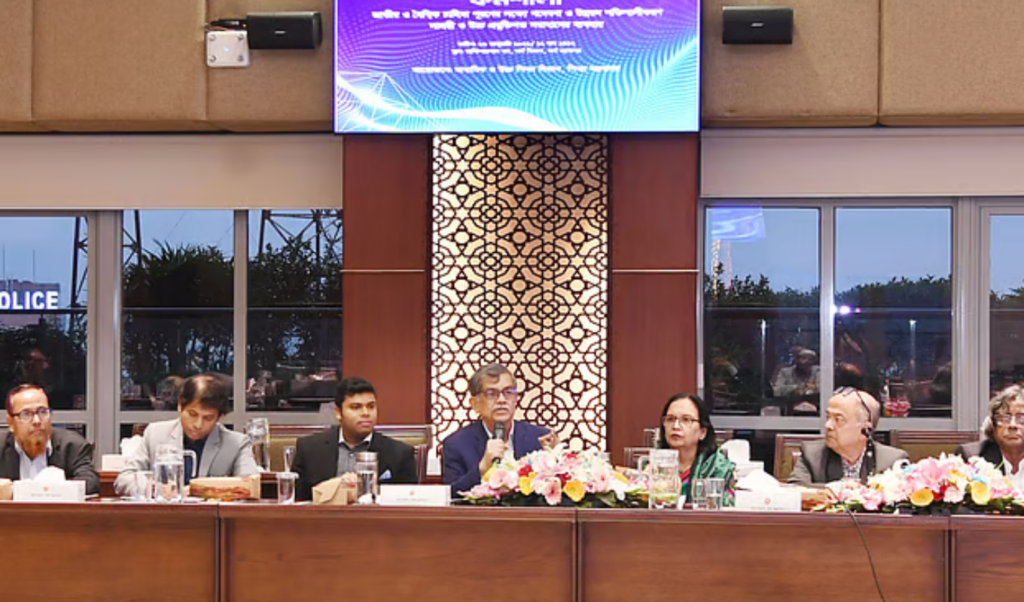
Professor Abrar made these remarks on Monday afternoon as the chief guest at a workshop organised by the Ministry of Education’s Department of Secondary and Higher Education. The event, held at the Secretariat, was titled “Strengthening Research and Development to Meet National and Global Needs: Utilising Cost-Effective and Advanced Technological Solutions”.
The workshop featured keynote presentations from eminent scientists, including Professor Ferdousi Kadri, Emeritus Scientist at the International Centre for Excellence in Research, Bangladesh, researcher Abed Chowdhury, and Professor Mobarak Ahmed Khan, a leading scientist. Discussions centred on the systemic challenges facing research institutions, the need for streamlined approval processes, and strategies to expand research capacity.
Professor Abrar highlighted the struggles of private universities, particularly those actively engaged in research. He pointed out that lengthy government approval processes after securing research grants often create severe obstacles. In many cases, it takes six to eight months to receive the necessary clearances, rendering funds effectively unusable and causing promising research projects to stall midway.
He stressed that while accountability is essential, unnecessary disparities between public and private universities in managing research must be eliminated. “Institutions that responsibly conduct research should benefit from a fast-track system,” he urged.
Drawing attention to Bangladesh’s low research investment, the education advisor noted that only 0.3% of GDP is currently allocated to research, far below regional and global benchmarks. He emphasised that this is not only lower than other South Asian countries but even less than many other least-developed nations—a reality that demands serious consideration.
Against the backdrop of Bangladesh’s graduation from the Least Developed Countries (LDC) category, Professor Abrar also highlighted the increasing public expenditure on vaccines and healthcare, which the state will have to cover up to 90% in the near future. He underscored that without significant investment in science, research, and specialised Centres of Excellence, the country cannot effectively address these challenges.
The workshop was attended by researchers, educators, policymakers, and senior officials from the Ministry of Education, who collectively agreed that immediate reforms are needed to enhance science education and research, positioning Bangladesh for sustainable economic growth and technological advancement.
Comparative Research Investment
| Region / Country | Research & Development Investment (% of GDP) |
|---|---|
| Bangladesh | 0.3% |
| South Asia Average | ~0.8% |
| Developing Countries Avg. | 1%–1.5% |
| Developed Countries Avg. | 2%–3% |
This data highlights the urgent need for increased funding, streamlined processes, and institutional support to accelerate Bangladesh’s research and innovation capabilities.