From the era of cassette tapes and compact discs in the 1990s, through the album-driven culture of the early 2000s, to today’s fully digital landscape, the long and evolving journey of Bangla music has been witnessed by many devoted individuals. That shared history came alive during an evening filled with songs, memories and emotion, as artists, composers, lyricists and behind-the-scenes creators gathered to celebrate the 20th anniversary of Gaanchill, one of Bangladesh’s leading music production houses.
The anniversary celebration was not merely an exercise in nostalgia. Rather, it stood as a confident declaration of intent—an affirmation that Gaanchill is determined to move forward while carrying its musical legacy with pride. Marking the milestone, the organisation unveiled a refreshed identity, including a new logo and expanded creative plans. Central to this renewal was the announcement of Gaanchill’s new motto: “Heritage never retires; it continually reinvents itself.” The statement captured the spirit of the evening, bridging past achievements with future ambitions.
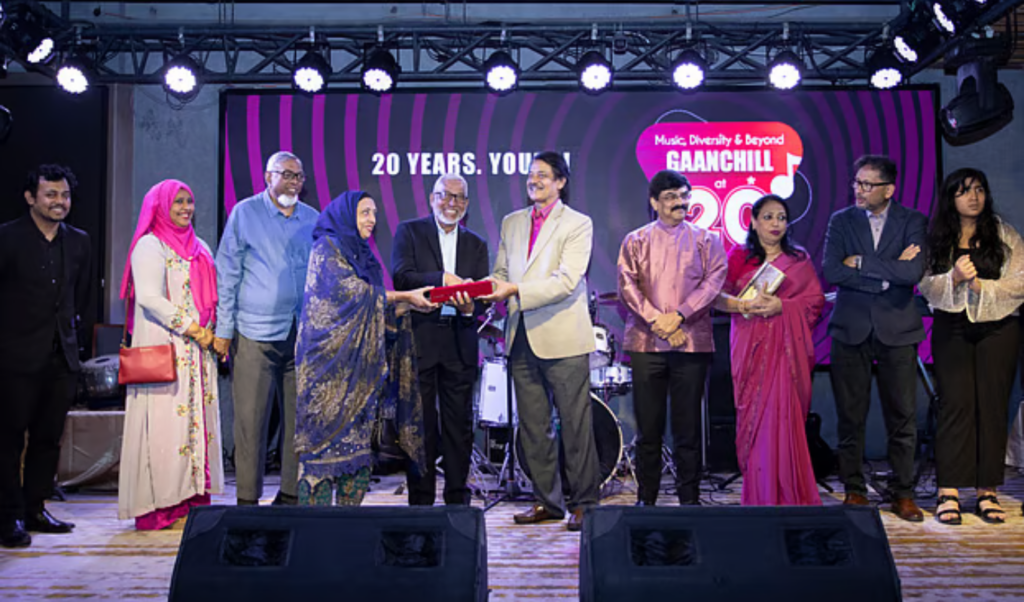
Gaanchill was founded in late 2005 by four prominent figures in the Bangladeshi music scene: Naqib Khan, Kumar Bishwajit, Asif Iqbal and Reza Rahman. Over the years, the label has matured into a respected institution, navigating both commercial success and industry-wide challenges. At present, Asif Iqbal serves as the sole proprietor, overseeing its creative and strategic direction. During the anniversary programme, he formally honoured the three co-founders—Naqib Khan, Kumar Bishwajit and Reza Rahman—with commemorative crests in recognition of their foundational contributions. Although Kumar Bishwajit could not attend in person due to his residence in Canada, he joined via video call to share heartfelt reflections and gratitude.
In their acceptance remarks, the founders recalled the long road Gaanchill has travelled, marked by passion, perseverance and a deep love for music. They expressed satisfaction with the label’s current trajectory and extended their best wishes for its future, hoping its influence would continue to expand across generations.
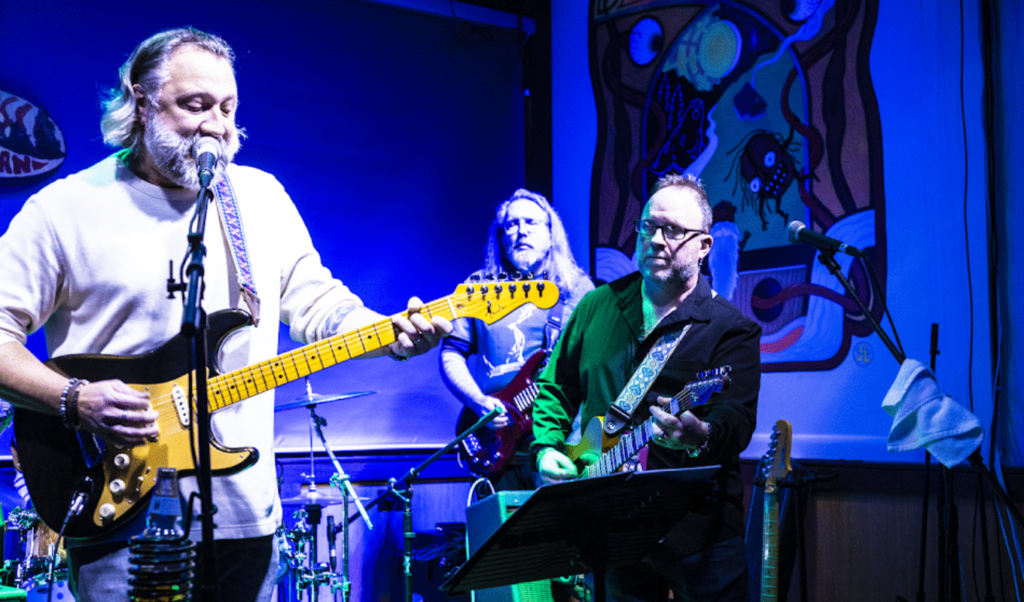
The celebratory mood continued with a vibrant cultural segment. Performances by artists such as Konal, Salma, Kishore, Mahadi, Dola, Niloy, Nahid Hasan and Tariq Mridha filled the stage with energy. Many of the songs performed were popular works written by Asif Iqbal and released under the Gaanchill banner, triggering waves of nostalgia among the audience.
Gaanchill’s early mission focused on promoting quality and responsible musical practice. It quickly gained attention by releasing acclaimed albums by Closeup One stars Mehrab and Rumi, including Adda and Beauty’r Chorondashi. However, the late 2000s brought significant challenges, as piracy and the rise of FM radio disrupted the traditional album market. By 2012, album production was temporarily suspended. Despite this setback, the organisation never ceased operations and, from 2015 onwards, re-emerged with renewed momentum. Stories of that struggle and resilience were woven throughout the evening’s programme.
Key Milestones in Gaanchill’s Journey
| Year/Period | Milestone |
|---|---|
| 2005 | Establishment of Gaanchill |
| 2006–2008 | Release of popular studio albums |
| 2009–2012 | Market downturn due to piracy |
| 2012 | Temporary halt in album releases |
| 2015–Present | Revival with new creative projects |
Looking ahead, Asif Iqbal outlined several upcoming initiatives, including drama productions, Gaanchill Originals, new music releases and a documentary-style project titled Pother Golpo, aimed at presenting unseen stories of Bangladesh through music and visuals.
The evening concluded with the premiere of the music video O Jaan, sung by Konal and Niloy. Written by Asif Iqbal, jointly composed by Avraal Sahir and West Bengal-based Lincoln, and directed by Tanim Rahman Anshu, the video was filmed amid the striking landscapes of Mustang, Nepal. Featuring performances by Sunerah Binte Kamal and Farrukh Ahmed Rehan, the video drew enthusiastic applause and was widely viewed as a symbol of Gaanchill’s new chapter.
As the curtains fell, one truth stood clear: Gaanchill is not merely a music production house. It is a living bridge between time, memory and artistic inheritance—one that honours its past while continually redefining itself for the future.