At the high-stakes Munich Security Conference (MSC) held in Germany this week, European leaders issued a collective and urgent call to “reconstitute” and modernise the continent’s relationship with the United States. The summit, often dubbed the “Davos of Defence,” was dominated by the looming shadow of shifting American foreign policy and the recent, provocative remarks made by US President Donald Trump regarding the future of the North Atlantic Treaty Organisation (NATO).
A Shift in Strategic Autonomy
The conference, which commenced on Friday, saw over 60 heads of state and government gather to address the deteriorating security architecture of the West. The consensus among European capitals appears to have shifted from mere concern to a proactive drive for “strategic autonomy.”
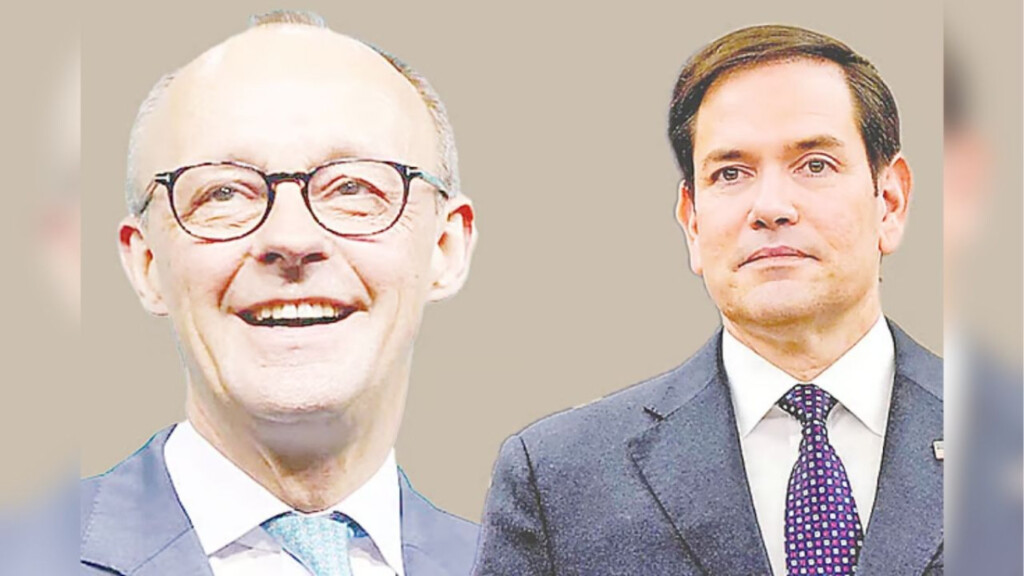
German Chancellor Friedrich Merz championed the concept of a “New Transatlantic Partnership,” arguing that a stable NATO provides a competitive advantage not just for Brussels, but for Washington as well. “Let us work together to restore transatlantic trust,” Merz implored, suggesting that the era of European complacency is over. Echoing this sentiment, French President Emmanuel Macron asserted that building a “Stronger Europe” is no longer a choice but a geopolitical necessity in an increasingly multipolar world.
Diplomatic Engagement and Defence Spending
The second day of the summit featured intensive diplomatic maneuvering. US Secretary of State Marco Rubio held a pivotal meeting with Chancellor Merz, focusing on the quagmire in Ukraine and the prospects for future negotiations with the Kremlin. Parallel to these talks, Rubio engaged with Chinese Foreign Minister Wang Yi. According to Chinese state media, Wang emphasised a preference for stability, stating that “dialogue is superior to confrontation, and cooperation is better than conflict.”
A key pillar of the discussions was the tangible commitment to defence budgets. The following table illustrates the projected shifts in European defence spending as leaders attempt to meet the US demand for greater burden-sharing.
| Nation | 2026 Defence Spending (% of GDP) | Policy Shift / Focus |
|---|---|---|
| Germany | 2.1% | Long-term procurement of air defence systems |
| France | 2.2% | Modernisation of nuclear deterrent and naval assets |
| United Kingdom | 2.5% | Expansion of AI-driven combat technologies |
| Poland | 4.0% | Significant land force expansion and border security |
| NATO Target | 2.0% (Minimum) | The baseline for all member states |
The “Sleeping Giant” Awakens
British Prime Minister Keir Starmer delivered a particularly resonant speech, describing Europe as a “sleeping giant” that must finally rouse itself from its reliance on American military might. Starmer’s office noted that the UK intends to lead a European charge toward self-sufficiency, reducing the continent’s “fragile dependency” on the results of American elections.
NATO Secretary General Mark Rutte concluded the session with a pragmatic outlook, noting that a “stronger Europe within a stronger NATO” is the only viable method to ensure the longevity of the transatlantic bond. The message from Munich was clear: Europe is ready to lead, but it requires a partner in Washington that values the alliance as a two-way street.